
Where Do Life Coaches Actually Get Clients? Reddit Experiences Across LinkedIn, Instagram, Referrals, Directories & Partnerships
Life coaches rarely struggle because there are zero marketing channels available. They struggle because every channel can produce attention while only a few reliably produce trust, qualified conversations, and paying clients. Reddit experiences from working coaches repeatedly point toward referrals, professional networks, niche communities, workshops, and strategic relationships, while LinkedIn, Instagram, directories, and websites perform very differently depending on positioning. Anyone studying why certified coaches still cannot find clients, first-client timelines, life coaching income, and private-practice risk needs a client-acquisition system rather than another platform account.
1. Where Life Coaches Actually Get Clients in 2026
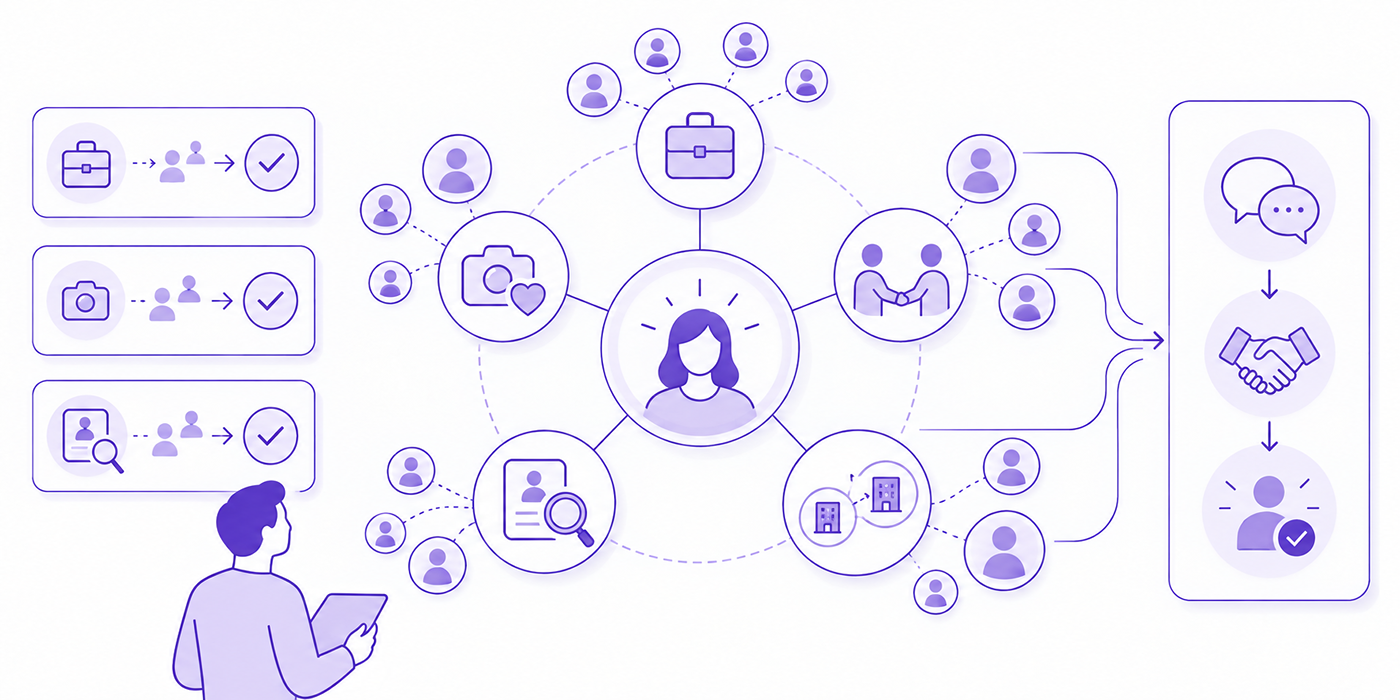
A revealing May 2026 Reddit discussion asked working coaches where their paying clients actually came from after years of hearing about Instagram, LinkedIn, TikTok, websites, podcasts, and email marketing. One coach who had been full-time for six years estimated that around 80% of their clients came through natural referrals, with additional clients coming through webinars, pop-up trainings, and shared emails. Another commenter reported 96% referrals, with occasional business generated through personal networking and speaking opportunities. These are individual experiences rather than representative industry statistics, but the consistency of the underlying theme matters: coaching is an unusually trust-heavy purchase.
That explains why a coach can understand CLEAR coaching, master SMART goal setting, use the OSCAR coaching model, and understand health behavior change while still having an empty calendar. Coaching skill and client acquisition solve different problems.
LinkedIn's own Services Marketplace adds useful context. LinkedIn says 82% of people who are hiring or have hired a service provider consider a referral from their professional network the best way to find a good candidate, according to LinkedIn internal data. The platform also allows buyers to search providers and request proposals.
That matters because a referral does three jobs before a discovery call begins:
It transfers trust. Someone the prospect already knows has reduced perceived risk.
It creates relevance. The referrer usually knows why the coach fits the person's problem.
It shortens the education process. The prospect arrives with more context than someone who watched one random Reel.
This gives coaches studying client trust after certification, coaching professional standards, contracting in coaching, and duty of care an important distinction: credentials can support trust, while relationships often create the initial opportunity for that trust to matter.
Another January 2026 Reddit discussion asked established coaches how they obtained their first clients. One response described talking at local events, participating in relevant associations, supporting adjacent nonprofits, networking, and blogging. The poster said the first paying clients came from referrals.
A 2025 discussion produced a similar pattern. A coach working around business and entertainment circles said most clients came from referrals, with occasional cold outreach, emphasizing the advantage of already being present inside professional communities where ideal clients existed.
This makes the foundational acquisition question more useful than “Should I use Instagram or LinkedIn?”
Ask:
Where does my ideal buyer already have conversations with people they trust?
An executive coach may find that answer inside professional associations, leadership teams, HR relationships, alumni communities, and LinkedIn.
A career burnout coach might target professional communities, recruiters, HR consultants, therapists, or outplacement providers.
A public speaking coach can build relationships with business schools, founder communities, conference organizers, and corporate training providers.
A couples coach may benefit from relationships with therapists, mediators, family-oriented organizations, or community groups while maintaining appropriate scope and referral boundaries.
A leadership coach can target organizations rather than waiting for individual executives to discover motivational content.
That is the deeper pattern running through many Reddit experiences: the highest-quality channel is often the ecosystem surrounding the client's problem.
| # | Client Channel | Best Use | What Creates Conversion | Common Failure Point |
|---|---|---|---|---|
| 1 | Past-client referrals | Established coaches | Strong results + easy referral process | Never asking satisfied clients for introductions |
| 2 | Professional referrals | Specialist coaching | Clear niche + scope + trust | Professionals cannot explain what you do |
| 3 | Personal network | First 10 clients | Specific problem and direct conversations | Announcing “I am a coach” without a clear offer |
| 4 | LinkedIn organic | Career, leadership, executive niches | Authority + conversations + targeted network | Posting without relationship building |
| 5 | LinkedIn Services | Professional-service discovery | Complete profile + recommendations + niche | Competing as a generic life coach |
| 6 | LinkedIn direct outreach | Highly identifiable professional niche | Personal relevance and research | Mass-copy DMs |
| 7 | Instagram organic | Consumer and identity-driven niches | Trust, personality, social proof | Chasing reach without buyer intent |
| 8 | Instagram DMs | Warm followers and engaged prospects | Existing interaction and relevance | Cold pitching strangers |
| 9 | Instagram Live | Relationship-building | Real expertise and useful interaction | Teaching with no conversion path |
| 10 | YouTube | Complex problems needing education | Searchable expertise + long-form trust | Long production cycle without clear offer |
| 11 | Podcast guesting | Niche authority | Audience alignment + compelling CTA | Appearing on irrelevant shows |
| 12 | Own podcast | Long-term authority | Specific niche + consistency | High workload before audience exists |
| 13 | Webinars | Trust-heavy offers | Teaching a painful problem + follow-up | Generic motivational topics |
| 14 | Workshops | Local or corporate acquisition | Immediate demonstration of skill | No next-step offer |
| 15 | Speaking events | Premium positioning | Relevant audience + memorable expertise | Speaking broadly instead of solving one problem |
| 16 | Professional associations | Career and executive coaching | Repeated presence and contribution | Networking only when sales are needed |
| 17 | Alumni networks | Early-stage business development | Shared context and warm introductions | Immediate selling |
| 18 | Therapist partnerships | Non-clinical follow-on goals | Clear scope and referral boundaries | Trying to replace therapy |
| 19 | HR partnerships | Leadership, career and burnout coaching | Organizational relevance | Selling personal transformation instead of workplace outcomes |
| 20 | Recruiter partnerships | Career and transition coaching | Complementary client needs | Unclear division of services |
| 21 | Consultant partnerships | Business and leadership coaching | Complementary expertise | Competing for the same problem |
| 22 | Local business partnerships | Community-based niches | Audience overlap | Partnership without reciprocal value |
| 23 | ICF directory | Credential-led discovery | Strong profile + specific specialty | Passive listing with generic language |
| 24 | Commercial directories | Supplemental visibility | Qualified traffic and niche fit | Paying for unqualified leads |
| 25 | Google search / SEO | High-intent prospects | Problem-specific pages and credibility | Trying to rank for “life coach” broadly |
| 26 | Google Business Profile | Local coaching | Reviews + geographic relevance | Remote-only offer with no local angle |
| 27 | Email list | Nurturing warm prospects | Useful insight + regular follow-up | Collecting subscribers without nurturing |
| 28 | Niche communities | Trust-first acquisition | Contribution before promotion | Joining only to pitch |
| 29 | Corporate training | B2B coaching pipeline | Workshop-to-coaching pathway | No individual follow-up mechanism |
| 30 | Past clients returning | Mature practices | Strong previous experience | No reactivation communication |
2. LinkedIn vs Instagram: Which Platform Actually Produces Coaching Clients?
LinkedIn becomes strongest when the client's problem is tied to career, leadership, business, workplace identity, professional transition, communication, or performance.
Its structure gives coaches information that Instagram usually cannot provide as efficiently: employer, title, seniority, industry, career history, mutual connections, and professional interests. LinkedIn's service marketplace also actively lets users browse life coaches and request proposals. Its current life-coaching category contains hundreds of thousands of provider results, illustrating both the size of the marketplace and the intensity of competition.
That means a profile saying “Life Coach helping people become their best selves” disappears into noise.
A profile saying “I help newly promoted technology managers lead former peers without micromanaging” gives the buyer a reason to continue.
This is why leadership coaching, career burnout coaching, public speaking coaching, and conscious leadership have obvious LinkedIn adjacency.
A 2025 Reddit thread asking where coaching clients came from included a coach reporting that referrals generated the highest return, while LinkedIn contributed additional business. The same coach described the website as comparatively weak. That does not establish a universal channel hierarchy, but it illustrates a useful combination: referrals generate trust while LinkedIn expands the professional network in which future referrals can occur.
For LinkedIn, the acquisition system should therefore include more than posting.
Comment thoughtfully on posts from people your clients already follow.
Build relationships with HR leaders, recruiters, consultants, community organizers, and adjacent service providers.
Publish problem-specific material.
Send personalized messages when there is a legitimate reason to connect.
Use your profile as a conversion page.
Collect recommendations.
Explain the transformation in concrete terms.
Give the visitor a low-friction next action.
Those activities complement coaching certification ROI, a strong first-10-clients plan, realistic client acquisition timelines, and sustainable life coaching economics.
Instagram solves a different problem
Instagram can work well when the client wants to understand the coach's personality, worldview, energy, lifestyle, identity, communication style, or transformation philosophy before buying.
That can make it useful for self-confidence coaching, life-purpose coaching, money mindset coaching, self-care coaching, and consumer-facing life visioning.
Its weakness appears when coaches confuse content performance with business performance.
A September 2026 Reddit poster reported spending a year publishing YouTube and Instagram content for a men's dating coaching offer without producing consistent clients. Paid advertising produced qualified calls, but sales conversion then became the bottleneck.
That story exposes the funnel clearly:
Reach asks whether people see you.
Lead generation asks whether the right people express interest.
Sales asks whether qualified prospects buy.
Delivery asks whether clients get sufficient value.
Referral asks whether results generate the next client.
A Reel receiving 60,000 views can fail at stage two.
A referral from one former client can arrive at stage three.
That distinction is crucial for coaches studying pricing and full-time income, why clients fail to appear after certification, how long acquisition actually takes, and the difference between coaching employment and private practice.
Your marketing dashboard should therefore track qualified conversations and customers, not followers alone.
3. Referrals, Directories & Partnerships: The Channels Coaches Underuse
Referrals become especially powerful after clients experience clear progress.
A coach who helps someone establish SMART goals, move through Immunity to Change, use the T-GROW framework, or improve through Positive Intelligence should make the value easy for that client to explain to somebody else.
“Safwan is a life coach” creates weak referral language.
“Safwan helped me finally decide whether to leave my role and build a practical 90-day transition plan” gives the referrer a story.
The referral mechanism therefore begins inside the offer.
Define the problem.
Deliver a recognizable result.
Create language clients can repeat.
Ask for introductions at appropriate moments.
Stay in touch after engagements finish.
A 2026 Reddit discussion about where clients come from included one established coach saying referrals did most of their business development and another emphasizing that results themselves created referral momentum. This aligns naturally with strong coaching contracts, professional conduct, duty of care, and cultural competence. People refer professionals they trust with other people's reputations and wellbeing.
Directories work best as capture infrastructure
The ICF Credentialed Coach Finder allows prospective clients to search participating credentialed coaches using filters for credentials, coaching themes, client types, industries, languages, location, and rates. Once a search has been narrowed sufficiently, users can also submit requests for proposals.
That creates high-intent visibility.
A person browsing such a directory has progressed further down the buying journey than someone scrolling past a motivational Instagram post.
The limitation is competition.
A generic profile gives the buyer little reason to select you.
Directories therefore work best when the description says precisely who you coach, what problem you work on, what evidence supports your competence, and what type of engagement you provide.
Recent Reddit experiences remain mixed. An April 2026 directory discussion included comments that directories can support visibility but their usefulness varies widely by niche and audience. A separate 2025 thread included several coaches reporting weak directory lead generation, while one coach said an NBHWC directory profile had generated a work inquiry and another mentioned some leads through specialized listings.
That supports a sensible role for directories: presence rather than dependence.
Use them alongside ICF versus NBHWC decisions, certification ROI, professional coaching standards, and clear contracting, while continuing to develop channels you control.
Partnerships can create repeated access to qualified prospects
A partnership works when another professional regularly encounters a problem you solve but does not want to solve themselves.
For example:
A therapist helps a client clinically and later refers them for clearly bounded career accountability.
A recruiter finds a candidate who repeatedly underperforms in interviews and refers them to a communication coach.
An HR consultant identifies new managers struggling with leadership transition and refers them to a coach specializing in leadership development.
A financial professional notices clients whose behavioral patterns around money need non-financial money mindset coaching.
A corporate wellness provider may need a specialist in career burnout, self-care, or behavior change.
The partnership pitch should explain three things:
Who should they refer?
What happens after the referral?
Why will referring to you make them look good?
The final question matters enormously. A professional introduces you partly with their own reputation.
4. Build a Client Acquisition System Instead of Betting on One Platform
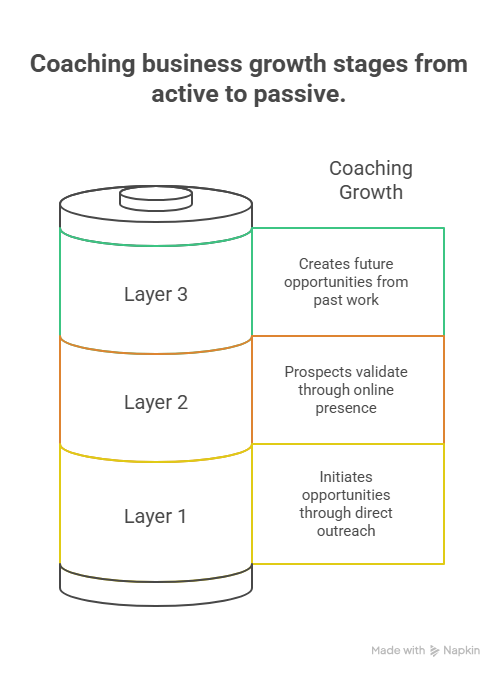
A reliable coaching business usually needs three layers.
Layer 1: An active acquisition channel
This is where you initiate opportunities.
Examples include targeted networking, LinkedIn conversations, partnership outreach, workshops, speaking, association participation, podcast guesting, or direct introductions.
Active acquisition matters because a new coach has little accumulated audience or referral momentum.
A September 2026 Reddit discussion captured this problem well. A coach asked which apps produced freelance coaching work and worried about paying for “leads” that might never become clients. One detailed response argued that passive posting often becomes a trap and recommended much more direct market activity, community involvement, networking, conversations, and clear value positioning.
That logic reinforces the lessons from first-client acquisition, why certified coaches struggle, life coaching income requirements, and employment versus private practice. A private practice includes business development as part of the job.
Layer 2: A credibility channel
This is where prospects validate you after hearing your name.
Your website.
LinkedIn profile.
Instagram page.
Podcast appearances.
Articles.
Case studies.
Client recommendations.
Credentialed directories.
A prospect may hear about you from an HR consultant and then spend 20 minutes reading your LinkedIn posts.
A former client may refer you and the prospect checks your website.
A workshop attendee may follow your Instagram for three months before becoming ready.
This is where coaching certification, professional conduct, CLEAR methodology, and SMART coaching structure can strengthen credibility when communicated in language clients actually understand.
Layer 3: A compounding channel
This creates future opportunities from work already completed.
Referrals.
SEO.
Email lists.
Partnerships.
Repeat clients.
Testimonials.
Organizational relationships.
A mature practice increasingly benefits from these assets because they reduce dependence on continuous prospecting.
The mistake is expecting a compounding channel to behave like an active channel immediately.
SEO takes time.
Referrals require successful clients.
Partnerships require trust.
Directories require discovery volume.
An email list requires subscribers.
That is why coaches can spend months polishing a website and wonder why nobody appears. A Reddit poster in August 2026 described four years of coaching, multiple website redesigns, ACC credentials, and recent Google Ads with little traction. Responses focused quickly on positioning and identifying who previous clients actually were.
A beautiful website amplifies a clear offer.
A beautiful website also amplifies confusion.
Before investing more into marketing, define:
Who pays you?
What problem becomes painful enough that they seek help?
What have they already tried?
What outcome do they want?
Why is coaching a believable mechanism?
Why should they trust you?
Where can they already be reached?
Those questions should shape life-purpose coaching, self-confidence coaching, leadership coaching, or any other niche before content production begins.
5. A 90-Day Client Acquisition Plan for New Life Coaches
The first month should prioritize conversations over content volume.
Days 1–30: Build the market map
Choose one primary client problem.
Define five groups of people who encounter that problem.
Identify ten potential referral partners.
Identify five communities.
Identify three events, associations, or professional groups.
Identify 30 people already inside the target market.
Interview prospects about what they have tried, what frustrates them, what outcome they would pay to reach, and what would make them skeptical of a coach.
Use insights from first-client timelines, coaching career ROI, full-time coaching economics, and positioning mistakes to keep the experiment commercially grounded.
Days 31–60: Run three channels simultaneously
Choose one relationship channel.
Example: partnership outreach.
Choose one authority channel.
Example: LinkedIn.
Choose one live trust channel.
Example: monthly webinar.
A coach serving career-transition clients might:
Connect with five recruiters weekly.
Publish two LinkedIn posts addressing concrete career-transition pain.
Comment meaningfully on posts from HR leaders and recruiters.
Host one live session on “How to decide whether your career problem requires a new role or a new strategy.”
Follow up with every attendee.
Ask relevant clients for introductions.
Document every lead source.
That approach can incorporate career burnout coaching, life visioning, SMART goals, and Immunity to Change without turning the content into abstract coaching theory.
Days 61–90: Calculate channel economics
Track:
Conversations generated
Qualified leads
Discovery calls
Offers made
Clients won
Revenue
Hours invested
Referrals produced
Suppose LinkedIn consumes 20 hours and produces three calls with one client.
Partnership outreach consumes eight hours and produces five calls with three clients.
Instagram consumes 25 hours and produces 40,000 views but zero calls.
Your next quarter's allocation becomes easier.
Use this formula:
Channel revenue per hour = revenue attributable to channel ÷ hours invested
Then calculate:
Lead-to-call conversion = discovery calls ÷ qualified leads
Call-to-client conversion = clients ÷ sales calls
Referral rate = clients who generate at least one qualified introduction ÷ completed clients
A coach studying coaching income, client acquisition benchmarks, private-practice economics, and certification ROI can then make business decisions from evidence instead of algorithm anxiety.
The goal after 90 days is to identify one acquisition engine worth doubling down on, one credibility channel worth maintaining, and one compounding asset worth building.
For many coaches, that becomes:
Referrals + LinkedIn + partnerships
or
Workshops + Instagram + email
or
Networking + SEO + referrals
or
Speaking + LinkedIn + corporate partnerships
The combination depends on the buyer.
A 2026 Reddit discussion about client sources summed up the broader pattern well: successful practices often grow through several trust mechanisms feeding one another rather than one viral channel.
6. FAQs About Where Life Coaches Get Clients
-
Reddit anecdotes repeatedly identify referrals and professional networks as major sources for established coaches. In one May 2026 discussion, individual coaches estimated 80% and 96% of their own business came through referrals. Those percentages describe those practitioners rather than the entire profession.
Referrals become stronger when the coach provides a specific result, follows clear professional standards, uses strong coaching contracts, understands duty of care, and gives clients an easy way to explain the service.
-
LinkedIn can be particularly strong for career, executive, leadership, business, communication, and workplace-focused coaching because professional identity and network information are already built into the platform.
Its Services Marketplace lets users browse providers and request proposals, while its life-coaching category contains a very large number of providers. Differentiation therefore matters. Position around a specific problem such as leadership development, career burnout, public speaking, or conscious leadership.
-
Instagram can generate coaching clients when the target audience uses it heavily and the coach's offer benefits from personality, storytelling, education, and visible social proof.
Content reach by itself provides weak evidence of client acquisition. A September 2026 Reddit poster reported producing YouTube and Instagram content without consistent sales, while paid ads produced qualified calls and exposed a sales-conversion problem instead.
Track discovery calls and revenue while using Instagram to communicate expertise around self-confidence, life purpose, money mindset, or another sharply defined niche.
-
Directories can provide additional discovery, especially when the platform attracts qualified buyers and your niche can be filtered clearly. Results vary significantly.
ICF's Credentialed Coach Finder allows prospective clients to filter credentialed coaches by multiple criteria and request proposals after narrowing results. Reddit reports on commercial directories remain mixed, with some coaches reporting very little acquisition and others receiving occasional opportunities.
Evaluate directories alongside certification value, client acquisition, positioning, and coaching income.
-
Start with warm access.
Speak with people in your existing professional network.
Enter communities where the target audience already gathers.
Offer workshops or useful talks.
Build relationships with potential referral partners.
Conduct direct conversations with suitable prospects.
Ask early clients for introductions after producing genuine value.
A January 2026 Reddit thread included coaches whose first clients came through referrals after participating in events, associations, adjacent organizations, networking, and blogging. Combine that approach with a focused first-10-clients strategy, realistic acquisition timelines, SMART coaching, and clear contracting.
-
The best partner serves the same client before, after, or alongside the coaching problem while offering a complementary service.
Examples include therapists, HR consultants, recruiters, training firms, financial professionals, wellness providers, community organizations, business consultants, schools, and professional associations.
Partnerships become stronger when you can articulate your coaching boundaries, professional conduct, client agreement, and concrete area of expertise such as leadership coaching.
