
Conscious Leadership: How This Trend Is Redefining Coaching Excellence
Conscious leadership is reshaping executive development by placing self-awareness, emotional regulation, values, accountability, and human impact at the center of performance. Leaders learn to notice the assumptions driving their decisions, understand how their behavior affects others, and respond deliberately under pressure. Coaches who combine emotional intelligence coaching, emotional agility, behavior-change science, and strengths-based development can turn this philosophy into observable leadership behaviors, stronger workplace relationships, and more credible business outcomes.
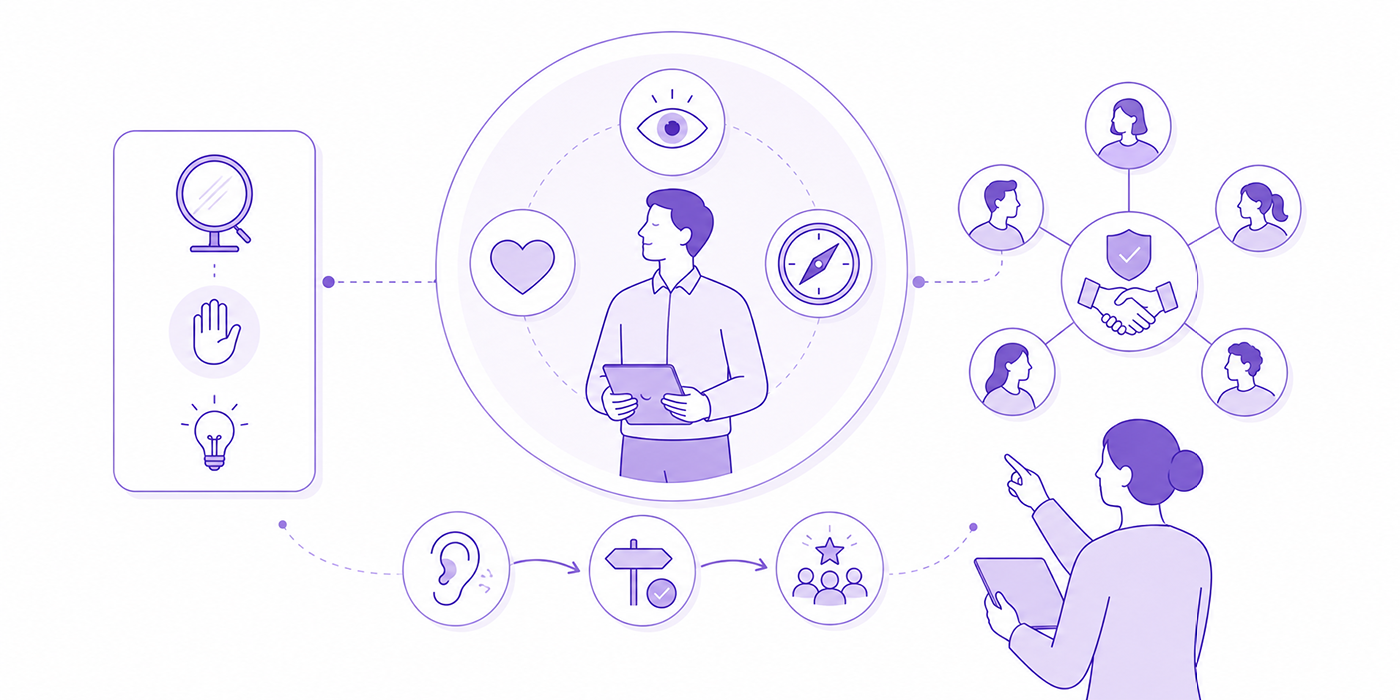
1. Why Conscious Leadership Is Redefining Coaching Excellence
Executives operate in environments shaped by technological disruption, workforce anxiety, cultural complexity, public scrutiny, and constant strategic change. The World Economic Forum’s Future of Jobs Report 2025 identifies leadership and social influence, resilience, flexibility, and agility among the most important workforce skills. The report reflects input from more than 1,000 employers representing over 14 million workers. These conditions reward leaders who can remain aware, adaptive, and relationally intelligent while making difficult decisions.
Conscious leadership gives coaches a framework for developing those capabilities through resilience coaching, transformational coaching, positive psychology coaching, and accountability practices. It asks leaders to examine the internal state from which they communicate, delegate, prioritize, and respond to pressure.
A leader may speak about empowerment while approving every meaningful decision. Another may promote psychological safety while becoming visibly impatient when employees disagree. A founder may value innovation while punishing unsuccessful experiments. These gaps between declared values and repeated behavior damage trust because employees learn from the consequences they experience.
Conscious leadership coaching exposes those gaps through constructive feedback, safe coaching conversations, client-feedback analysis, and behavioral accountability. The coach helps the leader identify the trigger, interpret the internal reaction, select a more useful response, and measure its impact in real workplace situations.
From automatic reaction to deliberate response
Many damaging leadership behaviors happen within seconds. A missed deadline triggers anger. A challenging question feels like disrespect. A cautious recommendation appears weak. A board member’s criticism activates defensiveness. The executive reacts before examining the meaning assigned to the event.
Conscious leadership creates space between stimulus and action. Leaders learn to identify bodily tension, emotional escalation, defensive assumptions, and recurring narratives before those patterns control the conversation. This practice can integrate emotional agility, anxiety and stress coaching, mindset shifts, and habit formation.
The aim is increased choice. An executive who notices defensiveness can ask for clarification. A leader who recognizes urgency can check whether immediate action is genuinely required. A manager who senses frustration can separate the employee’s behavior from assumptions about character or intent.
From image management to behavioral integrity
Leadership credibility weakens when executives invest more energy in appearing competent than in examining their impact. Image management produces filtered feedback, defensive explanations, and carefully controlled conversations. Behavioral integrity develops when leaders can acknowledge mistakes, revise decisions, and address contradictions without collapsing into shame.
Coaches build this capacity through feedback clients can hear, psychological safety, strengths-based reflection, and emotional-intelligence development. A strong coach challenges the contradiction while preserving the leader’s capacity to learn.
From individual performance to systemic impact
Every senior leader operates inside a system of incentives, power, culture, history, and stakeholder expectations. Conscious leadership expands attention beyond personal productivity. The executive examines how decisions affect employees, customers, communities, strategic partners, and long-term organizational capability.
Deloitte’s 2025 Global Human Capital Trends research drew on more than 13,000 business and human-resources leaders. Its central leadership tensions include stability and agility, control and empowerment, and business outcomes and human performance. Conscious leadership is commercially relevant because it helps executives hold these competing demands without relying on simplistic solutions.
This broader thinking can be developed through holistic coaching, life visioning, self-actualization coaching, and purpose coaching. The leader learns to connect immediate choices with their wider human and organizational consequences.
Why the coaching market is ready
The International Coaching Federation’s 2025 Global Coaching Study estimated annual industry revenue at $5.34 billion, representing 17% growth from 2023. It also reported 122,974 coach practitioners globally. Leadership and executive coaching remained dominant specializations, with 54% of coaches indicating work in these areas.
Market growth creates opportunity and competitive pressure. Coaches need sharper specialization, ethical competence, measurable frameworks, and credible positioning. Conscious leadership can support that differentiation when it is delivered through coaching case studies, professional certification portfolios, continuing professional development, and exceptional client experiences.
2. The Core Skillset of a Conscious Leader
Conscious leadership requires a connected group of capabilities. Self-awareness without accountability can become endless introspection. Empathy without boundaries can produce avoidance. Purpose without operational discipline can create inspirational language with weak execution. Coaches must develop the full system through behavior-change coaching, emotional-intelligence practice, accountability systems, and transformational strategies.
Self-awareness under pressure
A conscious leader can identify the assumptions, emotions, physical sensations, identity concerns, and previous experiences influencing a decision. This awareness must remain available during difficult conversations, missed targets, restructures, criticism, and uncertainty.
Coaches can ask:
What happened before your reaction?
What meaning did you assign to the event?
Which assumption felt unquestionably true?
What outcome were you trying to protect?
Which fear influenced your behavior?
How did others experience your response?
Which alternative response remained available?
These questions work well with emotional agility, resilience development, stress-coaching strategies, and mindset coaching.
Emotional regulation
Conscious leaders still experience anger, anxiety, disappointment, embarrassment, and fear. Emotional regulation helps them process these states without transferring the full emotional burden to employees.
A practical regulation sequence includes naming the emotion, rating its intensity, identifying the threatened value, checking the available evidence, selecting the immediate objective, and choosing a proportionate response. The leader can then communicate clearly while using constructive feedback, safe-conversation principles, emotional intelligence, and behavioral accountability.
Values-to-action alignment
Values become credible when they influence hiring, promotion, compensation, workload, communication, conflict, and strategic choices. A leadership team that values wellbeing while rewarding permanent availability sends a clear behavioral message. A company that promotes experimentation while penalizing every failed attempt creates risk avoidance.
Coaches should convert each value into observable decisions. Life visioning, life-purpose coaching, self-actualization coaching, and holistic coaching can help leaders clarify what they intend to protect.
For each value, define:
The behavior that demonstrates it
The decision that would test it
The sacrifice it may require
The metric that reflects it
The contradiction employees currently experience
The consequence for repeated misalignment
Curiosity and perspective-taking
Conscious leaders examine their first interpretation before treating it as fact. They ask what evidence supports the conclusion, which information remains missing, how another stakeholder understands the situation, and which organizational incentive may be influencing behavior.
Curiosity can be developed through strengths-based coaching, positive psychology, constructive-feedback practice, and safe coaching environments. It strengthens decisions because hidden information has a greater chance of reaching the leader.
Personal accountability
Conscious leadership asks the executive to identify their contribution before analyzing everyone else’s behavior. This can involve unclear expectations, delayed feedback, inconsistent consequences, emotional volatility, weak delegation, or failure to listen.
Accountability requires specific language:
“I changed the priority without explaining the trade-off.”
“I asked for feedback and defended myself immediately.”
“I delegated the task while retaining every decision.”
“I allowed this performance issue to continue.”
“My urgency caused the team to abandon the agreed process.”
Coaches can reinforce this skill through accountability coaching, client expectation management, habit tracking, and feedback-to-growth systems.
Systemic awareness
Leaders need to understand how incentives, structures, information flows, resource constraints, and power relationships shape behavior. A recurring team problem may continue because the organization rewards the behavior creating it.
Systemic coaching explores:
Which incentives reinforce the problem?
Who benefits from the current arrangement?
Where does information become distorted?
Which decision rights remain unclear?
What behavior receives public praise?
Which behavior receives private punishment?
How does the leader contribute to the system?
This lens can combine holistic coaching, economic-change coaching, networking and influence, and profitable scaling principles.
3. How Coaches Develop Conscious Leadership in Real Organizations
Conscious leadership creates value when awareness changes behavior in meetings, decisions, feedback conversations, strategic planning, and periods of pressure. A coach needs a repeatable process that connects internal reflection with workplace evidence.
Step 1: Contract around a business-critical outcome
The engagement should begin with a result that matters to the leader and the organization. “Become more conscious” gives the coach little measurement value. Stronger objectives include reducing leadership-team dependency, improving decision quality, increasing honest upward feedback, strengthening accountability, or maintaining behavioral stability during transformation.
The objective can be clarified through managing client expectations, life visioning, accountability coaching, and coaching case-study design.
Examples of measurable goals include:
Increase the number of decisions owned by direct reports.
Reduce defensive responses during stakeholder feedback.
Improve employee participation in leadership meetings.
Address performance concerns within an agreed timeframe.
Protect strategic work from reactive calendar demands.
Increase consistency between stated values and promotion decisions.
Strengthen stakeholder confidence during organizational change.
Step 2: Gather multi-source evidence
Self-perception provides one perspective. Conscious leadership requires evidence from the people experiencing the leader’s behavior.
Depending on the contract, evidence may come from stakeholder interviews, surveys, meeting observations, decision reviews, calendar analysis, communication samples, and structured self-reflection. The process requires clear consent and confidentiality boundaries informed by the ICF Code of Ethics, legal requirements for coaches, safe coaching environments, and credentialing best practices.
The coach should look for repeated patterns across situations. A leader may become defensive with peers while remaining receptive with the board. They may delegate operational tasks while retaining strategic decisions. They may communicate calmly in prepared meetings and become abrupt during unexpected problems.
Step 3: Identify the leadership trigger loop
A trigger loop connects an event with the leader’s interpretation, emotional response, behavior, and organizational consequence.
For example:
A director questions the executive’s recommendation.
The executive interprets the question as a challenge to authority.
Defensiveness and physical tension increase.
The executive interrupts and provides a longer justification.
Other directors stop challenging the recommendation.
The executive receives weaker decision data.
Silence reinforces the belief that the original recommendation was obvious.
Mapping this sequence applies behavior-change science, emotional agility, transformational coaching, and habit-formation principles.
Step 4: Select one replacement behavior
The replacement should be observable, repeatable, and small enough to use under pressure. Broad intentions such as “listen better” or “be more empathetic” collapse quickly because the executive lacks a specific action.
Useful replacement behaviors include:
Ask two questions before presenting a view.
State the decision criteria before discussing options.
Invite disagreement before revealing a preference.
Name the emotion privately before answering.
Convert criticism into an observable request.
Define ownership before ending a meeting.
Wait 30 minutes before sending a reactive message.
Ask the employee for a recommendation before offering a solution.
These behaviors can be reinforced through habit stacking, micro-coaching, coaching automation, and structured accountability.
Step 5: Rehearse high-pressure scenarios
Role-play helps leaders access the new behavior when emotional intensity rises. The coach can simulate board criticism, missed targets, employee resistance, peer conflict, redundancy decisions, strategic uncertainty, or public accountability.
Rehearsal should examine the leader’s opening sentence, physical signals, likely assumptions, questions, boundaries, and desired outcome. This process draws on handling difficult situations, constructive-feedback methods, resilience coaching, and emotional-intelligence development.
Step 6: Measure behavioral adoption and impact
A conscious-leadership engagement should track the behavior and its relevant organizational effect. Useful measures include:
Frequency of replacement-behavior use
Stakeholder ratings of listening or openness
Number of employee-generated solutions
Speed of difficult conversations
Decisions delegated successfully
Participation during leadership meetings
Strategic hours protected
Values-based decisions documented
Reduction in unnecessary escalation
Follow-through on feedback commitments
Gallup’s 2026 global workplace data found that 20% of employees worldwide were engaged in 2025, while 34% were thriving in their overall lives. These figures reflect broad workplace conditions with many contributing factors. They reinforce the need for leadership practices that create clarity, meaningful dialogue, contribution, and support.
Measurement can be strengthened through client-feedback systems, accountability processes, case-study documentation, and coaching automation.
4. Ethical Boundaries and Common Conscious-Leadership Coaching Mistakes
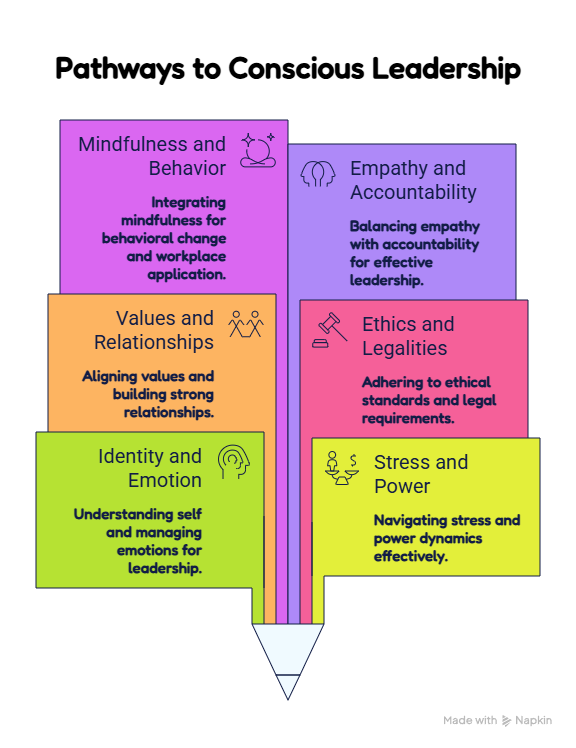
Conscious leadership touches identity, emotion, stress, power, values, and relationships. These areas require careful contracting and professional boundaries. Coaches should understand the ICF Code of Ethics, legal requirements for coaching, credentialing mistakes, and continuing certification responsibilities.
Turning consciousness into spiritual prescription
Some clients connect conscious leadership with spirituality. Others understand it through attention, emotional regulation, ethics, systems thinking, or reflective decision-making. Coaches should use language compatible with the client’s worldview and agreed objectives.
The coach’s personal philosophy should never become a required belief system. Useful practices can include reflection, values clarification, deliberate pauses, perspective-taking, and holistic coaching. Every practice should serve the client’s goals and remain consistent with safe coaching environments, client expectation management, and ethical coaching standards.
Using mindfulness as the entire intervention
A pause can create awareness. Workplace change requires behavioral application. A leader may complete daily meditation and continue interrupting employees, avoiding conflict, or reclaiming delegated decisions.
The coach must connect internal awareness with observable action through behavior-change science, habit formation, accountability coaching, and constructive feedback. Each insight needs a workplace experiment, tracking method, and review date.
Confusing empathy with the removal of standards
Conscious leaders can understand an employee’s circumstances while maintaining clear expectations. Empathy helps the leader select a proportionate and humane response. Accountability protects the employee, team, and organization from prolonged ambiguity.
Coaches can help leaders combine emotional intelligence, expectation management, handling difficult situations, and accountability principles. The resulting conversation should define the standard, available evidence, required support, deadline, and consequence.
Ignoring organizational power
A senior executive’s words carry consequences that exceed their intention. A casual preference can become an unofficial order. A disappointed facial expression can stop disagreement. A late-night email can establish a permanent availability norm.
Conscious-leadership coaching must examine power through safe-environment principles, emotional-intelligence coaching, influence mapping, and feedback systems. Intent and impact should be reviewed separately.
Moving into clinical treatment
Leadership coaching can address goals, habits, emotional awareness, communication, stress management, accountability, and workplace behavior. Clinical symptoms, trauma treatment, suicidality, addiction, severe depression, and other mental-health needs require appropriately qualified professionals.
Coaches need referral procedures informed by supporting clients during emotional crises, understanding anxiety and stress, safe coaching practice, and legal coaching requirements. Referral readiness demonstrates sound judgment and protects every party involved.
Sharing confidential information with sponsors
Corporate coaching commonly involves the executive, organizational sponsor, and coach. The agreement should identify coaching goals, reporting expectations, confidentiality boundaries, data-handling procedures, and conditions for disclosure.
The sponsor may receive attendance, agreed objectives, broad progress, and completion information. Session details require explicit agreement. Coaches should strengthen this process through ethical exam preparation, certification portfolio development, CPD accreditation, and credentialing best practices.
5. How to Build a Premium Conscious-Leadership Coaching Offer
A commercially strong offer connects conscious leadership with a defined executive problem. Broad promises about awareness, authenticity, or purpose can feel abstract to corporate buyers. Specific positioning explains who the program serves, which costly pattern it addresses, how the process works, and which indicators will demonstrate progress.
Choose a defined leadership situation
Potential specializations include:
Conscious leadership for newly appointed executives
Founder coaching during rapid organizational growth
Values-alignment coaching during transformation
Emotionally intelligent leadership for technical executives
Conscious decision-making for healthcare leaders
Leadership presence for high-potential directors
Burnout prevention for senior executives
Conscious culture development for leadership teams
Specific positioning strengthens high-ticket coaching offers, professional networking, coaching case studies, and joint-venture opportunities.
Package a measurable engagement
A conscious-leadership program may include:
Executive and sponsor contracting
Conscious-leadership baseline assessment
Stakeholder interviews
Values-to-behavior analysis
Trigger-loop identification
Biweekly coaching sessions
High-pressure scenario rehearsal
Between-session behavioral experiments
Midpoint stakeholder feedback
Final progress assessment
A 90-day maintenance plan
Package pricing can reflect assessment, preparation, interviews, coaching delivery, progress reviews, tools, and administrative work. Coaches can strengthen the business model through payment systems, financial forecasting, tax planning, and profitable practice scaling.
Demonstrate proof ethically
Case studies should describe the initial leadership pattern, coaching process, implementation barrier, behavioral change, and measurable outcome. Useful evidence can include improved stakeholder ratings, increased delegation, more meeting participation, faster conflict resolution, or greater alignment between decisions and values.
Client confidentiality and informed consent remain essential. Coaches can develop stronger evidence through credible case-study writing, successful transformation stories, client-feedback systems, and exceptional client experiences.
Build authority through practical intellectual property
A premium coach can develop a conscious-leadership assessment, trigger-loop worksheet, values-alignment scorecard, decision-awareness protocol, stakeholder-impact map, or behavioral integrity dashboard.
These resources should help the client identify patterns and act. They can be delivered through must-have coaching tools, coaching automation, technology-enabled coaching, and micro-coaching support.
Invest in credentials and continuing development
Conscious-leadership coaches need strong foundations in coaching competence, ethics, contracting, feedback, behavior change, power dynamics, and referral judgment. ICF’s discussion of its 2025 study reports that 73% of respondents said clients expect coaches to hold a credential or certification, while 43% pursued continuing coaching education to grow their businesses.
Professional development can include CPD accreditation, maintaining coaching certification, comparing coaching accreditations, and mastering certification interviews.
Create referral-led growth
Ideal referral partners may include HR executives, organizational-development consultants, leadership-training providers, therapists, recruitment firms, board advisors, business attorneys, and existing executive clients.
A referral partner needs a clear explanation of the clients you serve, the problems you address, the structure of your engagement, and the situations requiring another professional. This approach benefits from industry networking, strategic joint ventures, client-retention systems, and exceptional client experiences.
6. Frequently Asked Questions About Conscious Leadership
-
Conscious leadership is an approach in which leaders develop awareness of their thoughts, emotions, assumptions, values, behavior, power, and wider organizational impact. They use that awareness to make deliberate decisions and take responsibility for the consequences.
Coaching may combine emotional intelligence, emotional agility, behavior-change science, and accountability coaching.
-
Conscious leadership can improve the leadership behaviors that influence decision quality, delegation, conflict resolution, employee participation, accountability, trust, and strategic consistency. The coach should identify a specific behavior and connect it with relevant organizational indicators.
Useful methods include constructive feedback, strengths-based coaching, client-feedback systems, and transformational coaching.
-
Mindfulness can support present-moment awareness within conscious leadership. The wider approach also covers values alignment, emotional regulation, accountability, power, stakeholder impact, ethical decision-making, behavior change, and organizational systems.
A robust program may integrate habit formation, positive psychology coaching, holistic coaching, and life visioning.
-
The approach can support founders, senior executives, first-time leaders, succession candidates, technical leaders, and leadership teams. It becomes especially valuable during rapid growth, promotion, restructuring, burnout, cultural change, stakeholder conflict, or declining trust.
Relevant methods include resilience coaching, career-burnout coaching, mindset coaching, and self-actualization coaching.
-
Measurement should focus on observable behavior and relevant organizational indicators. Examples include stakeholder feedback, meeting participation, decisions delegated, difficult conversations completed, strategic time protected, feedback acted upon, emotional reactions managed, and values-based decisions documented.
Coaches can use accountability systems, behavior-change tracking, client-feedback analysis, and coaching automation.
-
A defined behavioral goal may show progress within several sessions. Deeper patterns involving power, identity, emotional regulation, or organizational culture usually require repeated practice across several months.
An effective engagement includes a baseline, focused goal, workplace experiments, micro-coaching support, habit reinforcement, accountability reviews, and a maintenance strategy.
