
Can You Become a Health Coach Without a Nutrition Degree? Reddit Experiences, Scope-of-Practice Boundaries & Safe Positioning
A nutrition degree is not required to build a legitimate health coaching career, including the NBC-HWC pathway. The bigger issue is understanding exactly what you are qualified to do once clients start asking about meal plans, supplements, lab results, medical conditions, or therapeutic diets. Anyone considering whether health coaching is worth it in 2026, health coaching certification versus NBHWC, health coach jobs after certification, or building a sustainable coaching income needs to understand that distinction before marketing nutrition-related services.
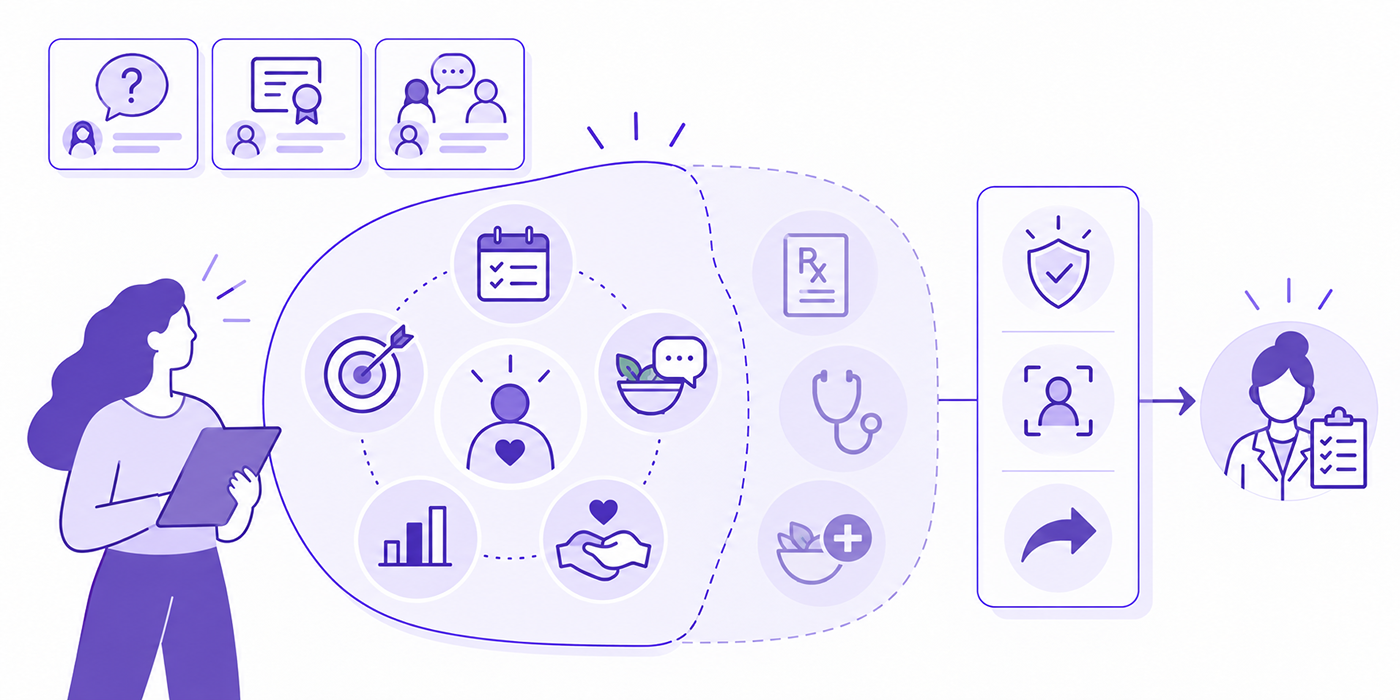
1. Can You Become a Health Coach Without a Nutrition Degree in 2026?
Yes. A nutrition degree is not an NBHWC requirement for becoming a National Board Certified Health & Wellness Coach.
As of 2026, NBHWC exam eligibility requires completion of an NBHWC-approved training program, 50 qualifying coaching sessions, and either an associate degree or higher in any field or 4,000 hours of work experience. Someone with a degree in business, psychology, education, communications, engineering, or another unrelated discipline can therefore pursue the NBC-HWC credential if the other requirements are satisfied.
That makes the career accessible to people coming from backgrounds far outside dietetics. It also explains why discussions about health coaching career viability, ICF versus NBHWC pathways, health coach employment requirements, and why certified coaches struggle to find clients need to separate education eligibility from professional scope.
A degree tells you what someone studied. Scope determines what professional services they can safely and legally provide.
That difference becomes crucial around nutrition.
NBHWC's current scope states that health and wellness coaches working solely under their coaching credential do not diagnose conditions, interpret medical data, prescribe or deprescribe, recommend supplements, provide nutrition consultation, create meal plans, prescribe exercise, or provide psychological treatment. Coaches can provide evidence-based information from recognized authorities when appropriate and may help clients implement treatment plans created by qualified healthcare professionals.
That still leaves a substantial amount of meaningful work.
A coach can help someone turn “I want to eat more vegetables” into an achievable routine. A coach can explore why meal preparation collapses every Wednesday. A coach can help a client identify environmental barriers, clarify personal goals, build accountability, prepare questions for a dietitian, or follow through on recommendations already received from a clinician.
Those are exactly the areas where health behavior change, SMART goal setting, the T-GROW coaching model, and the OSCAR coaching framework become commercially useful.
Reddit discussions reflect the same confusion. In a 2026 r/HealthCoaching thread, someone with a PhD in psychology considered health coaching because of a growing interest in food but specifically worried about lacking formal nutrition training. A 2025 thread featured an aspiring coach frustrated by learning that health coaching did not automatically authorize individualized food plans. Another discussion distinguished coaching skills from the type of directive nutrition expertise some aspiring professionals actually wanted. These are anecdotal experiences rather than regulatory authority, but they expose a recurring career decision: some people want to coach behavior while others actually want to practice nutrition.
If your ideal working day consists of asking powerful questions, helping people overcome resistance, improving adherence, tracking goals, and making health recommendations easier to implement, health coaching can fit. If you primarily want to design individualized diets, prescribe therapeutic nutrition strategies, interpret laboratory findings, and treat nutrition-related disease, the health coaching certification pathway addresses a different professional function. Understanding that early can save years of frustration, misplaced marketing, and problems with coaching duty of care or professional coaching boundaries.
| # | Client Request | Coach-Only Position | Safer Coaching Response | Referral Trigger |
|---|---|---|---|---|
| 1 | “Make me a weight-loss meal plan.” | Outside NBHWC coaching scope | Explore goals, barriers and implementation habits | Individualized meal prescription |
| 2 | “Help me eat vegetables more consistently.” | Coachable | Explore preferences, routines, access and realistic actions | None unless clinical concerns emerge |
| 3 | “What macros should I eat?” | Refer for individualized targets | Help client implement targets supplied by a qualified professional | Personalized nutrition prescription |
| 4 | “My dietitian gave me a plan but I cannot follow it.” | Strong coaching fit | Identify friction, routines, motivation and accountability | Return to dietitian if plan itself needs modification |
| 5 | “Should I take magnesium?” | Outside coach-only scope | Help client formulate questions for pharmacist or clinician | Supplement recommendation |
| 6 | “Help me stop ordering takeout every night.” | Coachable | Explore environment, fatigue, planning and alternatives | Clinical eating concerns |
| 7 | “Interpret my bloodwork.” | Refer | Encourage discussion with qualified clinician | Medical-data interpretation |
| 8 | “My doctor told me to walk after meals.” | Implementation coaching | Build cues, scheduling and adherence strategy | Pain, contraindications or exercise prescription needs |
| 9 | “Tell me whether I have insulin resistance.” | Refer | Support preparation for medical appointment | Diagnosis |
| 10 | “Help me remember to drink water.” | Coachable | Create environmental prompts and tracking | Medical fluid restrictions |
| 11 | “Give me a PCOS diet.” | Refer for individualized nutrition care | Coach implementation of clinician-approved recommendations | Condition-specific nutrition treatment |
| 12 | “Help me prepare healthy lunches for work.” | Behavior-focused coaching | Explore planning process and sustainable routines | Personalized therapeutic dietary requirements |
| 13 | “Which foods cure inflammation?” | Avoid treatment claims | Provide recognized general resources if appropriate | Disease-treatment advice |
| 14 | “I keep abandoning my health goals.” | Core coaching work | Use goal design, reflection and relapse planning | None unless underlying clinical needs appear |
| 15 | “Should I stop this medication?” | Immediate referral | Direct client to prescriber | Medication changes |
| 16 | “Help me track the habits my doctor recommended.” | Excellent coaching fit | Create tracking and accountability systems | Clinical change requiring provider review |
| 17 | “Give me supplements for menopause.” | Refer | Help client identify questions for qualified provider | Supplement prescribing/recommendation |
| 18 | “I want to cook at home three nights weekly.” | Coachable | Design planning, shopping and follow-through routines | None unless therapeutic diet needs arise |
| 19 | “Calculate a therapeutic diet for kidney disease.” | Refer | Support adherence to qualified clinical guidance | Medical nutrition therapy |
| 20 | “I understand what to do but cannot stay consistent.” | Core coaching territory | Identify triggers, competing priorities and recovery plans | Refer if mental-health or clinical issues dominate |
| 21 | “Tell me which diet will fix my gut.” | Refer | Explore goals and support professional follow-up | Condition-specific dietary treatment |
| 22 | “Help me organize grocery shopping.” | Coachable | Work on planning systems and decision friction | Specific therapeutic food prescription |
| 23 | “Do these symptoms mean I have a deficiency?” | Refer | Encourage appropriate clinical assessment | Diagnosis or laboratory interpretation |
| 24 | “Help me follow my RD’s protein target.” | Implementation support | Explore barriers and routines around the existing target | Changing the prescribed target |
| 25 | “Give me an eating-disorder recovery plan.” | Specialist referral | Coordinate only within an appropriate care team and scope | Eating-disorder treatment |
| 26 | “I want healthier habits while traveling.” | Coachable | Create flexible routines and minimum viable habits | Clinical dietary restrictions needing expert guidance |
| 27 | “Which supplement brand should I buy?” | Outside coach-only scope | Refer to qualified professional | Specific supplement recommendation |
| 28 | “My physician gave me lifestyle goals.” | Strong coaching fit | Translate goals into client-led routines and accountability | Any requested modification to clinical plan |
| 29 | “Build me an exercise prescription.” | Outside NBHWC coach-only scope | Coach adherence to an appropriate professional's plan | Exercise prescription or contraindications |
| 30 | “Help me make my health routine sustainable.” | Core health coaching | Work on goals, habits, barriers, confidence and relapse planning | Refer components requiring licensed clinical expertise |
2. Nutrition Education, Nutrition Coaching and Dietetics Are Different Jobs
The safest career decision begins by distinguishing three activities that clients often lump together.
Health coaching primarily facilitates behavior change. The coach helps clients clarify goals, identify motivations, generate their own options, troubleshoot barriers, strengthen self-efficacy and implement existing recommendations. That is why strong practitioners invest heavily in behavior-change coaching, the CLEAR coaching model, Positive Intelligence, and Immunity to Change.
General nutrition education can involve discussing publicly available information from recognized authorities within applicable professional and legal boundaries. NBHWC explicitly allows coaches, when appropriate, to offer evidence-based resources or information from nationally recognized authorities. Its January 2026 statement on the 2025–2030 Dietary Guidelines reiterates that coaches can focus nutrition conversations on values, preferences, goals, habit development and informed decision-making while avoiding individualized dietary protocols or meal plans.
That creates a useful practical distinction.
“Here is a recognized public-health resource about dietary patterns” differs substantially from “Based on your symptoms, you need 1,650 calories, 130 grams of protein and these five supplements.”
“Your dietitian recommended increasing fiber. What makes following that recommendation difficult?” is classic coaching.
“Your cholesterol result means you need to remove these foods” crosses into interpretation and individualized clinical direction.
Coaches developing self-care coaching, healthy habit interventions, life visioning, or SMART goal programs therefore have plenty of room to create value without pretending to be a dietitian.
Dietetics and regulated nutrition practice can carry different legal rights and educational requirements. In the United States, nutrition and dietetics regulation differs by state. The Academy of Nutrition and Dietetics notes that many states regulating dietetics or nutrition use practice-exclusivity provisions, while others use title protection or other models. That means the exact services an unlicensed person may provide can depend heavily on where they practice and where the client is located.
For new U.S. candidates entering the Registered Dietitian Nutritionist pathway, the Commission on Dietetic Registration has required at least a graduate degree for first-time exam eligibility since January 1, 2024, alongside the other education and supervised-practice requirements.
That is a radically different professional pathway from completing an approved health coaching program, building coaching competencies, understanding professional conduct, and developing effective client contracting.
The career question therefore becomes clearer:
If you want to change behavior, coaching may fit.
If you want to prescribe individualized nutrition interventions, investigate the credential and licensure pathway that authorizes that work where you intend to practice.
If you want both, consider obtaining distinct qualifications and documenting when you are functioning in each professional role. NBHWC specifically says coaches holding additional recognized credentials may work within those additional scopes, but dual roles should be clearly explained and documented.
That principle protects clients and also strengthens business positioning. Understanding duty of care, coaching ethics, clear professional agreements, and cultural competence lets a coach sell expertise without making promises their credential does not support.
3. What Reddit Experiences Reveal About Scope Confusion and Career Expectations
Reddit is especially useful here because aspiring coaches often reveal the job they imagine before learning what professional health coaching actually involves.
One 2025 r/HealthCoaching poster wanted “real solutions and real programs” around nutrition and exercise and felt many training programs focused heavily on people skills. Responses pointed out that facilitation, motivation, behavior change and client autonomy are central to coaching, while directive nutrition planning belongs to a different professional role.
That tension matters for anyone considering health coaching as a career, comparing NBHWC pathways, evaluating coaching employment, or calculating health coaching income. You should enjoy the work that actually fills a coaching session.
Another 2025 discussion came from someone wanting to become a “diet coach” who imagined helping clients implement recommendations from physicians, shop for food, understand labels and make practical changes. That question exposes a highly valuable middle ground: implementation support. A qualified clinician can establish the clinical target while a coach helps the client make the target workable inside ordinary life.
That implementation role is substantial. A person may understand exactly what their healthcare team wants and still struggle because of shift work, family demands, low confidence, poor planning, financial constraints, cultural food patterns, repeated setbacks or an all-or-nothing mindset. Those obstacles are ideal territory for behavior-change coaching, ADKAR-based change, the Wheel of Life, and T-GROW coaching.
A 2026 Reddit post from someone with three decades of lived experience with type 1 diabetes raised another difficult question: can lived experience support coaching within a condition-specific niche? One response correctly focused attention on distinguishing medical treatment from helping people implement strategies alongside a doctor.
Lived experience can improve empathy, language, relatability and understanding of daily barriers. Professional authority remains a separate issue.
A coach who has personally managed diabetes for 30 years still should not assume the authority to alter insulin, interpret glucose abnormalities, prescribe therapeutic diets, or override a client's medical team based solely on that experience. The same logic applies to coaches with personal histories involving PCOS, menopause, weight loss, autoimmune disease, ADHD, gastrointestinal conditions or chronic pain.
Safe specialization can instead combine health behavior support, client-centered SMART goals, clear contracting, and strong professional duty of care.
Another March 2026 Reddit discussion asked for a coach who could review laboratory data, symptoms, supplements, prescriptions, diet and exercise simultaneously. Responses warned that this request combined functions belonging to multiple professional scopes.
That thread reveals an important marketing lesson. Clients frequently do not know your scope for you.
A prospect can sincerely ask for something you should decline.
A client can confidently say that another coach interprets laboratories.
A competitor can sell individualized supplement protocols.
An influencer can call something “health coaching.”
Your own practice still needs defensible boundaries grounded in your credentials, applicable local law, professional ethics, duty-of-care standards, clear coaching contracts, and appropriate cultural competence.
4. How to Position a Health Coaching Business Safely Without Sounding Weak
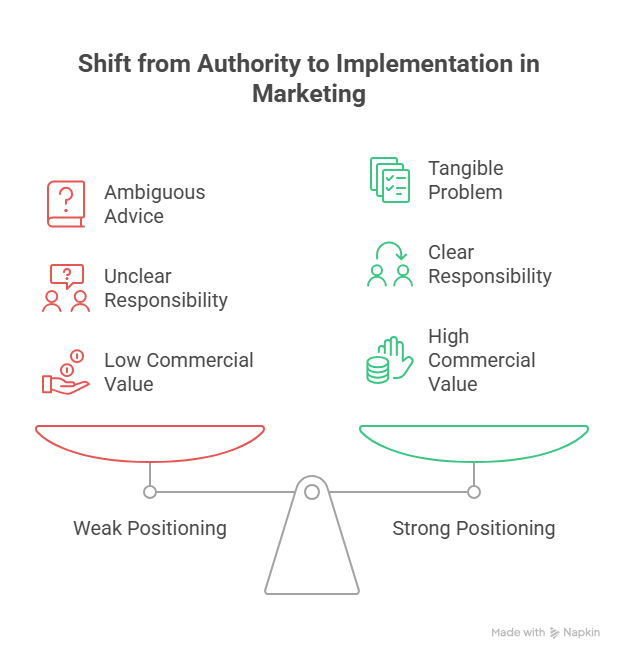
Scope-safe marketing can still be commercially compelling. The key is positioning around implementation problems rather than clinical authority.
Weak positioning says:
“I provide holistic nutrition advice.”
That phrase creates ambiguity around what “advice” means.
Stronger positioning says:
“I help busy professionals turn healthy intentions into routines they can actually maintain.”
The second statement gives the buyer a tangible problem and leaves room for health behavior change, self-care coaching, SMART goal design, and Immunity to Change work.
For condition-adjacent niches, positioning should make the division of responsibility equally clear.
Instead of “I treat prediabetes naturally,” use language such as:
“I help adults implementing clinician-recommended lifestyle changes build routines, accountability and consistency.”
Instead of “I reverse PCOS with nutrition,” position around:
“I help women with PCOS follow through on health goals developed with their healthcare team.”
Instead of “I create menopause nutrition protocols,” use:
“I coach midlife women around sustainable wellness routines, goal implementation and behavior change, with referrals for individualized clinical or nutrition care.”
This type of positioning works well alongside professional contracting, coaching ethics, duty of care, and cultural competence.
Build your website around what the client struggles to implement.
Useful positioning angles include:
following through on clinician-provided lifestyle recommendations
building consistent health routines around demanding work schedules
reducing all-or-nothing patterns after missed days
creating sustainable meal-planning habits without prescribing meal plans
improving accountability between medical or dietetic appointments
preparing questions for healthcare visits
tracking behavior goals chosen with the client
rebuilding health routines after burnout
supporting habit maintenance after structured programs end
Those are substantial problems with real commercial value. They also connect naturally with career burnout coaching, life coaching income models, health coach employment, and first-client acquisition.
Your intake process should reinforce the same clarity.
Ask clients whether they are currently receiving medical, nutrition, psychological or other professional care relevant to their goals. Document any existing recommendations they want coaching support implementing. Explain circumstances that require referral. Clarify messaging boundaries. Describe what coaching can and cannot provide.
That is where clear contracting, the coaching code of conduct, duty of care, and CLEAR coaching become risk-management tools rather than abstract theory.
5. The Strongest Career Paths for Coaches Who Love Nutrition but Do Not Have a Nutrition Degree
You have several viable paths, and each leads to a different professional identity.
Path A: Become a behavior-change-focused health coach
Choose this route if the part you enjoy is motivation, accountability, habits, goals and implementation.
A strong pathway can include an NBHWC-approved program, supervised skill development, qualifying coaching sessions, board certification if it suits your goals, and continuing education around the populations you serve. NBHWC currently requires 50 qualifying sessions for board exam eligibility and says at least 75% of qualifying session time must involve coaching facilitation rather than education.
That ratio tells you something important about the profession itself: coaching skill is the product.
Develop competency in T-GROW coaching, OSCAR coaching, SMART goals, and health behavior change, then build specialized knowledge without implying that education expands your legal scope automatically.
Path B: Coach inside a healthcare or wellness team
This can be particularly strong for someone who wants proximity to nutrition and medical care without personally delivering those services.
A dietitian might establish dietary recommendations. A physician manages diagnosis and medication. A physical therapist handles rehabilitation. The coach helps the client implement agreed actions, identify barriers, strengthen confidence and maintain consistency.
NBHWC explicitly recognizes supporting implementation of another qualified professional's treatment plan in appropriate settings.
This model pairs well with health coach jobs after certification, NBHWC career pathways, professional coaching conduct, and strong care-team boundaries.
Path C: Add a legitimate nutrition credential appropriate to your intended services
A short nutrition course can improve knowledge. The certificate itself does not automatically grant legal authority to provide every form of nutrition care.
Before buying a program, identify the exact services you eventually want to sell and check the laws governing those services in the relevant jurisdiction. The U.S. regulatory landscape varies by state, with different approaches to practice exclusivity and protected professional titles.
Evaluate education through the lens of career ROI, health coaching income, client demand, and employment requirements rather than collecting certificates without a defined professional outcome.
Path D: Pursue dietetics if individualized nutrition care is the work you genuinely want
Some aspiring health coaches discover that coaching feels frustrating because they want to assess, recommend and prescribe.
That realization is useful.
If your professional ambition centers on medical nutrition therapy, individualized nutrition assessment, therapeutic meal planning or clinical dietetics, investigate the formal dietetics route instead of trying to stretch a health coaching credential beyond its intended function.
The investment is larger, but the resulting role is different.
A person choosing between health coaching certification, health coaching employment, private coaching income, and specialized coaching niches should choose the professional function first and the credential second.
Build a referral network before you desperately need one
Every health coach working near nutrition should know at least one qualified dietitian or nutrition professional, primary-care provider, mental-health professional and appropriate exercise professional to whom clients can be referred when necessary.
That network improves safety and can strengthen business development.
Dietitians may encounter clients who know exactly what dietary changes are required but repeatedly fail to implement them. Physicians may have patients struggling with lifestyle adherence. Therapists may work with clients whose wellness goals sit outside psychotherapy. A strong health coach becomes useful because the coach owns the follow-through problem.
Referral relationships become much easier to build when your website demonstrates professional ethics, clear contracting, duty-of-care awareness, and evidence-based behavior-change coaching.
That positioning can also solve one of the hardest business problems described in why certified coaches struggle to find clients, how long first clients take, whether health coaching remains commercially viable, and how health coaches make a living: trustworthy referral distribution can be more valuable than building another social-media audience from zero.
6. FAQs About Becoming a Health Coach Without a Nutrition Degree
-
A nutrition degree is not required for NBC-HWC exam eligibility. NBHWC currently accepts an associate degree or higher in any subject or 4,000 hours of work experience, alongside completion of an approved training program and 50 qualifying coaching sessions.
Your education should still match the work you intend to perform. Someone pursuing health coaching certification, health coach employment, behavior-change coaching, and coaching ethics can build a credible career without becoming a dietitian.
-
Under the NBHWC scope, an NBC-HWC operating solely as a health and wellness coach does not create individualized meal plans or provide nutrition consultation. Coaches holding another active credential may provide services permitted within that separate credential, with appropriate role disclosure.
A coach can still help clients implement an existing plan using SMART goals, T-GROW, health behavior change, and clear coaching contracts.
-
Yes, within appropriate scope. NBHWC allows evidence-based information from recognized authorities when appropriate and specifically frames nutrition coaching around client values, preferences, goals, sustainable habits, self-directed exploration and informed decision-making.
That makes self-care coaching, behavior-change work, SMART goal setting, and the OSCAR model highly relevant without requiring individualized diet prescription.
-
Condition-specific audiences can be coached around behavior change and implementation when the service remains within your professional scope. Treatment decisions, diagnosis, medical-data interpretation, medication changes and individualized clinical nutrition require appropriately qualified professionals.
A safer practice integrates duty of care, professional conduct, clear contracting, and cultural competence while developing strong referral relationships.
-
The answer depends on what the credential actually authorizes and the laws governing nutrition practice where services are provided. A course certificate can increase knowledge without necessarily granting a regulated scope of practice. U.S. states use different nutrition and dietetics regulatory frameworks.
Before paying for extra education, compare its role in health coach hiring, career ROI, health coaching income, and client acquisition.
-
NBHWC's current scope states that coaches operating solely within the health and wellness coaching role do not recommend supplements.
A useful coaching response is to explore why the client wants the supplement, encourage them to discuss safety and appropriateness with a qualified clinician or pharmacist, and help them implement whatever plan results. That fits naturally with duty of care, professional ethics, CLEAR coaching, and behavior-change support.
