
Best Life Coaching Niches in 2026: Reddit Client Problems, Competition & Which Niches Support Premium Pricing
Choosing a life coaching niche in 2026 comes down to buyer economics, urgency, trust, and the value of the problem being solved. Coaches researching whether life coaching can produce a real income quickly discover that skill alone rarely fills a calendar. Your niche influences how quickly first clients arrive, how easily prospects understand your offer, and whether certification converts into paying clients. This guide breaks down client problems, competition, positioning, and premium-pricing potential across the strongest niches.
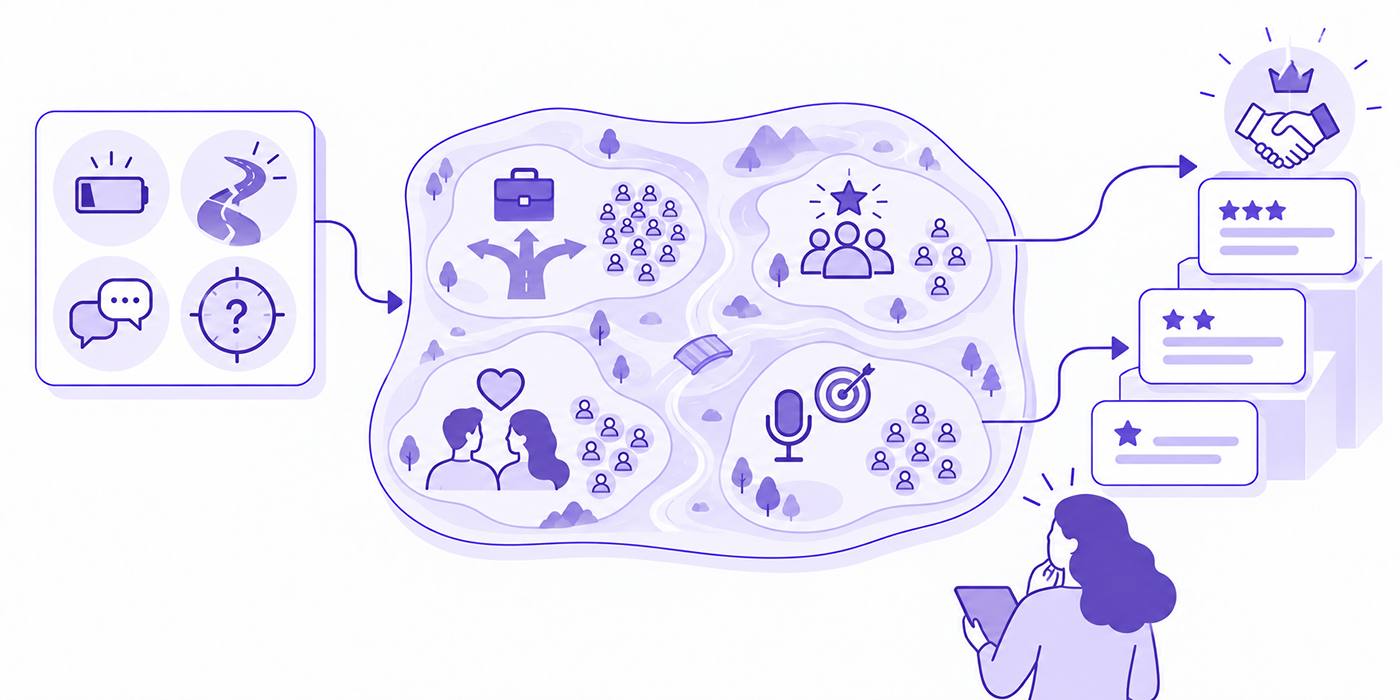
1. What Makes a Life Coaching Niche Worth Entering in 2026?
A commercially useful niche begins with a recognizable problem that somebody actively wants resolved. “Helping people become their best selves” gives the prospect very little to evaluate. Helping a burned-out manager decide whether to repair their current career or leave it gives the buyer a concrete reason to start a conversation. That difference explains why career burnout coaching, leadership coaching, couples coaching, and public speaking coaching can be easier to position than a broad life-improvement offer.
Five questions reveal whether a niche has commercial strength:
1. How painful is the unresolved problem? A person repeatedly missing promotions, fighting with a partner, procrastinating on revenue-producing work, or waking up depleted before Monday has a stronger buying trigger than someone who merely feels that life “could be better.” Coaches can then structure progress using tools such as the CLEAR coaching model, T-GROW coaching model, or SMART goals.
2. What happens when the client delays solving it? Premium demand grows when delay carries a visible cost: another failed interview cycle, continued executive underperformance, recurring relationship conflict, employee turnover, stalled business execution, or months of career paralysis. A well-positioned life-purpose coaching offer becomes considerably stronger when attached to an actual decision such as career direction, retirement, relocation, or entrepreneurship.
3. Can the client describe the desired outcome? “More confidence” is vague. Speaking confidently in executive meetings, dating without repeatedly choosing the same unhealthy relationship pattern, or completing high-value work without procrastinating gives both coach and client something observable. Coaches can combine self-confidence coaching with structured tools such as the Wheel of Life or OSCAR coaching model.
4. Does the target buyer have both motivation and purchasing capacity? This matters enormously. A 2026 Reddit discussion from a coach working largely with neurodivergent women and mothers described booking difficulty until pricing was reduced, highlighting how a meaningful niche can still face affordability friction. Compare that with senior-professional, corporate, founder, and leadership markets, where the economic consequences attached to performance can make coaching expenditure easier to justify.
5. Can you establish credible relevance? Experience, specialization, demonstrated results, referrals, professional education, a clearly defined method, and responsible coaching contracting all reduce perceived buying risk. Coaches also need a clear coaching code of conduct and appropriate duty of care, especially in niches touching stress, relationships, neurodivergence, or major life transitions.
| Niche | Problem Clients Pay to Solve | Competition | Premium Pricing Support | Stronger Positioning Angle | Useful ANHCO Resource |
|---|---|---|---|---|---|
| Executive leadership | Weak influence, delegation, decision-making or team performance | High | Very strong | Tie coaching to leadership performance and organizational consequences | Leadership coaching |
| Career transition | Feeling trapped, choosing a new direction, planning a career move | High | Strong | Specialize by career level, industry or transition type | Career burnout coaching |
| Career burnout | Exhaustion, boundaries, role mismatch and uncertainty about leaving | Medium-high | Strong | Focus on decisions, workload redesign and sustainable career action | Burnout coaching |
| Founder performance | Prioritization, accountability, decision overload and execution | High | Very strong | Connect coaching to expensive decisions and business execution | SMART goals |
| ADHD professional coaching | Planning, follow-through, workload organization and inconsistent execution | Medium-high | Strong when specialized | Target workplace consequences instead of generic productivity | Behavior change |
| Productivity coaching | Procrastination, overload and incomplete goals | High | Medium | Attach productivity to a valuable role, project or outcome | T-GROW model |
| Accountability coaching | Knowing what to do while repeatedly failing to execute | Medium | Medium | Sell structured execution around a valuable objective | SMART goals model |
| New-manager coaching | Delegation, difficult conversations, authority and confidence | Medium | Strong | Target first-time managers in the first 6–18 months | Conscious leadership |
| Executive presence | Visibility, credibility, communication and senior-room confidence | Medium | Very strong | Tie presence to promotion, leadership and stakeholder influence | Public speaking coaching |
| Public speaking | Presentation anxiety, weak delivery and poor communication confidence | Medium-high | Strong | Specialize in executives, founders, sales teams or speakers | Public speaking opportunity |
| Relationship coaching | Repeated conflict, dating patterns, communication and boundaries | High | Strong when specific | Define the relationship stage and recurring problem | Couples coaching |
| Couples coaching | Communication breakdown, shared goals and recurring conflict | High | Strong | Create a clearly bounded communication or decision-focused program | Couples coaching niche |
| Dating coaching | Poor partner selection, weak boundaries and inconsistent dating decisions | High | Medium-high | Specialize by stage such as post-divorce or serious-partner search | Self-confidence coaching |
| Self-confidence | Avoidance, under-assertion, hesitation and self-doubt | Very high | Medium | Attach confidence to career, relationships or communication | Confidence coaching |
| Money mindset | Undercharging, avoidance, spending patterns and financial decision anxiety | High | Medium-high | Serve entrepreneurs or earners with observable financial decisions | Money mindset coaching |
| Life purpose | Lack of direction and difficulty choosing meaningful next steps | Very high | Medium | Connect purpose to an upcoming career or life decision | Life purpose coaching |
| Life visioning | Conflicting priorities and unclear medium-term direction | Medium | Medium | Package around a transition, planning cycle or major decision | Life visioning |
| Self-care coaching | Unsustainable routines, poor boundaries and chronic overcommitment | High | Medium | Target high-responsibility professionals or caregivers | Self-care coaching |
| Habit-change coaching | Repeated failure to maintain desired behaviors | High | Medium | Choose a specific behavior and measurable result | Health behavior change |
| Midlife reinvention | Identity changes, career dissatisfaction and uncertainty about the next chapter | Medium | Medium-high | Build around a concrete transition rather than age alone | Life visioning |
| Post-divorce transition | Identity, routines, decisions and rebuilding personal direction | Medium | Medium-high | Stay within future-focused coaching scope and clear boundaries | Change curve |
| Women returning to work | Confidence, positioning, skill translation and career re-entry | Medium | Medium-high | Target re-entry after caregiving or extended career breaks | Career coaching insights |
| Remote-work performance | Focus, isolation, routines, boundaries and communication | Medium | Medium | Target remote leaders, freelancers or distributed teams | Goal-setting framework |
| Work-life boundaries | Overwork, availability creep and inability to disengage | High | Medium-high | Focus on managers and professionals with expensive burnout risk | Career burnout coaching |
| Values and decision coaching | Indecision when multiple paths appear equally plausible | Low-medium | Medium | Attach work to a real pending decision | Wheel of Life |
| Conscious leadership | Reactive management, culture problems and weak self-awareness | Medium | Very strong | Target leaders with people and culture responsibility | Conscious leadership |
| Change-management coaching | Difficulty adopting a new role, system, structure or organizational reality | Medium | Strong | Specialize in professional or organizational transitions | ADKAR model |
| Immunity-to-change coaching | Repeated self-sabotage despite clear goals and strong intentions | Low-medium | Medium-high | Use a defined change problem with observable consequences | Immunity to Change |
| Cross-cultural transition | Communication, belonging, work adjustment and conflicting expectations | Low-medium | Medium-high | Target expatriates, global leaders or internationally mobile professionals | Cultural competence |
| Positive-intelligence coaching | Unhelpful thinking patterns, reactivity and performance friction | Medium | Medium-high | Connect mental fitness to a specific work or life outcome | Positive Intelligence |
2. The Best Life Coaching Niches in 2026 — and the Buyer Problems Behind Them
Several niches stand out when you assess urgency, purchasing power, measurable consequences, repeatability of the coaching process, and ease of explaining the offer.
Career transition and burnout coaching
Career problems create strong buying moments because clients frequently arrive at a decision point: stay, leave, retrain, negotiate, apply, step into leadership, or recover from an unsustainable workload. This gives career burnout coaching a sharper commercial foundation than generic motivation work. A coach can combine ADKAR change principles, the Kübler-Ross Change Curve, and life visioning to move clients from confusion toward practical decisions.
The strongest sub-niches include senior professionals changing industries, new managers struggling after promotion, parents re-entering employment, professionals recovering from burnout, and experienced workers planning a second career. These audiences also fit naturally with life coach employment versus private-practice thinking because coaches can serve them privately, through employers, or through corporate programs.
Leadership, executive presence, and new-manager coaching
Leadership coaching has unusually favorable pricing economics because the buyer can connect improvement with decisions, people, budgets, promotions, team performance, and organizational risk. A manager who avoids difficult conversations may create months of performance drag. An executive whose communication weakens stakeholder confidence faces a problem with significant professional consequences.
That creates space for specialized offers around leadership coaching skills, conscious leadership, public speaking coaching, and Positive Intelligence. A Reddit pricing discussion in March 2026 included the observation that the broader life-coaching market can be tougher than business, leadership, and executive markets. Treat that as practitioner perspective rather than a universal pricing rule, yet the underlying buyer economics are important.
ADHD, productivity, and execution coaching
The commercial opportunity becomes clearer when the coach sells consequences and outcomes rather than “productivity.” Clients may struggle with missed deadlines, task initiation, chaotic workloads, inconsistent business execution, unfinished projects, or difficulty operating without external structure.
A 2025 Reddit discussion from a productivity and accountability coach described clients whose central problem was follow-through despite already knowing what to do. This is exactly where health behavior change principles, SMART goal design, T-GROW coaching, and Immunity to Change give coaches a more structured value proposition.
Pricing strength rises when the target client has an expensive execution problem: founders, consultants, executives, sales professionals, freelancers, and high-responsibility employees.
Relationship and couples coaching
Relationships carry urgency because people experience the consequences repeatedly and emotionally. Strong positioning could center on communication after recurring arguments, boundaries in dating, rebuilding routines after divorce, decision-making before marriage, or couples struggling to align around work, money, parenting, or future plans.
One Reddit relationship coach described the tension between narrowing the entire business and creating niche offers for distinct groups such as mothers or single men. That thread captures a valuable positioning strategy: keep a coherent expertise area while creating more specific offers inside it. Coaches can combine couples coaching, Transactional Analysis, CLEAR coaching, and strong coaching contracts while maintaining clear professional scope.
Confidence, communication, and public speaking
“Confidence coaching” faces heavy competition because the term covers almost everything. The economics improve when confidence is attached to a costly setting: interviews, management, negotiation, presentations, dating, sales calls, or leadership visibility.
A coach specializing in self-confidence coaching can therefore develop separate offers for public speaking performance, leadership presence, difficult workplace conversations, or relationship boundaries. The client can then identify exactly where confidence problems are hurting them.
Money mindset and entrepreneurial decision coaching
Money-related coaching becomes stronger when it addresses behavior: chronic underpricing, fear of selling, avoidance of financial conversations, inconsistent business decisions, or beliefs that interfere with action. Money mindset coaching can pair naturally with SMART goals, Immunity to Change, and Positive Intelligence when the engagement stays within coaching scope rather than regulated financial advice.
3. What Reddit Reveals About Competition, Client Friction, and Why Coaches Stay Stuck
The most useful Reddit signal is the recurring gap between being qualified to coach and being easy to buy from.
A 2025 discussion about niching included coaches arguing that prospects understand specific outcomes more easily than the generic “life coach” label. One contributor framed niches around outcomes rather than demographics alone. That distinction matters. “I coach women in their forties” describes a population. “I help experienced professionals return to work after a long career break” describes the population, problem, moment, and outcome.
This is also why certified coaches can struggle to find clients even after developing strong coaching skills. A certificate may build professional credibility, while the market still needs a reason to care today. Coaches weighing whether life-coach certification is worth the investment should therefore evaluate commercial positioning alongside education, while aspiring professionals can study first-client acquisition timelines before expecting immediate traction.
Competition also changes meaning once a niche becomes specific. “Career coach” may be crowded. “Career coach for senior technical professionals moving into management” competes inside a much narrower comparison set. “Relationship coach” is crowded. “Dating coach for divorced professionals preparing for a serious relationship” speaks to a distinct moment. “Confidence coach” is broad. Public speaking coaching for newly promoted leaders has a clear use case.
Another Reddit theme is acquisition. A May 2026 thread asked where coaching clients actually come from; one experienced commenter reported that roughly 80% of their clients came through natural referrals, while webinars, trainings, and shared emails also generated business. That supports a practical lesson: niche quality should be tested by referability. Someone should be able to hear a friend's problem and immediately think of you.
Compare these two referral sentences:
“Talk to Alex; she’s a life coach.”
“Talk to Alex; she helps senior managers who are burning out decide whether to redesign the role or make a career move.”
The second sentence carries a trigger. The same principle strengthens career burnout coaching, couples coaching, life-purpose coaching, and leadership coaching.
Coaches also underestimate the operational burden of running a practice. Marketing, sales, scheduling, follow-up, administration, client retention, and offer development all sit outside the coaching hour. That reality should shape any assessment of full-time life-coaching income and the choice between employment and an independent coaching practice.
4. Which Niches Support Premium Pricing — and What Actually Justifies the Price
Premium pricing works when several conditions stack together:
high consequence of delay + strong purchasing capacity + specialized relevance + clear outcome + high trust.
That formula explains why executive, leadership, founder-performance, senior-career, and executive-communication coaching often possess strong premium potential. A client considering leadership coaching may control teams, budgets, client relationships, or high-value projects. Improvement can affect outcomes far beyond the coaching fee. The same economic logic can strengthen conscious leadership programs, public speaking coaching, and specialized career burnout coaching.
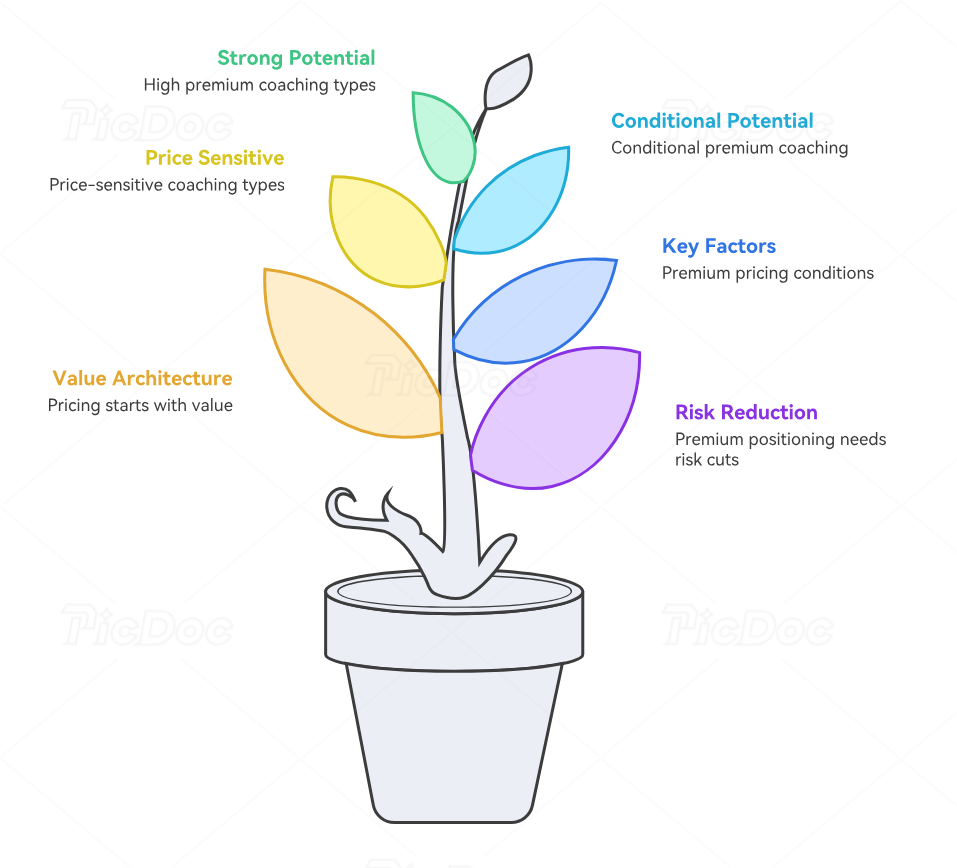
Strong premium potential: executive leadership, founder performance, executive presence, high-stakes communication, senior-career transition, new-manager acceleration, organizational change, and specialized professional performance.
Conditional premium potential: ADHD/execution coaching for professionals, relationship coaching, couples coaching, money mindset for entrepreneurs, dating coaching for financially established adults, midlife transition, confidence coaching tied to career outcomes, and cross-cultural leadership.
More price-sensitive unless tightly positioned: general accountability, generic life purpose, broad self-care, student coaching, basic habit coaching, and general motivation.
A 2026 Reddit discussion about coaching cost also highlighted a critical reality: consumers can perceive coaching as discretionary spending when the expected return remains unclear. This makes outcome clarity especially important for self-care coaching, life visioning, and life-purpose coaching.
Pricing therefore starts with value architecture rather than a random hourly number.
A stronger premium offer answers:
Who is this specifically for?
What costly situation are they currently facing?
What decisions or behaviors will the engagement address?
What observable progress should occur?
Why is your experience or method relevant?
How will accountability work between sessions?
What falls outside the coaching engagement?
What duration gives the process enough time to work?
The coach can then select appropriate frameworks such as OSCAR, CLEAR, T-GROW, Immunity to Change, or ADKAR based on the problem being addressed.
Premium positioning also depends on risk reduction. Detailed contracting in coaching, visible professional conduct standards, appropriate duty-of-care practices, testimonials where permitted, clear scope, and an understandable process give prospects more evidence for a purchasing decision.
5. How to Choose Your Niche Without Guessing: A 30-Day Validation System
Many new coaches spend months redesigning websites, debating logos, changing Instagram bios, and researching competitors while having almost no conversations with actual buyers. A better approach is to validate the niche before building heavily around it.
Step 1: Pick three candidate problems
Choose three problems where your experience, credibility, curiosity, and access to potential clients overlap.
For example:
burnout among mid-career professionals;
execution problems among ADHD entrepreneurs;
communication problems among newly promoted managers.
This is more useful than choosing “career,” “ADHD,” or “leadership” alone. Study career burnout coaching, leadership coaching, health behavior change, and Positive Intelligence to understand how broad themes become specific coaching problems.
Step 2: Conduct 10 problem interviews
Speak with people matching each candidate market. Ask what happened recently, what they have already tried, what the unresolved problem costs them, what would make them seek outside help, and how they would describe the desired result.
Avoid asking, “Would you buy coaching?” Hypothetical enthusiasm produces weak evidence.
Ask instead:
“When did this last cause a problem?”
“What have you already spent money or time trying to fix?”
“What happens if this is still happening six months from now?”
“What would meaningful improvement look like?”
These conversations also reveal the language that should eventually appear in your content, discovery calls, and first-client acquisition plan.
Step 3: Score the niche across seven commercial variables
Give each category a score from 1–5:
urgency;
financial or emotional consequence;
ability to pay;
ease of finding prospects;
your credibility;
measurability of progress;
referral clarity.
A niche scoring 30/35 deserves more attention than one scoring 17/35 simply because the latter “sounds exciting.” This also helps coaches thinking through whether certification will generate ROI, whether full-time coaching income is realistic, or whether a coaching job offers better stability.
Step 4: Build one narrow pilot offer
A pilot needs a clear client, problem, process, duration, and result.
Weak offer:
“Eight weeks of transformational life coaching.”
Stronger offer:
“Eight weeks for newly promoted managers who need a repeatable system for delegation, difficult conversations, weekly prioritization, and leadership confidence.”
That offer can draw from conscious leadership, SMART goals, CLEAR coaching, and the OSCAR coaching model while still giving prospects a concrete reason to care.
Step 5: Test willingness to act
Track stronger signals than likes:
qualified discovery calls;
referrals;
repeated pain language;
people asking about price;
prospects joining a waitlist;
pilot purchases;
completion rate;
client outcomes;
testimonials;
referrals after completion.
A 2026 Reddit post from an ACC-credentialed coach described four years of inconsistent traction despite repeated website changes and recent Google Ads. The discussion immediately returned to positioning and client fit. That is a useful reminder for coaches researching why certifications sometimes fail to create clients: traffic magnifies an offer; it cannot manufacture relevance.
Step 6: Establish boundaries before scaling
A valuable niche can still create professional risk if scope is vague. Burnout, trauma histories, relationship distress, eating disorders, addiction, serious mental-health symptoms, or financial issues may require professionals outside the coach's scope.
Build referral criteria into your coaching code of conduct, clarify responsibilities through coaching contracts, apply appropriate duty of care, and strengthen cultural competence. Professional boundaries protect clients and increase trust in the service.
After 30 days, keep the niche showing the strongest combination of real conversations, buyer urgency, purchasing capacity, coach credibility, and measurable progress. Then refine the offer before investing heavily in branding or acquisition.
6. FAQs About Life Coaching Niches in 2026
-
The strongest starting niche is one where you can already access people experiencing a specific, costly problem. For someone with management experience, leadership coaching, conscious leadership, or new-manager coaching may provide an immediate credibility advantage. Someone with deep career-transition experience may be better positioned around career burnout coaching and life visioning.
Start with the market where your relevance is easiest to prove and your prospects already recognize the problem.
-
Executive leadership, founder performance, executive communication, senior-career transition, new-manager development, and specialized professional-performance coaching generally have favorable premium economics because the client's problem can affect income, promotion, teams, customers, or business results.
Premium potential can also exist in couples coaching, money mindset coaching, specialized productivity coaching, and public speaking coaching when the buyer, outcome, and stakes are clearly defined.
-
Lead with the problem and buying situation, then use demographics to sharpen relevance.
“Women over 40” provides limited information about why someone needs coaching. “Women returning to senior-level work after a long caregiving break” reveals both the audience and the problem.
This structure also works for self-confidence coaching, life-purpose coaching, self-care coaching, and career burnout coaching.
-
Look for behavioral evidence. Interview potential clients, study the questions they repeatedly ask, examine what alternatives they already purchase, track discovery-call language, and test a narrow pilot.
Demand becomes much more credible when prospects already spend money, time, status, or emotional energy trying to solve the problem. Coaches can then create measurable pathways using SMART goals, T-GROW, the OSCAR model, or health behavior change.
-
Yes. Keep the business understandable.
One effective structure is a broad expertise category with multiple focused offers underneath it. A relationship coach could create separate programs for couples, post-divorce dating, and communication boundaries. A leadership coach could serve first-time managers, executives, and founders through distinct offers.
This approach aligns naturally with couples coaching, leadership coaching, public-speaking coaching, and conscious leadership.
-
Competition can confirm that buyers already understand the category. The important question is whether you can create a sharper reason to choose your offer.
A general self-confidence coaching offer faces broad competition. Confidence coaching for newly promoted technical managers preparing for executive presentations is far more specific. The same principle applies to money mindset coaching, life-purpose coaching, and career burnout coaching.
