
Best Health Coaching Niches in 2026: Reddit Demand Signals, Client Pain Points & Monetization Potential
Choosing a health coaching niche gets difficult when every audience seems promising and every creator claims their specialty is “booming.” The stronger approach starts with painful problems, visible demand, clear outcomes, and buyers who already spend money trying to improve them. Coaches exploring whether health coaching is still worth it in 2026, how to make a living as a health coach, where health coach jobs exist, and why certified coaches struggle to find clients need the same answer: solve a specific, expensive, persistent problem for a clearly identifiable person.
1. What the 2026 Demand Signals Actually Say About Health Coaching Niches
The broad health coaching market gives coaches plenty of room, yet the opportunity concentrates around problems where people struggle with implementation. Clients usually understand that sleep matters, movement matters, stress matters, and healthy food matters. The friction appears when they need those ideas translated into Tuesday morning, a demanding job, three children, medication side effects, inconsistent motivation, travel, burnout, or years of failed routines. That implementation gap explains why health behavior change, SMART goals, the T-GROW coaching model, and the OSCAR coaching model matter commercially: clients often pay for adherence, structure, accountability, and problem-solving.
Reddit provides useful qualitative signals because people describe frustrations in their own language. In January 2026, a discussion in r/HealthCoaching centered on whether the field was oversaturated, where coaches were actually making money, whether group coaching worked, and which niches offered opportunity. One response highlighted competition in corporate wellness and the difficulty of communicating coaching’s value proposition. Another 2026 thread featured a new coach testing low-cost sessions, community education, and group coaching as routes toward experience and client acquisition. These conversations point toward a recurring commercial problem: being certified creates capability; positioning and distribution create demand.
That distinction matters for anyone comparing health coaching certification and NBHWC pathways, weighing ICF versus NBHWC, studying the coaching code of conduct, or learning about duty of care. A niche becomes commercially stronger when the client can instantly recognize the problem, understand the outcome, and see where coaching fits.
The healthcare-adjacent opportunity is especially large. CDC data published in 2026 reports 115.2 million U.S. adults with prediabetes, while the CDC’s National Diabetes Prevention Program explicitly uses trained lifestyle coaches, curriculum, and group support. Separate CDC research found that roughly 194 million U.S. adults had at least one of 12 selected chronic conditions in 2023. These numbers create substantial room for lifestyle adherence, prevention, behavior change, movement, stress management, and medically coordinated coaching when appropriate.
Commercial market reports also point toward continued expansion, although definitions of “health coaching,” “wellness coaching,” and “digital health coaching” vary substantially between research firms. One 2026 report estimates the digital segment at $14.23 billion in 2026, while another broader report estimates health and wellness coaching at roughly $27 billion. Treat those figures as directional evidence rather than interchangeable measurements.
The practical takeaway aligns with contracting in coaching, cultural competence, self-care coaching, and Immunity to Change: the strongest niche usually combines an urgent problem, repeatable behavioral obstacles, an identifiable audience, measurable progress, and clear professional boundaries.
| # | Health Coaching Niche | Core Client Pain Point | Strong Coaching Offer | Monetization Potential |
|---|---|---|---|---|
| 1 | Prediabetes lifestyle coaching | Client knows risk is rising but struggles to change food, activity and routines consistently | 12-week lifestyle implementation + accountability program | Very High |
| 2 | GLP-1 lifestyle support | Weight changes faster than habits, strength routines and long-term maintenance skills | Behavior, movement and maintenance coaching alongside licensed care | Very High |
| 3 | Perimenopause wellness | Sleep, energy, stress, body composition and routines become harder to manage | Midlife lifestyle consistency program | Very High |
| 4 | Burnout recovery habits | High-performing clients feel exhausted and repeatedly abandon healthy routines | Stress, boundaries, recovery and behavior coaching | Very High |
| 5 | Sleep habit coaching | Irregular schedules, screen use and poor routines keep disrupting restorative sleep | Sleep-routine implementation and accountability | High |
| 6 | ADHD-friendly wellness routines | Executive-function friction makes meal, movement and sleep routines difficult to sustain | Low-friction routine design and accountability | High |
| 7 | PCOS lifestyle support | Clients feel overwhelmed by conflicting advice and inconsistent habits | Behavior and lifestyle adherence coordinated with clinical care | High |
| 8 | Weight-maintenance coaching | Clients can lose weight temporarily but struggle to maintain routines afterward | Maintenance systems, relapse planning and habit coaching | Very High |
| 9 | Emotional-eating behavior coaching | Stress repeatedly triggers eating patterns the client feels unable to interrupt | Trigger awareness, routines and behavior-change coaching | High |
| 10 | Corporate wellness coaching | Employers face stress, disengagement, absenteeism and poor employee health habits | B2B workshops, group coaching and employee programs | Very High |
| 11 | Executive health coaching | Senior professionals sacrifice sleep, movement and recovery to demanding schedules | Premium one-to-one performance-wellness coaching | Very High |
| 12 | Healthy aging coaching | Adults want to preserve energy, mobility and independence as they age | Movement, routine, sleep and preventive habit program | High |
| 13 | Chronic-condition habit support | Clients struggle to translate clinician recommendations into daily life | Care-plan adherence and behavior support within scope | High |
| 14 | Hypertension lifestyle habits | Stress, sedentary behavior and inconsistent routines undermine lifestyle goals | Habit implementation alongside medical care | High |
| 15 | Midlife metabolic wellness | Energy, weight and health markers become harder to manage with old routines | Structured lifestyle reset | High |
| 16 | Shift-worker wellness | Irregular hours disrupt meals, sleep, movement and recovery | Schedule-specific health routine coaching | Medium-High |
| 17 | Healthcare-worker burnout | Long shifts and emotional load leave little capacity for self-care | Recovery and sustainable-routine coaching | High |
| 18 | Caregiver wellness | Caregivers consistently place their own sleep, food and movement last | Minimum-viable self-care systems | Medium-High |
| 19 | Remote-worker wellness | Low movement, blurred boundaries and irregular workdays create unhealthy patterns | Workday architecture + wellness accountability | Medium-High |
| 20 | Sedentary-professional coaching | Desk-bound clients struggle to build movement into demanding days | Movement adherence and environment design | Medium-High |
| 21 | Stress-management coaching | Clients understand stress is harming their routines but lack usable coping systems | Stress-regulation and habit implementation program | High |
| 22 | Women's wellness coaching | Clients need life-stage-specific support across energy, stress and routines | Lifestyle coaching organized around life stage | High |
| 23 | Men's preventive wellness | Busy men delay preventive behaviors until health concerns become harder to ignore | Simple measurable health habit systems | Medium-High |
| 24 | Couples wellness coaching | Partners undermine each other's routines through conflicting habits and expectations | Shared goals, household systems and accountability | Medium-High |
| 25 | Family healthy-habit coaching | Parents struggle to create routines that work for the entire household | Family environment and routine redesign | Medium-High |
| 26 | Travel-heavy professional wellness | Flights, hotels, client dinners and schedule changes repeatedly break healthy routines | Portable habit systems | High |
| 27 | Habit-consistency coaching | Clients repeatedly restart plans after a few strong weeks | Behavior-change systems and relapse planning | Medium-High |
| 28 | Post-program maintenance coaching | Clients finish diets, challenges or fitness programs without a sustainable next phase | 90-day transition and maintenance program | High |
| 29 | High-stress entrepreneur wellness | Founders sacrifice recovery and structure during growth periods | Premium performance and health-routine coaching | Very High |
| 30 | Community/group wellness coaching | Clients want affordability, accountability and social reinforcement | Cohorts, challenges and structured group programs | High |
2. The Best Health Coaching Niches in 2026 and Why Clients Pay for Them
Prediabetes and metabolic-health behavior coaching
Prediabetes sits near the top because the audience is enormous, the consequence feels tangible, and behavior change forms a recognized part of prevention. CDC figures place the U.S. prediabetes population at 115.2 million adults, with eight in ten unaware they have it. The CDC-recognized National DPP itself uses lifestyle coaches and group support, giving this category unusually strong institutional validation.
A coach can focus on implementing clinician-approved lifestyle goals: planning walking routines, creating meal-preparation systems, improving consistency, identifying barriers, recovering after missed weeks, and building accountability. This fits naturally with health behavior change, SMART goal setting, ADKAR-based change, and the Wheel of Life.
GLP-1 lifestyle and maintenance coaching
GLP-1 use has created a valuable adjacent coaching problem: what happens around the medication experience? Clients still face movement consistency, eating routines, strength habits, identity shifts, social situations, motivation, maintenance anxiety, and the transition from short-term weight change toward long-term behavior.
2026 Reddit discussions among personal trainers repeatedly feature clients using GLP-1 medications, questions around professional boundaries, strength training, nutrition referrals, and maintaining healthy routines. Another Reddit discussion focused explicitly on wanting a weight-loss approach with an “exit strategy” and fearing maintenance after previous regain.
This niche rewards coaches who understand duty of care, create strong coaching contracts, follow a professional coaching code of conduct, and specialize in sustainable behavior change. Medication decisions, dosing, prescribing, side-effect treatment, diagnosis, and individualized medical nutrition therapy belong with appropriately licensed professionals.
Perimenopause and menopause wellness coaching
The client pain here can be intense: poor sleep, changing energy, stress, body-composition concerns, disrupted routines, brain fog, and uncertainty about what belongs in a medical conversation. A 2026 r/Menopause thread drew substantial engagement around people feeling unprepared for menopause and discovering the connection between previously confusing symptoms and perimenopause.
That makes education-to-action support commercially meaningful. A coach can help a client prepare questions for healthcare appointments, implement movement and sleep goals, build self-care routines, track behavioral patterns, and maintain consistency. Evidence-based boundaries matter because menopause content online is saturated with supplement promises and medical claims. NCCIH continues to caution that evidence for many complementary menopause approaches remains uncertain or limited.
The coaching angle connects strongly with self-care coaching, Immunity to Change, Positive Intelligence, and health behavior change.
Burnout and high-stress professional wellness
Burnout creates excellent coaching economics because the client experiences consequences across work, sleep, eating, relationships, movement, and concentration simultaneously. The offer can also expand beyond one-to-one coaching into employer workshops, leadership programs, cohorts, retainers, and corporate wellness contracts.
A generic “stress coach” offer feels soft. “I help healthcare leaders rebuild sustainable sleep, movement and recovery routines around unpredictable schedules” gives the buyer a recognizable use case. Coaches can combine lessons from career burnout coaching, leadership coaching, conscious leadership, and self-confidence coaching to make the offer more commercially precise.
Sleep coaching
Sleep has unusually strong pain visibility. The buyer can feel the problem every morning. Poor sleep affects concentration, mood, routines, perceived energy, work performance, and willingness to exercise.
A 2026 Reddit discussion asking whether sleep coaches were worthwhile centered on exactly the value proposition coaches should sell: structure, accountability, prioritization, and ongoing guidance. A separate coaching discussion about entering the sleep niche emphasized symptom-led marketing and educating people who may never have considered “sleep coaching” as a category.
The strongest offer goes deeper than “sleep better.” It targets an audience: executives with inconsistent schedules, parents rebuilding routines, shift workers, entrepreneurs, or professionals whose late-night work habits wreck the next day. That specialization can use SMART goals, T-GROW, CLEAR coaching, and behavior-change principles.
ADHD-friendly health routines
ADHD creates a distinctive coaching problem: people can understand a healthy plan completely while struggling with planning, task initiation, transitions, remembering routines, meal preparation, time awareness, and recovering after disruption.
A 2026 r/HealthCoaching discussion came from someone working around ADHD assessments who was actively considering ADHD coaching and already had a potential referral environment. Broader epidemiological evidence also supports a sizable adult population; a recent umbrella review estimated pooled adult ADHD prevalence around 3.1%, though prevalence varies by methodology and population.
The health-coaching angle should stay focused on wellness implementation: creating environmental cues, simplifying routines, reducing decision friction, building accountability, and making plans resilient to missed days. The Immunity to Change model, ADKAR, SMART goals, and Wheel of Life all offer useful implementation frameworks.
PCOS lifestyle adherence
PCOS has enormous discussion volume online because clients often feel trapped between conflicting diet advice, weight-focused messaging, hormonal claims, supplements, medications, and social-media programs. A highly engaged 2026 PCOS discussion focused on simple routines around food, movement, sleep, and stress. Other threads show frustration with generic weight-loss advice and confusion around GLP-1 medications.
There is also a major trust problem. Reddit users have criticized aggressive PCOS coaching sales tactics, large program prices, and sweeping “healing” claims. That skepticism tells serious coaches exactly how to differentiate: narrower promises, transparent scope, collaboration with clinicians, measurable behaviors, and realistic expectations.
This niche benefits heavily from coaching ethics, duty of care, clear contracting, and cultural competence.
Weight-maintenance coaching
Maintenance may be one of the strongest under-positioned niches. Millions of programs compete for the “lose weight” buyer. Fewer offers specialize in the emotionally difficult period after progress: vacations, appetite changes, old routines returning, social pressure, scale fluctuations, boredom, reduced novelty, and fear of regain.
That creates an excellent recurring offer: 12 weeks of post-weight-loss maintenance, with weekly accountability, routine audits, trigger planning, environmental redesign, relapse protocols, and gradual independence. Coaches can apply health behavior change, Immunity to Change, Positive Intelligence, and SMART goals.
Corporate wellness
Corporate wellness changes the buyer. The employee receives the coaching while an employer, benefits provider, clinic, or wellness organization may fund it. This creates larger contracts and reduces dependence on finding one consumer at a time.
Commercial 2026 market research places corporate buyers among the largest segments of the broader health-and-wellness coaching market, while Reddit discussions from coaches also describe corporate wellness jobs as attractive and competitive.
Coaches pursuing this route should study health coach jobs after certification, understand leadership coaching, develop public speaking skills, and learn how conscious leadership expands a wellness conversation into organizational outcomes.
Healthy aging and longevity habits
“Longevity” attracts attention, although many consumers encounter an expensive maze of tests, supplements, protocols, devices, and influencer advice. A coach can occupy a cleaner lane: movement consistency, recovery, sleep routines, social connection, goal adherence, appointment preparation, and sustainable preventive habits.
Healthy aging also supports longer client relationships because goals evolve over years. An audience such as “busy professionals over 50 rebuilding strength, sleep and routine consistency” communicates more value than broad wellness language. Coaches can combine the Wheel of Life, CLEAR model, OSCAR model, and behavior-change coaching without drifting into medical claims.
3. How to Choose Your Niche Without Wasting Six Months Building the Wrong Offer
Start with a five-factor niche score. Rate each factor from 1 to 5:
Pain frequency: How often does the problem affect daily life?
Pain intensity: How strongly does the client want relief or progress?
Buyer visibility: Can you reliably find these people through communities, search, employers, referral partners, professional groups, or social platforms?
Coaching fit: Can meaningful progress come from accountability, behavior change, implementation and reflection within your scope?
Payment logic: Does the person, employer, clinic, organization, or community have a believable reason to spend money solving the problem?
A niche scoring 22/25 deserves validation before one scoring 14/25. This simple filter protects coaches from choosing a niche purely because it sounds interesting. The same logic explains why certified coaches can still struggle for clients, why understanding realistic health-coaching income, studying first-client timelines, and knowing where health coach jobs actually exist deserve attention before branding begins.
Then make the niche narrower through audience + painful situation + desired behavior change.
“Stress coaching” becomes healthcare professionals who finish long shifts too depleted to maintain healthy routines.
“Weight coaching” becomes people finishing structured weight-loss programs who fear regaining because their old environment remains unchanged.
“Sleep coaching” becomes founders whose irregular work schedule keeps destroying bedtime consistency.
“Women’s health” becomes midlife professional women trying to rebuild sleep, movement and self-care routines during perimenopause.
This precision improves marketing because every article, webinar, referral conversation, social post, and discovery call can address the same client reality. It also makes models such as T-GROW, OSCAR, Transactional Analysis, and Immunity to Change easier to apply because the behavioral problem becomes concrete.
Before building a course, run 10 problem interviews. Ask potential clients what they have already tried, where the plan collapses, what the problem costs them, what frustrates them about existing solutions, which outcome would feel meaningful after 12 weeks, and what would make them skeptical of a coach. Those answers are more commercially useful than guessing from follower counts.
A coach who learns how people describe their own pain can build stronger offers, stronger content, and stronger sales conversations. That is also why researching client acquisition problems, coaching ROI, client conversion timelines, and full-time coaching economics matters as much as learning another technique.
4. Monetization Potential: How Strong Niches Turn Into Offers People Actually Buy
The niche determines who you serve. The offer determines what they pay for.
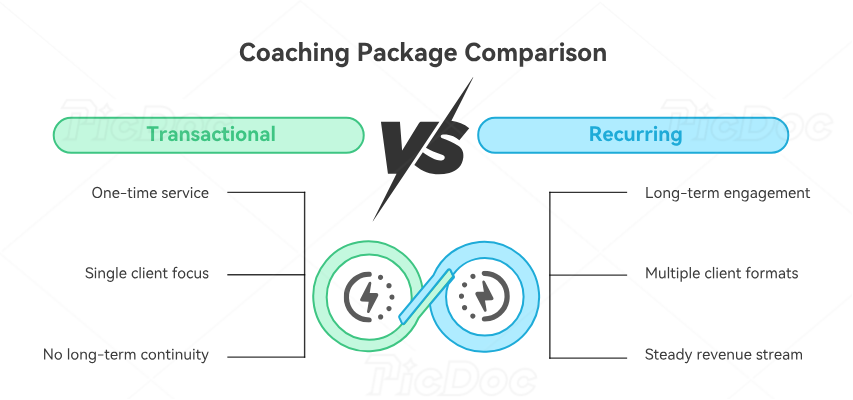
A coach can take the same expertise and package it in several ways. A $75 individual session produces transactional revenue. A 12-week transformation package creates continuity. A group cohort creates leverage. A corporate workshop provides B2B revenue. A clinic partnership creates referrals. A monthly accountability program produces recurring income.
This is why anyone researching whether health coaching pays, life-coaching revenue requirements, health coaching employment, and private-practice client acquisition should evaluate business models alongside niches.
For example, a sleep coach for executives can offer a premium eight-week one-to-one program. A prediabetes lifestyle coach can develop group programs through community organizations. A burnout coach can sell employer workshops and ongoing employee cohorts. A weight-maintenance coach can partner with gyms, dietitians, weight-management clinics, or structured programs. A perimenopause wellness coach can build education-driven cohorts and referral partnerships with appropriately licensed practitioners.
The strongest package usually includes four components:
Assessment: Where is the client currently losing consistency?
Implementation: Which routines need to change first?
Accountability: What mechanism catches slippage before one missed week becomes three months?
Independence: What should the client be able to manage alone when the engagement ends?
Frameworks such as CLEAR, OSCAR, SMART goals, and T-GROW become commercially useful when they support those stages rather than appearing as theory inside sessions.
Pricing also becomes easier when the offer carries a defined result. “Weekly health coaching” forces the buyer to value your time. “Twelve weeks to build a sustainable post-GLP-1 lifestyle system with weekly accountability, routine tracking, maintenance planning and clinician-aligned boundaries” gives them a concrete product to evaluate.
The same principle applies to money mindset coaching, leadership coaching, self-confidence coaching, and career burnout coaching: specificity increases the buyer’s ability to understand the transformation.
5. Build a Niche That Clients Trust: Scope, Proof and a 90-Day Validation Plan
The fastest route to a credible niche starts with proof before scale.
During days 1–30, interview at least 10 members of the target audience. Study the language they use. Map recurring barriers. Identify what they already spend money on. Look for failed attempts. Study relevant Reddit communities, professional forums, Google searches, local organizations and referral ecosystems. Review first-client timelines, understand why certified coaches struggle with positioning, and compare employment with private practice.
During days 31–60, sell a small founding-client offer. Five clients are enough to expose weak assumptions. Track attendance, completion, habit consistency, barriers, client language, perceived value, referrals, and which components clients actually use. Apply health behavior-change methods, SMART goals, Positive Intelligence, and Immunity to Change where they improve execution.
During days 61–90, refine the offer around what clients repeatedly needed. Remove unused modules. Strengthen onboarding. Clarify referral triggers. Tighten the outcome. Create one case study around behaviors and process. Establish two referral relationships. Publish five pieces of niche-specific content answering real questions gathered during interviews.
Professional boundaries create another major trust advantage. Diagnosis, prescribing, psychotherapy, medication adjustment, and individualized medical treatment should remain with appropriately qualified professionals. Coaches can provide accountability, reflective questioning, goal setting, implementation support, general education within competence, and behavior-change work.
This is where duty of care, professional coaching guidelines, clear coaching agreements, and cultural competence become business assets. A menopause coach who knows when to refer inspires more confidence. A PCOS coach who avoids miracle claims becomes easier for clinicians to recommend. A GLP-1 lifestyle coach who respects medication boundaries becomes easier for medical practices to work with.
Your certification strategy can also follow the niche. Coaches targeting health systems, formal wellness employers, or specific board-eligible roles should understand health coaching certification versus NBHWC and the practical differences between ICF and NBHWC. Coaches building independent practices should still study career ROI from certification and the realities of earning from health coaching.
The winning niche eventually becomes obvious through evidence: people describe the problem frequently, prospects respond to your language, clients complete the program, outcomes improve, referrals appear, and the acquisition cost begins making economic sense.
6. FAQs About the Best Health Coaching Niches in 2026
-
Prediabetes and metabolic-health coaching, GLP-1 lifestyle support, perimenopause wellness, burnout coaching, sleep coaching, weight-maintenance coaching, corporate wellness, and chronic-condition habit support all show strong demand drivers.
The right commercial choice depends on your audience access, expertise, referral environment, scope, and business model. Someone already working around clinics may gain more leverage from metabolic-health coaching, while a coach with HR relationships may find corporate wellness far easier to monetize. Review health coach job pathways, health-coaching income models, first-client acquisition timelines, and health behavior change before deciding.
-
Yes, especially when the positioning moves toward behavior, strength-supporting habits, routine consistency, maintenance and long-term lifestyle implementation. 2026 Reddit discussions repeatedly show users thinking about medication, exercise, nutrition support, muscle preservation, stigma, and what happens when weight loss transitions into maintenance.
A coach can build a valuable service around behavior change, SMART goal implementation, Immunity to Change, and strong duty-of-care boundaries.
-
A useful starting niche is narrow enough that the ideal client recognizes themselves immediately and broad enough to provide a reachable market. “Wellness coaching” gives weak positioning. “Burnout recovery habits for hospital professionals working irregular shifts” gives the coach clear content topics, referral partners, pain points and outcomes.
Use career burnout coaching, CLEAR coaching, T-GROW, and the guide to finding your first coaching clients to test the niche against real buyers.
-
Coaches can build services around the behavioral and lifestyle implementation problems experienced by those populations while staying inside their professional scope. The offer may cover accountability, habit formation, stress-management routines, movement consistency, sleep routines, goal setting, and helping clients implement recommendations received from qualified clinicians.
Clinical diagnosis, medication decisions, psychotherapy, disease treatment and individualized medical nutrition therapy require the appropriate licensed professionals. Study coaching ethics, duty of care, contracting, and cultural competence before building a health-condition-adjacent offer.
-
Executive wellness, entrepreneur wellness, corporate burnout programs, employer wellness, specialized midlife programs, and premium one-to-one transformation packages often support stronger pricing because the economic buyer has greater spending capacity or the problem affects professional performance.
Premium pricing still requires a credible offer, strong positioning, trust, and client acquisition. Study leadership coaching, conscious leadership, public speaking coaching, and realistic coaching revenue math when developing higher-ticket services.
-
The easiest niche usually sits closest to an audience you already understand and can reach. A nurse may have stronger access to healthcare workers. An HR professional may understand corporate wellness buyers. A fitness professional may naturally encounter clients needing weight-maintenance or GLP-1 lifestyle support. A parent active in community groups may understand caregiver wellness.
Distribution matters as much as expertise. The guides on why coaches struggle to find clients, how long first clients take, health coach employment, and health coaching career viability help evaluate that advantage.
