
Health Coaching Is Saturated—So What Still Works? Reddit Experiences on Niches, Credibility & Demand in 2026
Health coaching can feel crowded when every profile promises “better habits,” “more energy,” and “accountability.” The opportunity becomes clearer once you examine where people still pay, where employers still hire, and which problems create urgency. Recent Reddit discussions show real concern about competition, client acquisition, and low-paying entry roles, while coaches with stronger specialization and credibility signals describe more viable paths. Anyone asking whether health coaching is still worth it in 2026 should therefore examine career demand, certification strategy, and client acquisition together.
1. Health Coaching Saturation in 2026: Where the Pressure Actually Shows Up
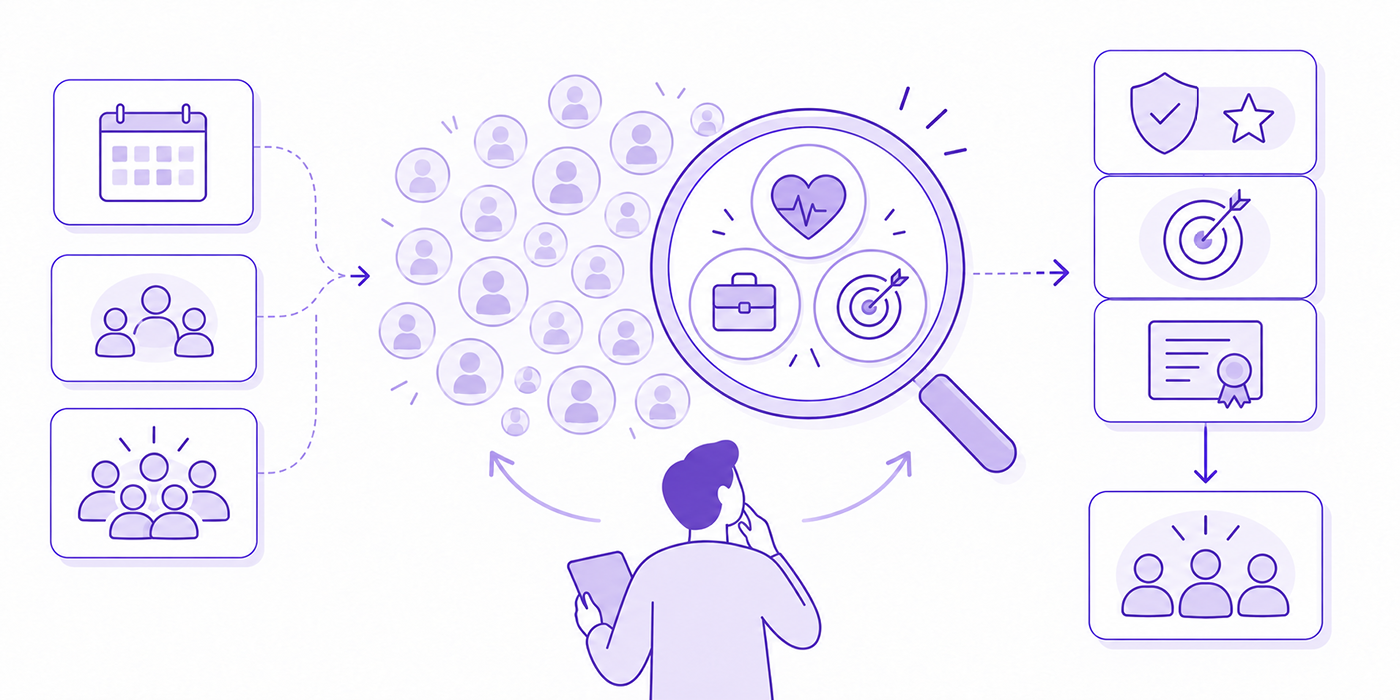
The strongest saturation pressure sits around generic coaching. “I help people become healthier” gives a prospective client very little reason to choose one coach over hundreds of alternatives. The same problem appears when someone earns a certificate and expects the credential itself to create demand. ANHCO’s breakdown of why certified coaches struggle to find clients becomes especially relevant here, because getting the first coaching clients usually requires a clearer commercial proposition than “certified health coach.”
Reddit discussions in 2025 and 2026 repeatedly surface this tension. One January 2026 r/HealthCoaching discussion came from a prospective coach worried that another qualification might produce little economic return. Another discussion that month described corporate wellness roles as competitive and highlighted employer interest in certification plus experience. The anxiety is real, especially for people comparing the cost of training against the real income potential of health coaching or trying to decide whether board eligibility matters for their career.
Competition also varies by business model. Remote employee roles can attract applicants from a much larger geographic pool. A 2025 Reddit commenter who eventually moved into a full-time coaching role described remote positions as highly competitive and said an in-person opportunity improved their chances of consideration. That makes the distinction between health coaching employment, independent practice, contract coaching, and building a sustainable coaching income extremely important.
Demand still exists around health behavior. The U.S. Bureau of Labor Statistics projects 6% employment growth from 2025 to 2035 for health education specialists, with about 6,900 openings per year on average, while community health workers are projected to grow 13% over the same period. These occupations are adjacent to health coaching rather than interchangeable with it, so their forecasts should be treated as evidence of broader demand for health education, prevention, navigation, and behavior support rather than as a forecast for private health-coaching businesses.
That broader demand helps explain why skills such as health behavior change, SMART goal setting, change management, and client accountability remain commercially useful. A coach becomes easier to understand when those skills are attached to a specific population, specific friction point, appropriate scope, and visible outcome.
| Audience / Problem | Demand Signal to Validate | Scope-Safe Coaching Offer | Credibility Proof to Build | Best First Channel |
|---|---|---|---|---|
| Busy professionals with inconsistent routines | Repeated difficulty maintaining meals, movement and sleep around work | Weekly routine and accountability system | Behavior-change process + client completion data | |
| Professionals experiencing burnout pressure | Workload is disrupting healthy routines and recovery habits | Recovery routines, boundaries and sustainable habit planning | Clear coaching scope + workplace experience | Employer workshops |
| Shift workers | Irregular schedules repeatedly disrupt health habits | Schedule-adapted routines and consistency planning | Shift-specific framework | Healthcare employers |
| New managers | Promotion creates time, stress and routine instability | Energy-management and sustainable routine coaching | Leadership background + structured program | |
| Remote workers | Low movement, weak boundaries and irregular daily structure | Workday habit architecture | Remote-work specific assessment | Remote-work communities |
| Freelancers and founders | Work intensity repeatedly crowds out self-care | Health routines that survive variable workloads | Entrepreneur-specific workflow | Business communities |
| Parents with overloaded schedules | Personal health habits collapse under family logistics | Minimum-effective weekly routines | Realistic planning framework | Parent communities |
| Women navigating midlife habit changes | Clients want support around sustainable lifestyle behaviors | Habit, movement and wellness accountability within scope | Relevant continuing education | Professional referrals |
| People referred after a medical consultation | They understand recommendations but struggle with implementation | Behavior-change and adherence support | Referral relationships + scope boundaries | Clinician referrals |
| People managing physician-directed lifestyle goals | Repeated failure to turn recommendations into routines | Implementation and accountability coaching | Documented coaching process | Healthcare partnerships |
| Adults building movement consistency | Stop-start exercise patterns | Consistency and barrier-solving program | Habit adherence tracking | Fitness partnerships |
| Clients struggling with meal planning | Planning and preparation repeatedly break down | Routine-building within appropriate nutrition scope | Scope statement + planning system | Community groups |
| People transitioning out of structured programs | Results disappear once external accountability ends | Maintenance and relapse-prevention habits | Transition framework | Program partnerships |
| Older adults seeking healthier routines | Motivation exists but implementation feels overwhelming | Simple habit sequencing and accountability | Age-relevant continuing education | Community organizations |
| Caregivers | Care responsibilities repeatedly displace personal wellbeing | Minimum-viable self-care routines | Caregiver-specific coaching protocol | Support organizations |
| Corporate teams | Employers want participation in wellness initiatives | Group habit challenges and coaching support | Facilitation experience + outcomes reporting | HR partnerships |
| Healthcare employees | High workload complicates basic wellness routines | Shift-compatible habit systems | Healthcare-setting familiarity | Hospital wellness teams |
| People returning to routines after major life change | Old systems no longer fit current circumstances | Routine reconstruction and accountability | Change-management framework | Referral network |
| Young professionals living independently | First-time responsibility for meals, routines and health planning | Foundational lifestyle systems | Structured onboarding assessment | Social content |
| Clients with repeated goal abandonment | Strong intentions collapse after several days or weeks | Barrier analysis and minimum-action planning | Behavior-change methodology | Educational content |
| Clients struggling with accountability | They know what to do but rarely follow through alone | Weekly accountability coaching | Adherence tracking | Referral marketing |
| People rebuilding confidence around healthy routines | Repeated failed attempts have weakened self-efficacy | Progressive goal design and wins tracking | Coaching framework + outcome measures | Workshops |
| People seeking digital-wellness structure | Screen habits interfere with routines and recovery | Environment and behavior redesign | Specific digital-habit framework | Content marketing |
| College-to-work transition clients | New employment removes old schedule structure | Adult routine-building program | Transition-focused curriculum | Alumni networks |
| People approaching retirement | Loss of work structure changes daily habits | Purposeful routine and wellness planning | Life-transition specialization | Community workshops |
| Small-business teams | No internal wellness department but clear employee interest | Short group coaching programs | Facilitation + reporting system | Local business networks |
| Clients needing post-program maintenance | Initial improvement fades without continued structure | Maintenance coaching membership | Retention and adherence data | Existing client base |
| People overwhelmed by multiple health goals | Too many simultaneous changes produce low adherence | Priority sequencing and one-goal-at-a-time coaching | Decision framework | Educational webinars |
| Clients who repeatedly “restart Monday” | All-or-nothing behavior creates recurring resets | Recovery protocol after missed habits | Behavior-change framework | Search-driven content |
| Organizations needing health-engagement support | Resources exist but participation remains weak | Engagement coaching and behavior activation | Group facilitation + reporting skills | B2B outreach |
2. The Health-Coaching Niches With the Strongest Positioning Advantage
A useful niche starts with a repeated, expensive, frustrating problem. Demographics come second. “Women 35–50” gives you an audience. “Women in demanding careers who repeatedly lose their health routines during high-workload periods” gives you an audience, a trigger, a pain point, and a reason to seek help.
This is why career burnout coaching, self-care coaching, leadership coaching, and health behavior-change coaching can each produce stronger positioning than broad “wellness coaching.” They describe situations people can recognize in their own lives.
The best niche questions are practical:
Who already feels the pain? A prospective client with a vague interest in wellness has weak urgency. Someone whose schedule destroys every health routine they start experiences the problem repeatedly.
What have they already tried? Repeated failed attempts create buying intent. A coach who understands why plans collapse can use frameworks such as Immunity to Change, the ADKAR model, the CLEAR coaching model, or SMART goals to turn broad motivation into observable behavior.
Can you reach them cheaply? A theoretically profitable niche becomes difficult when every client requires expensive advertising. Existing professional communities, referral sources, employers, associations, alumni groups, clinician relationships, and partnerships can reduce acquisition friction. That matters when your first ten coaching clients are still ahead of you and you are learning how long client acquisition can realistically take.
Does the problem fit coaching scope? Good specialization becomes safer when the coach knows exactly where coaching ends. A coach can help clients build routines, clarify goals, identify barriers, track commitments, and improve follow-through. Diagnosis, psychotherapy, medication changes, and individualized clinical treatment belong with appropriately licensed professionals. Strong coaching duty of care, a clear coaching code of conduct, and precise client contracting strengthen credibility rather than limiting the offer.
Your niche should therefore read like a business case:
Audience + recurring problem + coaching mechanism + measurable behavioral outcome.
For example: “I help shift-working healthcare professionals build health routines that survive changing schedules through weekly planning, barrier analysis, and accountability.”
That positioning gives the client more information than a title such as “holistic health coach.” It also creates better content topics, referral conversations, workshops, landing pages, and partnerships. Coaches exploring conscious leadership, self-confidence coaching, life purpose coaching, or life visioning can apply the same test: identify the specific situation that creates demand.
3. Credibility Is Becoming the Real Competitive Advantage
The credibility problem matters because consumers cannot easily evaluate coaching quality before buying. They see polished websites, certifications they may not understand, testimonials with little context, and promises ranging from reasonable behavior support to claims that should raise scope concerns.
NBHWC itself identified employment opportunities, compensation, public awareness, client acquisition, and stronger employer understanding of health and wellness coaching among concerns and priorities raised by its community in 2026. That makes credibility commercially important as well as professionally important.
For employed roles, credential requirements deserve close attention. NBHWC currently requires candidates for its national board exam to complete an approved training program, complete 50 health-coaching sessions, meet its education requirement, and satisfy the applicable exam requirements. Anyone comparing credentials should understand health coach certification versus the NBHWC path and the distinction between ICF and NBHWC before paying for training.
Reddit experience also points in this direction. A 2025 thread about part-time health-coaching work included comments describing board certification as common in organizational job listings. A February 2026 discussion about low-paid coaching roles similarly argued that better-paying roles the poster had encountered often required coaching certification. These are individual experiences rather than universal employer rules, yet they reveal why credential strategy matters for applicants.
Private-practice credibility requires a broader stack. Start with clear boundaries, supported by professional coaching ethics and duty-of-care principles. Add a repeatable method such as the OSCAR coaching model, T-GROW coaching, or the Wheel of Life where appropriate.
Then build proof around behaviors you can responsibly measure: attendance, goal completion, weekly adherence, program completion, self-reported confidence, implementation consistency, referral rates, and retention. A client saying “I followed my walking plan four days a week for eight weeks” communicates something concrete. Strong behavior-change coaching becomes easier to trust when the coach can explain the process that produced progress.
Finally, build a referral boundary. Coaches working around complex physical or psychological needs should know when to refer to physicians, dietitians, therapists, physiotherapists, or other regulated professionals. Cultural competence, clear contracting, and ethical scope decisions can become visible trust signals because they show prospective clients that the coach understands professional limits.
4. What Actually Works for Getting Health-Coaching Clients Now
Client acquisition improves when you stop treating “marketing” as one activity. There are at least four separate jobs: getting discovered, earning trust, generating a conversation, and converting the right person into a client. A coach can have thousands of followers and still fail at the last three.
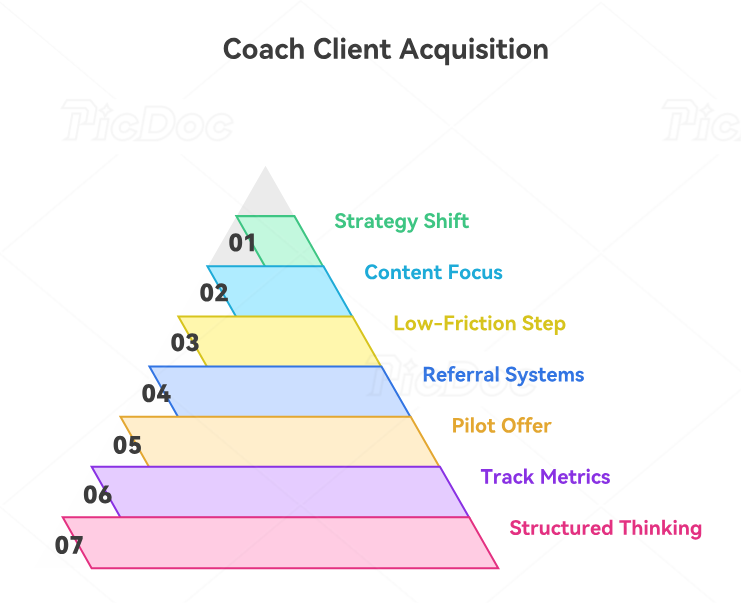
Start with one problem-rich content cluster. A burnout-focused coach could publish around workload-triggered routine collapse, recovery planning, boundary failures, irregular eating, movement inconsistency, and weekly resets. Someone working with behavior adherence could build around lasting behavior change, Immunity to Change, Positive Intelligence, and SMART goal design.
Then create one low-friction next step. A generic “book a call” button asks a stranger to make a large trust leap. A niche assessment, short workshop, referral conversation, workplace session, structured discovery call, or practical checklist gives the prospect a smaller commitment.
Referral systems deserve particular attention. Coaches can build relationships with professionals who already encounter the target problem: clinicians, therapists, trainers, HR teams, community organizations, educational institutions, professional associations, and other coaches with complementary specialties. Clear coaching contracts and a strong code of conduct make those conversations easier because the referral partner can understand your scope.
Your first offer should also produce learning, not merely revenue. A six- or eight-week pilot can reveal which clients engage, where people drop out, which exercises generate action, what objections appear before purchase, and which outcomes clients value most. These insights improve your first-10-clients strategy, help you estimate realistic client-acquisition timelines, and eventually clarify whether coaching can support full-time income.
Track five numbers from the beginning: qualified inquiries, consultations booked, consultations attended, clients enrolled, and clients completing the program. Add referrals once you have enough completed engagements. These numbers expose the real bottleneck. Ten inquiries with zero consultations suggests weak trust or messaging. Ten consultations with zero enrollments points toward offer fit, qualification, pricing communication, or sales conversations. High enrollment followed by low completion points toward delivery.
That diagnostic approach is far more useful than endlessly changing logos, websites, or social-media templates. Coaches who understand the CLEAR framework, OSCAR model, T-GROW process, and ADKAR change model can apply the same structured thinking to their businesses.
5. Employment, Private Practice or a Hybrid Model: Where Demand Is Easier to Capture
Choosing the right route matters because each path rewards a different form of credibility.
Employment rewards recognizable qualifications, relevant experience, interviewing ability, domain knowledge, and fit with the organization. Anyone targeting this path should study health-coach jobs after certification, understand NBHWC-related requirements, and compare ICF versus NBHWC against the actual roles they want.
Private practice rewards distribution. You need a reliable route to people who already experience the problem you solve. Strong coaching ability without lead flow produces an empty calendar. That is why client-acquisition strategy, realistic earnings math, professional contracting, and ethical practice belong in the business plan from the beginning.
Hybrid practice can reduce risk. A coach might retain employment or related professional work while building a small coaching caseload, running group programs, delivering workplace workshops, or developing a referral network. This gives the coach time to test positioning before depending on coaching revenue. Anyone considering a broader coaching career can compare this with the trade-offs explored in life-coach employment versus private practice and full-time coaching income requirements.
Geography can also alter the credential and commercial picture. Coaches working internationally should research local consumer expectations, employer standards, business rules, and professional boundaries. ANHCO has dedicated certification guides for markets including Saudi Arabia, Qatar, Germany, South Africa, and Japan.
The practical 2026 strategy is to build around specific demand, visible credibility, a reachable audience, measurable client behavior, and a business model you can sustain long enough to learn. That combination gives a coach something far stronger than another generic wellness profile.
6. FAQs About Health-Coaching Saturation, Niches and Demand in 2026
-
Generic positioning faces significant competition, particularly online and in remote roles. Recent Reddit discussions show prospective and practicing coaches concerned about client acquisition, employer competition, and unclear public understanding of coaching. Opportunities become easier to evaluate once you separate health-coaching career demand, employment opportunities, private-practice income, and first-client acquisition.
-
Look for populations with recurring behavior problems, clear urgency, enough ability or organizational funding to pay, and channels through which you can actually reach them. Areas connected with career burnout, self-care, leadership, and behavior change can all support focused offers when the audience and problem are defined precisely.
-
Private clients may use many different signals when choosing a coach, while specific employers can set credential requirements of their own. People targeting employment should compare actual job descriptions against the NBHWC certification route and understand ICF versus NBHWC. Your coaching code of conduct and duty of care also influence professional credibility.
-
Certification answers a competence-and-training question. Client acquisition also requires positioning, distribution, trust, sales conversations, an understandable offer, and a reachable audience. ANHCO's first-10-clients framework, client-acquisition timeline guide, health-coaching income analysis, and behavior-change guide address different parts of that equation.
-
Start specific enough that a prospect recognizes the problem quickly, then use real client conversations to refine further. Premature micro-niching can leave you targeting a population you barely understand. Your early work should identify recurring barriers, language clients naturally use, acquisition channels, willingness to pay, and which coaching methods create action. Models such as CLEAR, OSCAR, T-GROW, and SMART goals can help structure that early delivery.
-
It can become a full-time business or career for some coaches, while the economics vary sharply by employment route, pricing, client volume, acquisition costs, retention, group offers, and available referral channels. Start by modeling realistic health-coaching revenue, reviewing health-coaching job options, understanding first-client timelines, and studying why qualified coaches still face acquisition problems.
