
The Ultimate Guide to Getting Health & Life Coaching Certification in South Africa: Everything You Need to Know in 2026-2027
Getting certified in South Africa is a credibility decision, a scope-of-practice decision, and a client-trust decision at the same time. The wrong program leaves you with vague confidence, weak positioning, and no clear pathway to paid work. The right one helps you build a safer practice, list your health coach certification credentials properly, avoid career-ending coaching mistakes, strengthen client trust, and turn training into real outcomes through behavior change coaching.
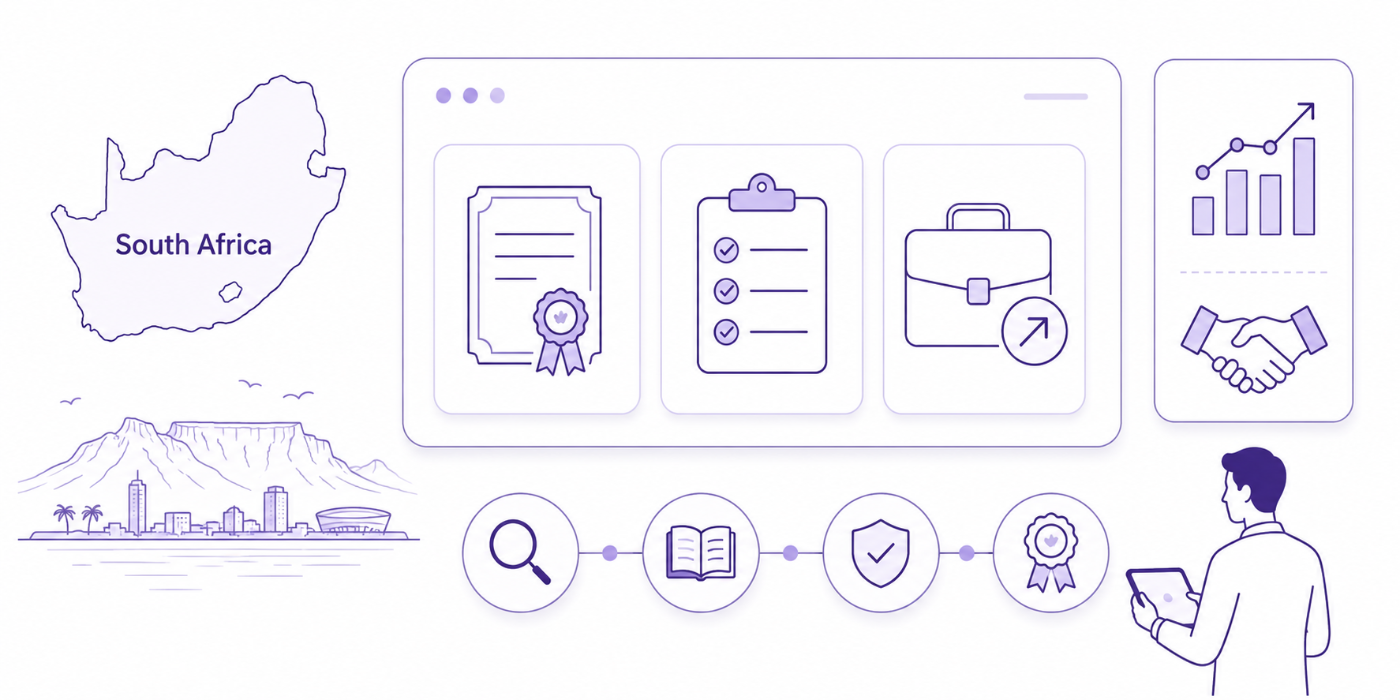
1. What Health & Life Coaching Certification Means in South Africa in 2026-2027
In South Africa, certification matters because clients, employers, wellness brands, and corporate buyers need proof that you understand coaching boundaries, ethics, accountability, behavior change, and professional communication. A certificate alone will never build a practice; your value comes from combining structured training with coaching integrity, ethical responsibilities, effective client communication, safe coaching environments, and measurable follow-through. COMENSA describes itself as South Africa’s SAQA-recognised professional body for coaching and mentoring, while SAQA explains that qualifications and part-qualifications are registered on the National Qualifications Framework through the relevant quality councils.
The first decision is whether you want to become a health coach, a life coach, or a blended health and life coach. Health coaching usually focuses on lifestyle habits, wellness goals, prevention-oriented support, accountability, food behavior, sleep routines, stress habits, movement consistency, and client self-management. Life coaching usually focuses on identity, career direction, relationships, confidence, personal goals, emotional patterns, decision-making, and life transitions. A blended route works best when your future clients need habit formation support, goal tracking tools, client anxiety coaching strategies, constructive feedback, and accountability systems in one structured relationship.
The biggest mistake is choosing a program because the website sounds inspiring. South African learners should compare the exact certificate wording, training hours, assessment method, supervision access, ethics coverage, business support, recognition pathway, and whether the program helps you explain your role legally and practically. A credible course should teach you how to coach without diagnosing, prescribing, treating, or crossing into regulated health services. That boundary protects your clients, protects your brand, and helps you avoid the painful gap between “I completed a course” and “clients trust me enough to pay.” Use certification as the foundation for differentiating your coaching business, building a certification portfolio, applying non-negotiable coaching standards, and developing the coaching skills clients actually feel.
| # | Decision Area | What To Verify | South Africa Lens | Best Evidence To Collect |
|---|---|---|---|---|
| 1 | Career goal | Health, life, wellness, corporate, relationship, or niche coaching path | Local clients need clear role wording, especially when health claims are involved | One-sentence positioning statement |
| 2 | Certificate wording | Exact title printed on the certificate | Vague wording creates confusion on LinkedIn, proposals, and client contracts | Sample certificate from provider |
| 3 | Accreditation language | Whether claims mean provider approval, course approval, CPD approval, or qualification registration | South African learners must separate marketing language from formal recognition | Accreditation page plus confirming body details |
| 4 | NQF/SAQA relevance | Whether the course is a registered qualification, skills program, short course, or private certificate | NQF language should be verified carefully before using it in marketing | SAQA or quality council confirmation |
| 5 | COMENSA fit | Whether the program aligns with coaching ethics, competence, and professional development | Useful for coaches wanting stronger local professional identity | Provider recognition, membership pathway, ethics alignment |
| 6 | International portability | Whether the certificate helps with international clients or future credentialing | Online coaches in South Africa often serve clients across time zones | ICF, NBHWC, CPD, or other pathway explanation |
| 7 | Training hours | Total live hours, self-study hours, practice hours, and assessed hours | Short programs can help with basics; deeper programs build competence faster | Curriculum hour breakdown |
| 8 | Assessment | Quizzes, case studies, recordings, observed coaching, written assignments | Clients trust skill, so assessment should test more than memory | Assessment rubric |
| 9 | Practice coaching | Number of real or simulated sessions required | Practice gaps become confidence gaps after graduation | Session log requirement |
| 10 | Mentor support | Access to trainers, supervisors, mentors, or feedback reviewers | Beginners need correction before weak habits become their coaching style | Feedback policy |
| 11 | Ethics training | Boundaries, confidentiality, consent, referrals, record-keeping, client safety | Essential for both life coaching and health coaching credibility | Ethics module outline |
| 12 | Health scope | What you can coach around without diagnosing or prescribing | Nutrition, mental health, and medical claims require careful boundaries | Scope-of-practice lesson details |
| 13 | Referral process | When to refer to doctors, dietitians, psychologists, therapists, or emergency support | Safe practice means knowing when coaching is the wrong container | Referral checklist |
| 14 | Behavior change depth | Motivation, resistance, relapse, identity, routines, barriers, environment design | South African clients often need practical coaching around busy work and family systems | Behavior change curriculum |
| 15 | Communication model | Listening, reflection, questioning, feedback, conflict, emotional consent | Weak communication causes client drop-off even when the plan is strong | Skills rubric |
| 16 | Accountability tools | Check-ins, dashboards, habit logs, nudges, review calls | Certification should teach systems, not motivational speeches | Client tracking templates |
| 17 | Business training | Niche, offers, pricing, onboarding, testimonials, discovery calls, retention | Many new coaches fail after certification because they never learn acquisition | Business module outline |
| 18 | Portfolio support | Case studies, sample sessions, testimonials, coaching philosophy, proof of competence | Strong portfolios make new coaches easier to trust | Portfolio template |
| 19 | Resume use | How to list the credential accurately on CV, LinkedIn, and proposals | Incorrect credential display can reduce credibility with employers | Credential-use guidance |
| 20 | CPD pathway | Continuing education after graduation | Professional coaches need skill renewal as client needs evolve | CPD requirements |
| 21 | Online delivery quality | Live calls, recordings, peer practice, LMS, mobile access | Online programs suit working professionals across South Africa | Demo lesson or platform preview |
| 22 | Time demand | Weekly hours required for study, calls, practice, assignments | Busy learners need a schedule they can finish without disappearing | Weekly study plan |
| 23 | Peer community | Practice pods, alumni groups, networking, local or global community | Community reduces dropout and helps new coaches build confidence | Community access details |
| 24 | Client niche fit | Weight wellness, stress, leadership, relationships, habits, women’s health, burnout, executives | Your niche determines which curriculum gaps matter most | Niche-to-module match |
| 25 | Technology training | CRM, scheduling, client portal, automations, surveys, dashboards | South African coaches serving online clients need clean operations from day one | Tool stack lesson list |
| 26 | Testimonials process | How to collect ethical proof without manipulating clients | Testimonials build trust when they are specific, consent-based, and outcome-focused | Consent and testimonial template |
| 27 | Cost clarity | Tuition, exam fees, supervision fees, renewal fees, materials, payment plans | The cheapest program can become expensive when it lacks support | Full fee schedule |
| 28 | Exit outcome | What you can confidently do the month after graduation | The best course should leave you with skills, assets, and a launch plan | Graduate capability list |
| 29 | Risk management | Contracts, disclaimers, intake forms, privacy, records, referral notes | Professionalism protects client safety and business continuity | Starter legal/admin templates |
| 30 | Next credential step | Whether the course prepares you for advanced certifications or professional membership | Choose a route that can grow with your career | Progression map |
2. How To Choose the Right South Africa Certification Path Without Wasting Money
The smartest path starts with one question: what proof will your future buyer respect? A private client may care most about trust, testimonials, and a clear method. A corporate wellness buyer may care about ethics, reporting, professionalism, and whether your work fits employee wellbeing goals. A future international client may care about recognisable training language. A South African learner should compare local relevance with global portability, then choose a course that supports career growth, certification credibility, online learning flexibility, life coach certification options, and continuous coaching education.
In South Africa, verify formal claims with extra care. SAQA states that it registers qualifications and part-qualifications on the NQF upon recommendation from quality councils, and QCTO describes occupational skills programmes as occupation-based learning linked to NQF qualifications when registered and delivered through accredited providers. That means “accredited,” “approved,” “recognised,” “international,” “CPD,” and “NQF” can point to different things, so ask the provider to define every claim in writing. Use that answer to protect your credentialing process, improve your certification portfolio, prepare for certification interviews, and avoid common credentialing mistakes.
A high-value program should show you the curriculum before you pay. Look for coaching competencies, ethics, intake design, client agreements, practical coaching, health boundaries, goal-setting, motivational interviewing-style skills, behavior change frameworks, business basics, and feedback from trainers. Programs built around lectures alone can leave you emotionally motivated and professionally underprepared. You need a course that helps you handle a stuck client, a confused prospect, a late payer, a boundary-pushing client, a client who wants medical advice, and a client who keeps missing goals. That is where client retention strategies, managing client expectations, handling difficult clients, emotional consent, and safe coaching practice become more valuable than a beautiful certificate design.
For most beginners, the best route is a program that gives enough theory to understand clients, enough practice to coach safely, enough assessment to prove competence, and enough business support to launch. If you already work in healthcare, fitness, HR, wellness, education, ministry, or leadership, choose a certification that strengthens your current credibility without pushing you outside your professional lane. If you are starting from scratch, choose the most practical program you can complete, then build a niche through coaching case studies, client testimonials, feedback tools, custom coaching dashboards, and resource hubs.
3. What Your Curriculum Must Include If You Want Real Client Results
A serious health and life coaching curriculum should train you to create change under real-life pressure. Clients rarely fail because they never heard good advice. They fail because their schedule breaks, family systems pull them back, stress hijacks routines, confidence drops, and goals stay too abstract. Your training must teach you how to convert intention into repeatable action using habit formation, micro-coaching, solution-focused coaching, appreciative inquiry, and positive psychology frameworks.
Health coaching curriculum needs especially strong boundaries. The HPCSA publishes scope-of-practice materials for dietetics and nutrition, and its dietetics board guidance reflects that regulated nutrition work sits within defined professional scopes. NBHWC’s scope of practice also frames health and wellness coaching around client-centered support, self-directed goals, and behavior change rather than diagnosis or treatment. This matters because a South African health coach may help clients explore habits, motivation, planning, barriers, routines, accountability, and lifestyle goals, while regulated clinical decisions belong to qualified professionals. Your course should teach referral language, consent, documentation, confidentiality, and how to support clients without overclaiming. Pair that with diet coaching boundaries, client stress strategies, emotional crisis support, mental health coaching guidance, and preventative health coaching.
Life coaching curriculum should go deeper than goal-setting. Strong life coaches can help clients name the real problem, separate values from pressure, make cleaner decisions, rebuild self-trust, and create action after emotional friction. Look for modules on listening, powerful questioning, reflection, self-awareness, limiting beliefs, values, identity, resilience, relational patterns, career direction, and accountability. A weak course gives you scripts. A strong course gives you judgment. That judgment is what helps you use inner critic management, life mapping, daily journaling prompts, gratitude journal coaching, and visualization techniques without sounding mechanical.
The best certification also teaches operational skill. You need intake forms, contracts, check-ins, session notes, privacy practices, progress reviews, cancellation rules, referral notes, testimonials, and renewal conversations. Many new coaches lose clients because the experience feels messy. Clients should always know what happens before the session, during the session, between sessions, and after each milestone. Build that structure through client portals, CRM tools, automated email sequences, payment systems, and technology-driven coaching.
4. The Fastest Practical Route From Beginner To Certified Coach
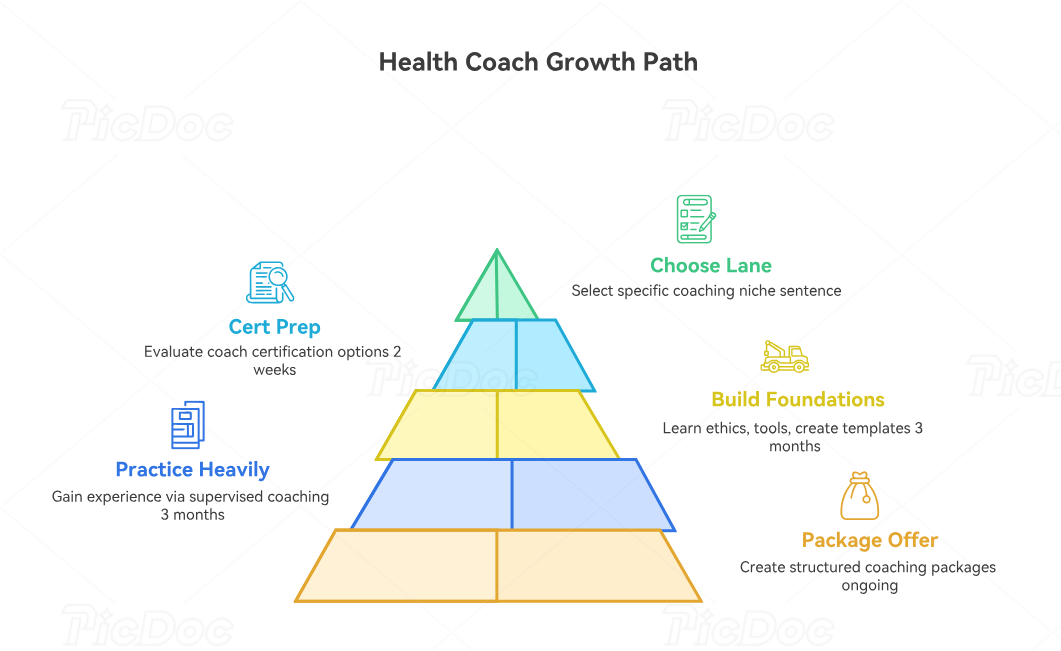
The fastest route is the one you can finish with competence. Start by choosing your coaching lane in one sentence: “I help busy professionals rebuild health habits without extreme routines,” “I help women navigate life transitions with clearer boundaries,” or “I help leaders reduce burnout through sustainable behavior change.” A sharp lane helps you choose the right program, practice with the right clients, and build proof faster. Use the first two weeks to compare online health coach certification programs, life coach certification routes, CPD-accredited options, ICF exam preparation, and NBHWC exam pitfalls.
From month one to month three, focus on foundations. Study ethics, coaching presence, client intake, goal design, listening, questioning, behavior change, scope, and record-keeping. Create your starter templates while you study: consultation form, coaching agreement, session note, goal tracker, check-in form, referral list, cancellation policy, and testimonial consent form. This prevents the common beginner disaster where the coach graduates with knowledge and zero operating system. Use coaching toolkit curation, case study templates, surveys and feedback tools, client journaling tools, and session recording tools to turn learning into assets.
From month three to month six, practice heavily. Coach peers, volunteers, supervised clients, or low-cost beta clients inside your scope. Track the problem they arrived with, the goal they chose, the barrier pattern, the action plan, the check-in data, the turning point, and the result. These notes become your first case studies. They also expose skill gaps faster than another lecture ever will. This stage is where client accountability, client feedback, client experience design, relationship coaching skills, and emotional intelligence coaching become real.
From month six onward, package your offer. A beginner-friendly offer should have one clear promise, one client type, one timeframe, one onboarding process, one progress measure, and one retention path. Avoid building ten services before you have one reliable client journey. Start with a 6-week or 12-week coaching container, define session rhythm, add weekly check-ins, collect baseline data, and create a review at the halfway point. Then refine using high-ticket coaching offers, client retention strategies, digital marketing tools, SEO tools for coaching websites, and YouTube growth for coaches.
5. How To Turn Certification Into Clients, Income, And Credibility
Certification becomes valuable when the market can understand your promise. A South African coach should avoid generic positioning such as “I help people become their best selves.” Stronger positioning names the person, the pain, the desired change, and the method. For example: “I help overworked managers rebuild energy through sleep, stress, and habit coaching,” or “I help new mothers rebuild confidence and routines after major life change.” This clarity improves your website, discovery calls, referrals, corporate proposals, and social content. Build it with client preference insights, coaching industry trends, future-proof practice strategy, client magnet positioning, and networking for coaches.
Your first credibility assets should be practical: a clean bio, a precise credential line, a coaching philosophy, three case-study snapshots, one client journey diagram, a simple FAQ, a referral policy, and a clear discovery-call script. These assets answer the client’s hidden fears: “Can I trust you?” “Do you understand my problem?” “Will this become another failed attempt?” “Are you qualified enough?” “Will I feel judged?” “What happens when I fall off track?” The best coaches answer those fears before the client has to say them aloud. Strengthen that with resume credential guidance, trust-building methods, client transformation case studies, credible case study writing, and client testimonials capture.
Income depends on niche, offer strength, proof, marketing consistency, sales skill, and retention. A coach with one clear transformation and strong follow-up usually has a better path than a coach with endless certifications and no conversion system. Track leads, calls, close rate, renewal rate, average package value, referral source, client progress, and testimonial quality. Treat your practice as a service business, not a motivational identity. Use financial forecasting, coaching salary insights, business benchmarking, profitable scaling, and tax planning for coaches to make better decisions.
The strongest South Africa route for 2026-2027 is simple: choose a credible certification, verify recognition claims, master scope and ethics, practice before charging premium rates, build proof, package one clear offer, and keep improving through CPD. The coach who wins trust will be the one who makes clients feel safe, seen, challenged, and supported between sessions. That requires radical simplicity, mastery habits, client engagement systems, technology adoption, and results-focused coaching.
6. FAQs About Health & Life Coaching Certification In South Africa
-
The best certification is the one that matches your niche, gives practical coaching hours, teaches ethics and scope, includes assessed practice, supports business launch, and gives you language clients can trust. For South Africa, compare local professional relevance, international portability, certificate wording, trainer support, and post-graduation usefulness. A busy beginner may prefer online certification, while someone pursuing global life coaching credibility may compare ICF certification, life coaching exam preparation, and essential coaching skills.
-
Many coaching certificates accept learners without a university degree, although entry requirements vary by provider and level. A degree can help in fields such as psychology, nutrition, HR, education, or healthcare, yet coaching competence still requires specific training in ethics, communication, behavior change, boundaries, and client accountability. Your priority should be choosing training that helps you coach safely, position yourself clearly, and build proof through coaching portfolios, resource hubs, coaching case studies, and client progress tools.
-
A health coach should be careful with diet plans because nutrition advice can cross into regulated professional territory depending on the content, claim, and client condition. Safer coaching focuses on habits, awareness, planning, barriers, preferences, accountability, and referral when a client needs medical nutrition therapy or clinical support. Your certification should teach you how to discuss food behavior without pretending to be a dietitian. Build competence through diet coaching strategy, ethical coaching responsibilities, safe boundaries, and client empowerment methods.
-
Some short programs can be completed in weeks, while deeper certifications may take several months or more. Speed should never be your only filter. A fast program works when it includes clear lessons, practice, feedback, scope training, and an actionable launch plan. A slow program works when it builds deeper competence and stronger professional identity. Compare your schedule, budget, goals, and learning style, then review quick certification routes, life coach certification timelines, online program reviews, and future-proof coaching education.
-
Experience helps, although certification gives structure, vocabulary, ethics, boundaries, and a more professional client journey. Many natural helpers struggle once a client becomes resistant, emotional, inconsistent, dependent, or unclear. Certification trains you to serve clients without rescuing them, advising too quickly, or making promises you cannot responsibly control. It also helps you explain your credibility through certification value, business differentiation, trust-building, and professional coaching standards.
-
Choose health coaching first if your target clients mainly need lifestyle habits, wellness routines, food behavior support, sleep consistency, stress habits, movement accountability, and prevention-oriented change. Choose life coaching first if your target clients mainly need confidence, career clarity, relationships, identity work, emotional resilience, goal direction, and decision-making support. Choose a blended route when your future offer sits across both. Strengthen the decision by studying which certification is right for you, mental health coaching niches, relationship coaching pathways, and financial coaching careers.
