
The Ultimate Guide to Getting Health & Life Coaching Certification in Bahrain: Everything You Need to Know in 2026-2027
Bahrain is a strong market for coaches who can connect wellness goals, behavior change, accountability, and professional trust. A certificate can help, yet the real advantage comes from choosing training that gives you credible skills, ethical boundaries, clear positioning, and a client experience that feels serious from day one. Before you compare programs, study how certification differentiates your health coaching business, how to present health coach certification credentials, and which 2025 health coach certification trends will still matter in Bahrain through 2027.
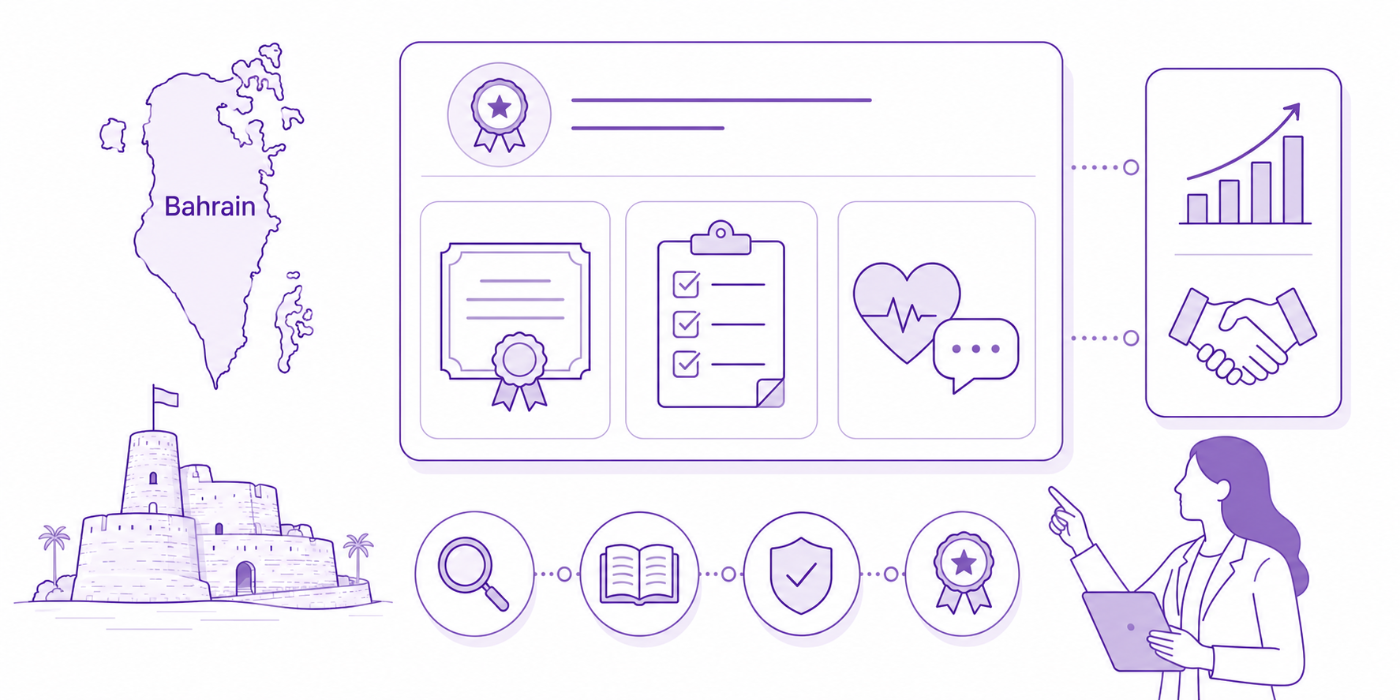
1. What Health & Life Coaching Certification Means in Bahrain in 2026-2027
Health and life coaching certification in Bahrain should be understood as a credibility pathway for non-clinical behavior change support. Coaches help clients clarify goals, improve habits, manage routines, strengthen motivation, build self-awareness, and follow through on wellness plans. That makes certification especially valuable when it covers ethical coaching responsibilities, client trust and credibility, safe coaching environments, and client accountability rather than relying on motivation talk alone.
Bahrain’s healthcare sector is regulated by the National Health Regulatory Authority, which oversees healthcare professional and facility licensing in government and private sectors. Coaching certification gives you a professional education signal; clinical treatment, diagnosis, medical nutrition therapy, and regulated healthcare practice belong inside the correct licensed scope. This distinction matters because a coach who understands the non-negotiable standards every coach must know, emotional consent in coaching, career-ending coaching mistakes, and legal requirements for coaches will appear safer, clearer, and more hireable.
The best certification path for Bahrain depends on your target client. Corporate professionals in Manama may need stress, sleep, productivity, and habit coaching. Women’s wellness clients may want sustainable routines, energy, confidence, and food behavior support. Gym-adjacent clients may want accountability without aggressive diet rules. Expat clients may want bilingual, flexible, online support. Your training should prepare you to build custom coaching dashboards, use interactive goal tracking tools, manage client expectations, and improve client communication.
A strong Bahrain-ready certification teaches three things: coaching process, ethical safety, and practical business delivery. Process means discovery sessions, goal setting, reflection, accountability, and behavior-change planning. Ethical safety means referral boundaries, informed consent, confidentiality, and scope language. Business delivery means packaging sessions, collecting testimonials, pricing clearly, and retaining clients. Study how the world’s best coaches get results, how to actually change your client’s life in 2026, the science of behavior change, and client retention strategies before choosing a program.
| Decision Area | What to Check Before Enrolling | Best Bahrain-Ready Choice | Why It Matters for Clients |
|---|---|---|---|
| Primary niche | Does the program support health, life, or integrated coaching? | Integrated health and life coaching | Bahrain clients often connect stress, lifestyle, work, family, energy, and habit consistency. |
| Scope clarity | Does training explain coaching boundaries clearly? | Strong ethics and referral modules | Protects clients and prevents coaches from sounding like unlicensed clinicians. |
| Behavior change | Does it teach habit loops, motivation, relapse planning, and accountability? | Evidence-informed behavior-change framework | Clients pay for follow-through, not inspirational calls that fade after one week. |
| Communication skills | Does it train listening, questioning, reflection, and feedback? | Skills-based coaching practice | Better conversations create better client insight and stronger retention. |
| Assessment method | Does certification require exams, practice sessions, or portfolio work? | Exam plus observed coaching or case work | Clients trust coaches who can prove practical skill, not just course attendance. |
| Online flexibility | Can busy professionals complete the program around work? | Self-paced modules with live practice | Useful for Bahrain learners balancing jobs, family, and weekend commitments. |
| Business support | Does the course teach packages, pricing, sales calls, and retention? | Certification with business-building resources | A trained coach still needs a clear offer, referral path, and client journey. |
| Corporate coaching fit | Does training address stress, productivity, burnout, and workplace wellness? | Corporate wellness-ready curriculum | Bahrain has strong demand from professionals who need realistic lifestyle systems. |
| Nutrition boundary | Does the program distinguish coaching from dietetic or medical nutrition work? | Food behavior and habit coaching focus | Allows coaches to support routines while referring clinical nutrition needs correctly. |
| Mental health boundary | Does it explain crisis signs, referral language, and emotional safety? | Trauma-aware, referral-aware coaching education | Clients feel safer when a coach knows when coaching is the wrong tool. |
| Language strategy | Can you serve English, Arabic, bilingual, or expat audiences? | Clear bilingual client materials if possible | Language affects trust, onboarding, testimonials, and referral quality. |
| Credential display | Does the provider explain how to list credentials correctly? | Transparent certificate title and completion requirements | Prevents vague claims that confuse clients and weaken credibility. |
| Practice hours | Are there supervised sessions, peer practice, or client simulations? | Practice-heavy course design | Confidence grows faster when coaches rehearse real client resistance. |
| Case studies | Does the program teach documentation and outcome tracking? | Portfolio and case-study templates | Useful for building trust with clinics, companies, gyms, and private clients. |
| Technology training | Does it cover portals, reminders, forms, and dashboards? | Tech-enabled coaching workflow | Clients stay engaged when the plan is easy to see, use, and remember. |
| ICF alignment | Does life coaching content prepare learners for recognized coaching standards? | Competency-aware training | Helpful for coaches who may pursue broader life-coaching credentials later. |
| NBHWC awareness | Does health coaching content explain competencies and exam-style thinking? | Competency-driven health coaching foundation | Strengthens professional language for serious wellness and health behavior work. |
| Program duration | Can you realistically complete it without rushing? | 8-24 weeks for structured completion | Rushed certification often produces weak client confidence and poor positioning. |
| Cost recovery | Can you map tuition against package pricing and client volume? | Program with clear business ROI planning | Certification should connect to a realistic income model. |
| Client onboarding | Does training include intake forms, expectations, and agreements? | Strong onboarding workflow | Good onboarding reduces ghosting, refunds, confusion, and weak commitment. |
| Accountability systems | Does it teach check-ins, progress reviews, and habit tracking? | Weekly accountability structure | Clients struggle most between sessions, where accountability matters most. |
| Testimonials | Does the course teach ethical testimonial collection? | Consent-based testimonial process | Early proof helps new Bahrain coaches overcome trust barriers. |
| Referral network | Does it help you identify when to refer to licensed professionals? | Referral map for doctors, dietitians, therapists, and trainers | Referral confidence makes your coaching safer and more respected. |
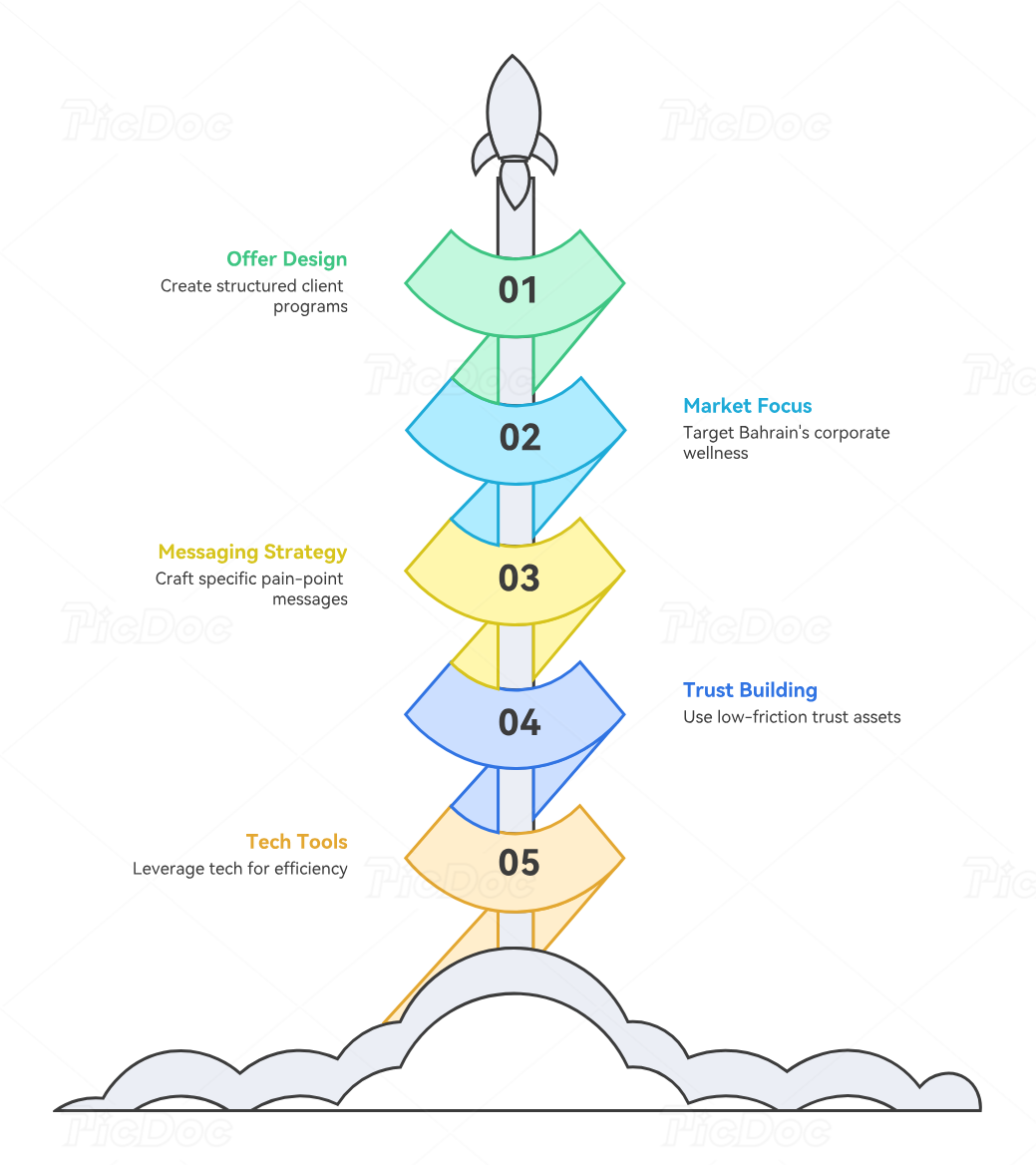
| Offer design | Does it help turn skills into a sellable package? | 8-12 week coaching offer model | Clients buy a clear outcome journey more easily than random sessions. |
| Marketing assets | Does it teach website copy, social proof, and niche messaging? | Certification plus marketing toolkit | Skill without visibility creates slow growth and weak lead flow. |
| Continuing education | Can you keep learning after certification? | CPD or continuing education pathway | Ongoing learning keeps your methods current and your confidence strong. |
| Client types | Does the curriculum prepare you for beginners, executives, parents, and expats? | Flexible coaching frameworks | Bahrain’s market rewards coaches who can adapt without losing structure. |
| Pricing readiness | Does training help you price private, group, and corporate coaching? | Package-based pricing education | Prevents undercharging and helps clients understand the value of the program. |
| Launch support | Does the provider help you launch after completion? | 90-day post-certification action plan | The hardest part often begins after the certificate arrives. |
| Long-term credibility | Will this certificate support future specialization? | Stackable certification path | Lets you grow into wellness, corporate, habit, relationship, or mental fitness niches. |
2. How to Choose the Right Certification Path for Bahrain
Start with your coaching lane before choosing the certificate. A general life coach in Bahrain may focus on confidence, transitions, productivity, relationships, or decision-making. A health coach may focus on habits, food behavior, sleep, movement consistency, stress routines, or preventative wellness. A combined health and life coach can serve clients whose lifestyle problems have emotional, practical, and identity-based layers. Review online life coach certification programs, best online health coach certification programs, CPD-accredited life coach certification, and which certification is right for you before deciding.
For Bahrain, the smartest route is usually a certification that includes coaching fundamentals, health-behavior change, practical ethics, client documentation, business setup, and digital delivery. This matters because many clients enter coaching with messy problems: low energy, work pressure, inconsistent routines, family responsibilities, self-doubt, and failed attempts at change. A program that teaches habit formation tools, strength-based coaching techniques, constructive feedback clients listen to, and transformational coaching strategies gives you a stronger delivery base.
Pay close attention to the provider’s assessment style. A certificate earned through passive videos may look easy, yet it rarely prepares a new coach for a client who arrives late, avoids check-ins, overpromises, then disappears after week three. Look for practice calls, case reflection, sample forms, coaching demonstrations, and feedback. The best programs help you build coaching case studies, use surveys and feedback tools, improve coaching communication for certification, and avoid common credentialing mistakes.
Cost matters, yet cheap training becomes expensive when it leaves you unable to sell, serve, or retain clients. Calculate return through your first three offers: private coaching, group coaching, and corporate wellness sessions. A Bahrain coach who can position clearly, deliver structured outcomes, and collect strong proof can recover tuition faster than a coach with a vague “wellness support” offer. Compare training with the health coach certification salary report, the guide on whether certification is really worth it, high-ticket coaching offers, and financial forecasting for coaches.
3. Step-by-Step Plan to Get Certified Without Wasting Money
Step one is to define your coaching promise in plain language. Avoid starting with “I help everyone live better.” Choose a sharper lane such as “I help busy Bahrain professionals rebuild health routines without extreme dieting,” or “I help women create sustainable wellness systems around work and family.” Your niche should connect with preventative health coaching, mental health coaching trends, relationship coaching pathways, or financial coaching career paths only when your training and scope support that promise.
Step two is to choose a certification that teaches the actual client journey. You need intake, goal design, weekly planning, accountability, review, relapse recovery, and ending sessions professionally. This is where many new coaches struggle because they can explain wellness yet cannot run a clean 12-week client transformation. Build your process around goal tracking tools, powerful client journaling tools, daily journaling prompts, and client session recording tools when consent and privacy are handled correctly.
Step three is to protect your scope from day one. In Bahrain, clients may ask for meal plans, supplement advice, anxiety treatment, medical interpretation, or clinical recommendations. A responsible coach uses coaching questions, behavior design, referral language, and collaboration instead of drifting into regulated care. Dietitians and nutritionists are trained to counsel on nutrition issues and healthy eating habits, and clinical nutrition advice should be handled by appropriately qualified professionals. Study client diet change coaching, understanding client anxiety and stress, supporting clients during emotional crises, and coaching ethical responsibilities.
Step four is to build your certification portfolio while you study. Do not wait until graduation to create your intake form, session template, testimonial request, sample coaching agreement, client dashboard, and niche landing page. These assets turn education into income. Your portfolio should include case study templates, certification portfolio guidance, client testimonial capture, and coaching resource hub strategy.
Step five is to test your offer with a small pilot group. Offer a structured four-week or six-week program to a narrow audience, collect feedback weekly, and refine the system before selling a premium package. Track client wins, missed check-ins, confusing instructions, and emotional sticking points. This is where micro-coaching, gamification strategies, turning client feedback into growth, and exceptional client experiences can turn early practice into real market proof.
4. How to Turn Your Certification Into Paid Coaching Work in Bahrain
Once certified, your first job is to translate your training into a specific offer. A certificate says you studied; an offer tells clients why they should book. Build a 8-week or 12-week program with a measurable client journey: intake, baseline habits, weekly goals, accountability check-ins, progress reviews, and a final maintenance plan. Use coaching dashboards, automated email sequences, payment systems, and client retention strategies to create a polished experience.
For Bahrain, corporate wellness is a serious pathway because professionals often struggle with sedentary schedules, long workdays, sleep disruption, stress eating, and inconsistent routines. Your offer can serve HR teams, small businesses, clinics, gyms, coworking communities, and executive groups when your scope is clear. Study benchmarking your coaching business, state of coaching industry trends, must-know client preferences, and future-proof coaching practice trends to shape your market entry.
Private coaching works best when your message speaks to an urgent pain point. “Health coaching” alone can feel vague. “I help busy professionals rebuild energy, sleep, and food consistency in 12 weeks” feels easier to understand. “Life coaching” can feel broad. “I help high-achieving professionals stop overthinking major career and lifestyle decisions” feels stronger. Your messaging should use SEO tools for coaching websites, digital marketing tools for coaches, YouTube channel growth for coaches, and networking secrets for coaches.
Build trust before asking for high-ticket commitments. Bahrain clients may want privacy, professionalism, proof, and cultural awareness before sharing personal goals. Use low-friction trust assets: a clear website page, a coaching agreement, a short discovery form, testimonials, case studies, weekly recap templates, and a professional credential section. Strengthen this with coaching integrity, why trust is valuable in coaching, crafting coaching case studies, and mastering certification interviews.
Technology can help you look established even while you are new. Use scheduling automation, a client portal, reminders, check-in forms, habit trackers, video calls, and simple dashboards. The goal is to reduce the client’s mental load: they should always know what to do next, where to report progress, and how to prepare for sessions. Start with coaching automation tools, essential CRM tools, the 10 best coaching apps, and technology transforming coaching.
5. Mistakes That Make New Bahrain Coaches Look Unprepared
The first mistake is choosing a certificate for speed alone. Fast certification can help when the curriculum is structured, practical, and ethical; speed becomes a problem when the learner finishes with no coaching model, no offer, no confidence, and no client workflow. Before enrolling in a quick program, compare how quickly you can earn life coach certification, how to quickly earn health coach certification online, essential resources for certification, and continuous coaching education.
The second mistake is copying global coaching language without adapting it to Bahrain’s market. Clients may care about confidentiality, family schedules, religious rhythm, work pressure, gender comfort, language choice, and cultural sensitivity. A coach who ignores these realities can sound imported and disconnected. Learn how to create safe coaching environments, handle difficult client situations, use emotional intelligence coaching, and set professional coaching boundaries.
The third mistake is treating accountability as “checking in.” Strong accountability is designed, documented, and connected to the client’s real life. A weak coach asks, “Did you do it?” A stronger coach asks what blocked the habit, what trigger failed, what support was missing, and what tiny next version can succeed this week. That skill comes from habit formation coaching, solution-focused brief coaching, appreciative inquiry, and positive psychology coaching.
The fourth mistake is building a business around single sessions. Single sessions can help with discovery or maintenance, yet transformation usually needs a structured container. Packages improve commitment, tracking, cash flow, and client outcomes. A Bahrain coach can offer a starter audit, a 6-week reset, a 12-week transformation, a group challenge, or a corporate wellness sprint. Build this around high-ticket coaching packages, scaling your coaching practice, automating your coaching business, and must-have coaching business tools.
The fifth mistake is failing to create proof. New coaches often wait for perfect confidence before asking for testimonials, writing case studies, or publishing useful content. Start with consent-based mini case studies, anonymous progress stories, client reflections, and educational posts that show your method. Document the problem, intervention, behavior shift, and client result. Use client testimonials capture, inspiring coach-client case studies, coaching case study templates, and client feedback growth systems to build trust faster.
6. FAQs About Health & Life Coaching Certification in Bahrain
-
The best certification for Bahrain is the one that combines coaching fundamentals, health-behavior change, ethical boundaries, practical assessments, business training, and client-delivery tools. A strong program should help you coach real clients, package your services, present your credential clearly, and know when to refer out. Compare best online health coach certification programs, online life coach certification programs, ICF exam preparation, and NBHWC practice questions before choosing.
-
Many coaches build online or private coaching practices with online certification, especially when they stay within coaching scope and avoid clinical claims. The key is to present yourself accurately, use proper agreements, and refer medical, mental health, and clinical nutrition issues to licensed professionals. Bahrain’s NHRA regulates healthcare professional licensing and healthcare facilities, so coaches planning clinical, facility-based, or healthcare-adjacent work should verify the relevant requirements directly. Strengthen your setup with coaching legal requirements, coaching integrity, and ethical responsibilities.
-
Choose health coaching if your clients mainly need support with routines, habits, energy, sleep, movement consistency, stress behaviors, or food behavior. Choose life coaching if your clients need clarity, confidence, decisions, relationships, career direction, or personal growth. Choose both if your market sees lifestyle problems as connected to identity, work, family, motivation, and emotional patterns. Study which certification is right for you, mental health coaching careers, relationship coaching pathways, and preventative health coaching.
-
Many online programs can be completed in weeks or months, depending on depth, live practice, assignments, and assessment requirements. A practical timeline is 8 to 24 weeks for serious learners who want more than a badge. Use the study period to build your niche, intake forms, first offer, client dashboard, and sample content. That way, graduation becomes a launch point. Review quick health coach certification online, how quickly life coach certification can be earned, certification portfolio creation, and coaching toolkit curation.
-
Start with a narrow offer, a clear result, a simple landing page, and a low-friction discovery process. Use content that speaks to urgent problems: stress eating, inconsistent routines, burnout, sleep discipline, confidence, career transitions, family-life balance, and accountability. Then build proof through pilot clients, testimonials, case studies, referral partners, and corporate wellness introductions. Use digital marketing tools, SEO tools for coaching websites, joint ventures for coaches, and networking secrets.
-
Avoid language that sounds like diagnosis, treatment, cure, prescription, therapy, or clinical nutrition advice unless you hold the correct healthcare license for that work. Use coaching language around goals, habits, reflection, routines, motivation, accountability, and behavior change. Your safest credibility comes from clarity: tell clients what coaching can support, when referral is needed, and how your process works. Study career-ending coaching mistakes, emotional consent, coaching boundaries, and client anxiety and stress coaching strategies.
