
ICF certification practice questions work best when they train judgment, ethics, and coaching presence under pressure. The ACC sample format tests knowledge with one correct answer, while ICF’s Credentialing Exam sample questions use coaching scenarios where candidates identify the BEST and WORST actions based on ICF Core Competencies. That means strong preparation needs more than memorizing definitions. You need to recognize clean contracting, client autonomy, ethical boundaries, active listening, and growth-focused coaching choices through ICF credentialing skills, ICF application preparation, ethical coaching responsibilities, and coaching integrity.
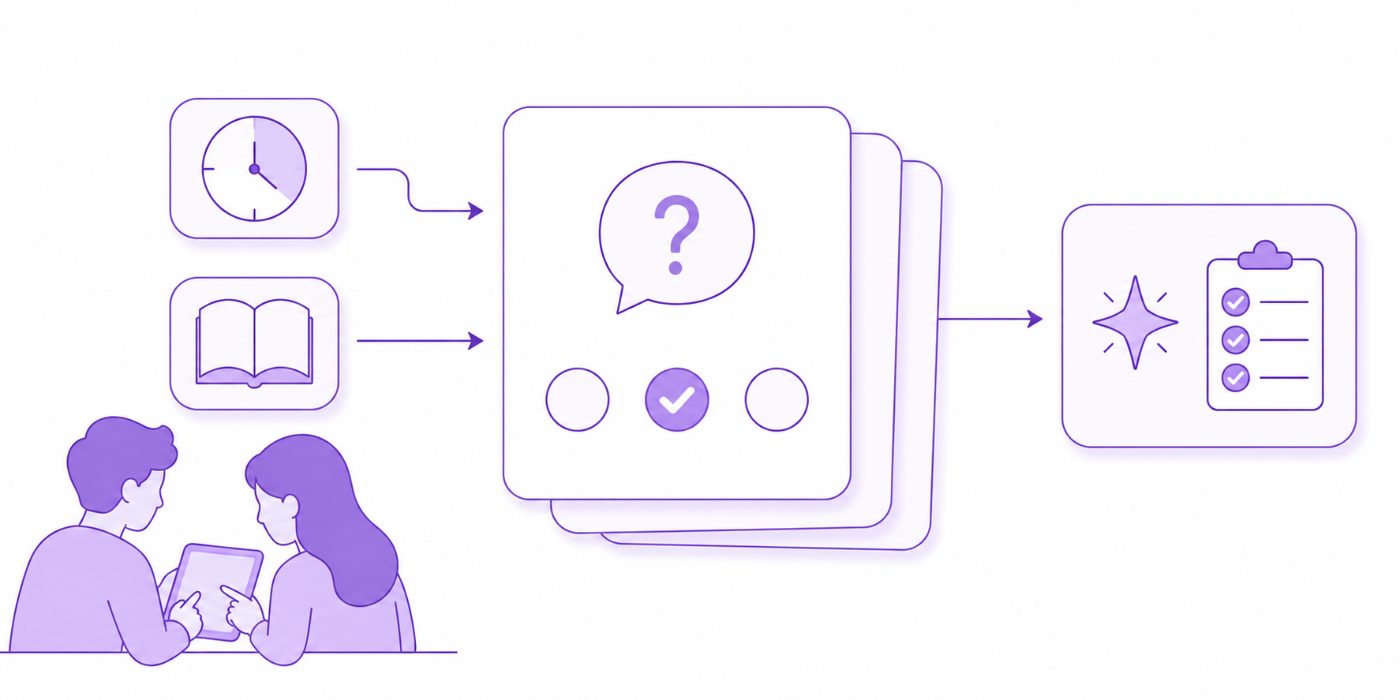
1. How To Use ICF Practice Questions Without Memorizing The Wrong Thing
The fastest way to waste ICF exam prep time is to treat practice questions like trivia. ICF credential preparation rewards applied judgment: what serves the client, what honors the agreement, what keeps the coach in a coaching role, and what supports the client’s learning without taking over the session. ICF’s current Core Competencies are organized across four domains: Foundation, Co-Creating the Relationship, Communicating Effectively, and Cultivating Learning and Growth. Every strong practice question should train those muscles while reinforcing ICF core competency skills, coaching communication, client trust, and safe coaching environments.
Start every question by identifying the coaching moment. Is the issue about ethics, agreement, listening, presence, direct communication, client insight, accountability, or progress? Then remove answers that make the coach the expert, rescuer, judge, therapist, consultant, or fixer. Strong coaching answers usually preserve client ownership. Weak answers often sound helpful but quietly shift power away from the client. This matters for candidates studying common ICF exam mistakes, building a certification portfolio, preparing for certification interviews, or comparing which certification is right.
Use each practice question in three passes. First, answer quickly using instinct. Second, explain why your best answer honors coaching principles. Third, explain why the worst answer creates risk. This three-pass method builds exam speed and professional judgment together. A candidate who only marks answers may improve short-term recall. A candidate who explains the reasoning becomes better at spotting ethical drift, advice-giving, weak contracting, missed emotion, and shallow accountability. That is where practice connects with client expectations, constructive feedback, accountability in coaching, and behavior change coaching.
2. The Question Logic Behind Strong ICF Exam Answers
ICF-style questions often feel tricky because two or three answers can sound professional. The difference sits in the level of coach-centeredness versus client-centeredness. A tempting answer may be warm, efficient, or knowledgeable, yet it may still take control away from the client. Better answers usually invite reflection, clarify the agreement, respect confidentiality, preserve autonomy, and connect insight to action. ICF’s Credentialing Exam sample guidance says candidates need to choose the response that aligns most closely with ICF competencies and ethical standards. That is why your prep should include coaching ethics, trust-building, client-centered communication, and boundary setting.
A useful shortcut is to ask whether the answer expands the client’s awareness or narrows the client into the coach’s conclusion. “Tell the client what to do” usually narrows. “Ask what the client notices” usually expands. “Explain the correct framework” can narrow when the client has not asked for teaching. “Partner to explore what matters” usually expands. The exam is measuring judgment inside realistic coaching scenarios, so your answer must fit the moment. Strong candidates practice this through solution-focused coaching, appreciative inquiry, strength-based coaching, and positive psychology coaching.
Ethics questions require extra discipline because the “nice” answer may be risky. Confidentiality, conflicts of interest, client agreements, sponsor expectations, technology use, and professional boundaries all require clear thinking. ICF’s Code of Ethics framework emphasizes areas such as confidentiality, conflict management, fair treatment, transparency, accountability, and professionalism. If a question involves a sponsor, organization, family member, recording, testimonial, referral, or dual role, pause before answering. Ask what was agreed, who the client is, what confidentiality allows, and what transparency requires. That reasoning supports coaching legal requirements, client consent, professional standards, and career mistake prevention.
Growth-focused questions usually test whether the coach helps the client convert insight into ownership. A client may discover a pattern, name a fear, recognize a strength, or admit a barrier. The weaker answer celebrates the insight and stops. The stronger answer asks what the client wants to do with the insight, what support they need, how they will track progress, and what accountability would serve them. This is where exam readiness overlaps with real coaching quality through goal tracking tools, client accountability, habit formation, and client outcome feedback.
3. Interactive ICF Practice Questions With Best-Worst Answer Training
Use the following original practice questions as a deeper drill. For each scenario, choose the best response before reading the reasoning. Then choose the worst response and explain why it violates coaching judgment. This approach mirrors the applied decision-making style seen in official ICF Credentialing Exam sample scenarios, where the candidate must weigh multiple plausible actions against competencies and ethical standards. Keep your focus on ICF exam mistakes, essential credentialing skills, coaching mindset, and professional coaching credibility.
Question 1: The Advice Trap
A client says, “I have tried everything. Just tell me which option is best.” The strongest response is to acknowledge the client’s frustration, revisit the coaching partnership, and explore how the client wants to evaluate the options. This keeps the client in ownership while still supporting decision-making. The weakest response is to choose the option for the client because it may feel helpful but undermines self-directed growth. This question tests whether you can resist the expert role and support client empowerment, communication skill, behavior change confidence, and coaching breakthroughs.
Question 2: The Confidentiality Pressure
An HR sponsor asks, “Can you tell me whether the employee admitted they are disengaged?” The strongest response is to follow the confidentiality agreement and share only what was explicitly agreed, such as attendance or broad progress themes if permitted. The weakest response is to disclose private session content to satisfy the sponsor. This question tests ethical contracting, especially in organizational coaching where the payer, sponsor, and client may differ. Study this alongside legal coaching requirements, trust in coaching, difficult client situations, and client expectation management.
Question 3: The Missed Emotion
A client says, “I got the promotion,” then becomes quiet and looks tense. The strongest response is to notice the shift gently and ask what is happening for the client in that moment. The weakest response is to congratulate them enthusiastically and move into goal planning. This scenario tests listening beyond words. The client’s body language, pause, tone, and emotional contradiction may contain the real coaching material. Practice this skill with emotional intelligence coaching, stress coaching strategies, safe coaching environments, and client journaling tools.
Question 4: The Accountability Mismatch
A client says, “I need accountability,” but they ignore reminders and avoid check-ins. The strongest response is to explore what accountability means to them, what kind of support feels respectful, and what structure they want to test. The weakest response is to increase pressure because the client requested accountability. The issue may be shame, unrealistic goals, unclear motivation, poor fit, or fear of being judged. This question connects directly to accountability in coaching, habit formation, client retention, and goal tracking tools.
4. How To Review Wrong Answers Like A Coach, Not A Test Taker
Wrong answers are valuable when you know how to inspect them. Do not simply mark the correct option and move forward. Write down the trap you fell for. Did you choose efficiency over partnership? Did you rescue the client? Did you skip the agreement? Did you over-teach? Did you ignore emotion? Did you prioritize the sponsor over the client? Each wrong answer reveals a coaching habit that deserves attention. This turns exam prep into professional development through ICF certification application support, coaching case studies, certification portfolio work, and coaching mastery.
Create a wrong-answer log with five columns: question theme, answer selected, correct reasoning, trap pattern, and practice response. If you choose advice-giving three times in a week, practice turning advice into questions. If you miss confidentiality issues, review ethical agreements and sponsor scenarios. If you skip session agreements, practice opening every mock session with focus, importance, outcome, and success markers. This system supports coaching communication, boundary setting, client feedback, and client-centered transformation.
Use the “best answer, better reason” drill. After choosing an answer, write a stronger reason than the answer key gives. For example, if the best answer is to revisit confidentiality, your reason should mention contracting, trust, sponsor boundaries, and client safety. If the best answer is to ask about the client’s desired outcome, your reason should mention agreement, focus, accountability, and ownership. This forces you to connect concepts instead of memorizing isolated words. It also strengthens professional standards, coaching integrity, client trust, and future-proof coaching practice.
Timed practice should come after reasoning practice. Candidates often rush into timed sets too early and train panic instead of judgment. Build accuracy first, then speed. Once your reasoning is stable, complete short timed blocks of 10 questions, review immediately, and write the trap pattern for every missed item. This creates pressure without overwhelming your learning. It fits especially well with online coaching certification prep, life coach exam preparation, credentialing mistakes, and continuous coaching education.

5. A 7-Day ICF Practice Question Study Plan That Builds Real Judgment
Day one should focus on ethics and agreements. Review confidentiality, conflicts of interest, informed consent, sponsor relationships, and role clarity. Then complete 10 ethics-heavy questions and write why the worst answers create risk. ICF ethics resources emphasize confidentiality, conflict management, fair treatment, transparency, accountability, and professionalism, so ethics practice should train both decision-making and language. Pair this day with ethical coaching responsibilities, coaching legal requirements, safe coaching environments, and career-ending mistake prevention.
Day two should focus on establishing the coaching agreement. Practice questions where the session topic is vague, the client shifts goals, the sponsor has expectations, or the client wants advice. Your job is to identify what outcome the client wants, what success would look like, why it matters, and how the session should proceed. This helps you avoid wandering conversations and coach-led agendas. Study this with client expectations, communication skills, client engagement, and coaching relationship management.
Day three should focus on listening and presence. Choose questions where the client’s words and emotions do not match, where silence appears, where the coach feels tempted to interrupt, or where the client reveals something deeper than the stated goal. The best answer usually slows the coach down and honors what is emerging. This builds readiness for real sessions and exam scenarios. Use emotional intelligence coaching, client anxiety and stress strategies, emotional consent, and client journaling tools.
Day four should focus on evoking awareness. Practice questions where the client has repeated patterns, conflicting values, hidden assumptions, or unexplored strengths. The best response often asks a concise question that helps the client discover something new. The weakest response often explains the pattern for the client. This is where coaching becomes transformational rather than instructional. Study with appreciative inquiry, solution-focused coaching, inner critic management, and life mapping.
Day five should focus on action, accountability, and growth. Work through scenarios where the client has insight but lacks follow-through, sets oversized goals, avoids accountability, or dismisses progress. Strong answers invite ownership, realistic next steps, support structures, and learning review. Weak answers push, praise, rescue, or prescribe. Connect this study day to habit formation, goal tracking, accountability in coaching, and client retention.
Day six should be mixed practice under time. Complete 20 questions across ethics, agreements, presence, listening, awareness, and growth. Afterward, sort every missed answer into a trap pattern. Day seven should be reflection and repair. Revisit the three weakest areas, write better coaching responses, and create a final exam checklist. This plan strengthens test performance and real-world coaching through ICF exam preparation, certification interviews, coaching case study evidence, and client transformation.
6. FAQs: Interactive ICF Certification Practice Questions
-
ICF certification practice questions are difficult because the wrong answer often sounds helpful. The trap usually appears when the coach advises, rescues, interprets, teaches too much, skips the agreement, or ignores confidentiality. Strong answers preserve client autonomy, ethical clarity, coaching presence, and client-led learning. ICF’s Credentialing Exam sample page explains that candidates choose best and worst actions based on Core Competencies, which means scenario judgment matters heavily. Prepare with ICF credentialing skills, ICF exam mistakes, coaching ethics, and client trust.
-
ICF’s official sample resources show different styles: ACC sample questions are knowledge-based multiple-choice items with one correct answer, while ICF Credentialing Exam sample questions use realistic coaching scenarios where candidates identify BEST and WORST actions. Candidates should study both knowledge and judgment depending on their credential path. ACC candidates need clean understanding of coaching definitions, competencies, and ethics. PCC and MCC candidates need stronger applied judgment in complex scenarios. Useful prep areas include ICF application process, certification comparison, credentialing resources, and continuous education.
-
Quality matters more than raw volume. A focused candidate can gain more from 80 deeply reviewed questions than from 300 rushed questions. Review every missed item, name the trap, and write the competency logic behind the better answer. Increase volume only after your reasoning becomes consistent. A useful target is 10–20 questions per study block with immediate review. Pair question practice with coaching communication, boundary setting, client accountability, and behavior change coaching.
-
Ask which answer most protects client ownership, ethics, agreement, presence, and growth. The slightly weaker answer often contains a coach-centered move: explaining too much, directing the client, assuming meaning, choosing the goal, or solving the problem. The stronger answer usually partners with the client and keeps the session aligned with the client’s agenda. This skill improves through solution-focused coaching, appreciative inquiry, constructive feedback, and safe coaching practice.
-
Study the competencies as behaviors inside coaching moments. ICF organizes the Core Competencies into Foundation, Co-Creating the Relationship, Communicating Effectively, and Cultivating Learning and Growth. For each competency, write examples of what the coach would say, avoid, notice, and document. Then match practice questions to competency categories. This turns abstract study into usable judgment. Support your study with essential ICF skills, coaching mastery, client engagement, and goal tracking.
-
Stop reviewing by score alone. Build a trap-pattern log. Common patterns include advice-giving, rescuing, over-teaching, sponsor loyalty, missed emotion, weak contracting, and rushed action planning. Choose one pattern each week and practice rewriting the coach response. For example, turn advice into a question, turn rescuing into reflection, and turn rushing into agreement. This creates measurable improvement through client-centered communication, coaching integrity, client expectations, and handling difficult coaching situations.
