
The Ultimate Guide to Getting Health & Life Coaching Certification in Singapore: Everything You Need to Know in 2026-2027
Singapore is a sharp market for health and life coaching because clients are educated, time-poor, outcome-driven, and quick to sense weak credentials. A serious coach needs more than motivation, scripts, and a polished LinkedIn bio. You need health coach certification, life coach credential clarity, ethical coaching standards, and a delivery system that turns client pressure into measurable progress.
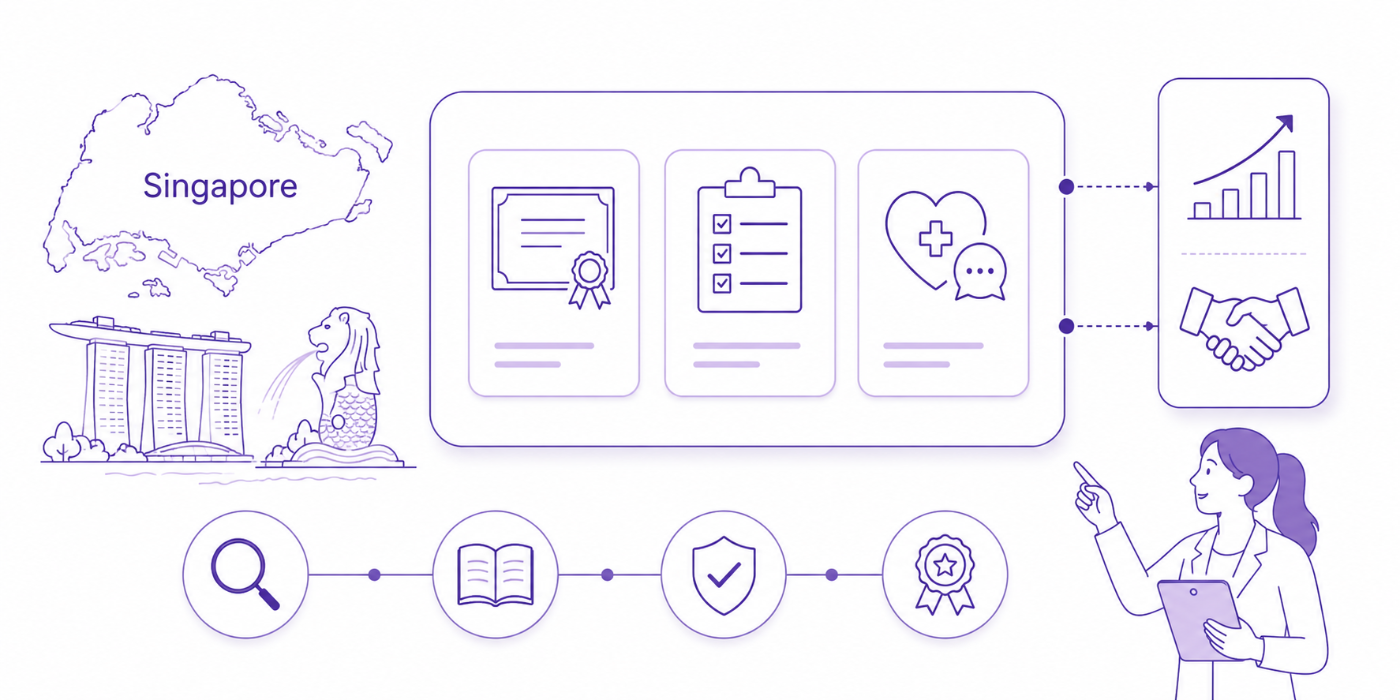
1. Why Health & Life Coaching Certification Matters in Singapore in 2026-2027
Singapore’s coaching market rewards credibility because the audience is used to structured training, measurable outcomes, professional development, and high service standards. A corporate buyer, founder, working parent, executive, healthcare-adjacent professional, or expat client will usually look for proof before trusting you with stress, lifestyle habits, confidence, burnout, career decisions, or wellbeing goals. That proof comes from certification differentiation, coaching integrity, trust-building, and clear credential presentation.
Singapore also has a strong lifelong-learning culture. SkillsFuture Singapore describes MySkillsFuture as a portal where individuals can discover training opportunities and support their lifelong learning journey, which fits the way many Singapore-based professionals evaluate upskilling, certification, and career mobility. For coaches, this means your training pathway should look organised, credible, and career-relevant. A vague certificate will struggle beside a clear certification portfolio, credentialing resource plan, continuous education strategy, and professional coaching toolkit.
Health coaching also sits inside a broader national push toward prevention, lifestyle support, and community-based wellbeing. Singapore’s Ministry of Health has referenced health coaching on lifestyle modifications in health programmes for people at risk of or living with chronic conditions, while Healthier SG has strengthened the national focus on preventive care. That creates opportunity for coaches who understand behaviour change science, habit formation, preventative health coaching, and scope-safe health coaching.
2. Choose the Right Certification Path for Singapore
Your first decision should be based on the client problem you want to solve. Health coaching suits clients who need behaviour support around sleep, stress, exercise consistency, nutrition habits, prevention mindset, and energy management. Life coaching suits clients who need support with confidence, leadership, relationships, career clarity, self-leadership, identity shifts, or major transitions. A Singapore-based hybrid coach can succeed when the offer has one clear outcome, backed by behaviour-change tools, client expectation management, safe coaching environments, and coaching boundaries.
ICF is a strong international route for life coaching, executive coaching, leadership coaching, and corporate coaching. ICF lists ACC as requiring 60+ hours of coaching education, 100+ hours of coaching experience, 10 hours of mentor coaching, performance evaluation, and a passing exam score; ICF also lists PCC as requiring 125+ education hours and 500+ coaching experience hours. Singapore-based coaches targeting executives, HR buyers, regional clients, or expats can pair ICF preparation with ICF application guidance, ICF exam mistake prevention, ICF credentialing skills, and life coach exam preparation.
For health and wellness coaching, NBHWC is one of the clearest board-certification routes internationally. NBHWC says candidates must complete an NBHWC Approved Training Program before applying for the board exam, and its exam eligibility requirements include 50 health and wellness coaching sessions plus an associate degree or 4,000 hours of work experience. This pathway is useful for coaches who want health-specific credibility alongside NBHWC practice exam preparation, NBHWC coaching competencies, NBHWC communication training, and NBHWC exam pitfalls.
EMCC can also matter for Singapore coaches who want a European-style professional identity in coaching, mentoring, reflective practice, and supervision. EMCC Global says its Individual Accreditation recognises practice quality, continuing professional development, reflective learning, and ongoing one-to-one supervision. This route can fit organisational coaches, leadership coaches, mentor-coaches, and senior practitioners who want to build credibility around coaching mastery, professional standards, supervision and growth, and career mistake prevention.
3. Build Eligibility, Practice Hours, and Professional Proof
Start with a credential map. Write down the programme name, accreditation status, education hours, practice-hour rules, assessment format, mentor coaching expectations, exam window, portfolio requirements, renewal rules, and total cost. This protects you from the expensive mistake of completing a course that looks polished yet fails to support the credential, market, or niche you actually want. Use credentialing resources, common credentialing mistakes, certification portfolio planning, and certification interview preparation before you commit money.
Singapore clients expect structure, so your practice sessions should be documented like professional work. Track session date, client type, coaching focus, duration, consent, paid or pro bono status where relevant, client action step, and your own skill reflection. That record helps credential applications, mentor feedback, case-study development, and business proof. Use client session recording tools, client journaling tools, surveys and feedback tools, and case-study templates to turn practice into evidence.
Privacy deserves special attention in Singapore. The Personal Data Protection Commission explains that the PDPA recognises both the need to protect personal data and the need for organisations to collect, use, or disclose it for legitimate and reasonable purposes; PDPC also lists notification, consent, and purpose limitation among data protection obligations. A coach handling goals, health habits, emotional struggles, work stress, or family context should use clear consent forms, minimal data collection, secure storage, and careful client communication. Support that with coaching integrity, ethical responsibilities, emotional consent, and safe coaching environments.
A realistic certification timeline can run in phases. Month one is for credential selection, scope, intake design, and basic session structure. Months two to four are for practice clients, mentor feedback, recorded sessions, competency review, and reflection. Months five and six are for assessment, exam preparation, portfolio tightening, testimonials, and offer building. This schedule works well for busy Singapore learners because it turns study into business preparation. Combine quick health coach certification guidance, life coach certification timing, interactive goal tracking, and coaching automation to protect momentum.
4. Study the Skills Singapore Clients Actually Pay For
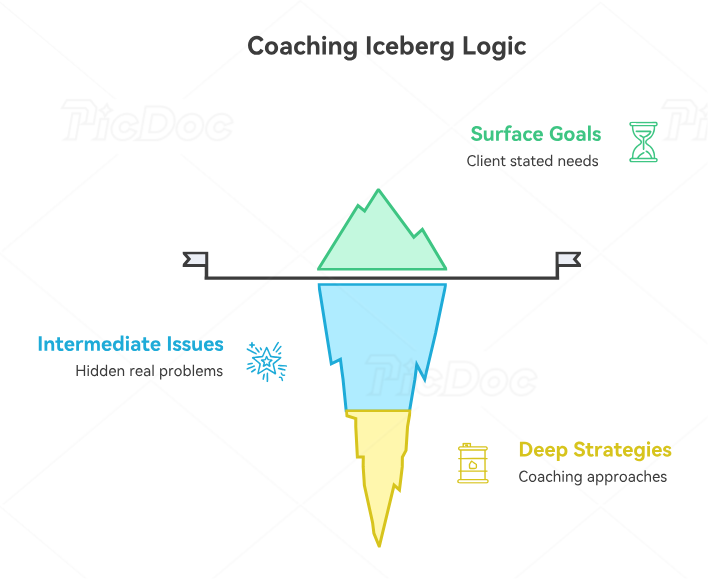
Singapore clients often bring layered, high-pressure problems. The surface goal may be weight management, confidence, career clarity, better sleep, stress control, leadership presence, or work-life balance. The real coaching work may involve long work hours, perfectionism, family expectations, financial pressure, comparison culture, caregiving responsibilities, or fear of falling behind. A serious coach needs inner critic management, solution-focused brief coaching, appreciative inquiry, and transformational coaching strategies.
Study listening as a commercial skill. In a fast-moving market, advice can feel efficient, yet effective coaching usually requires better diagnosis of patterns, values, obstacles, decision loops, and accountability gaps. A client who says “I need discipline” may actually need friction reduction, identity work, stress recovery, family-boundary practice, or a smaller action plan. That is where effective coaching communication, constructive feedback, client empowerment, and breakthrough coaching techniques become valuable.
Health coaching requires mature boundaries. Singapore’s Health Promotion Board highlights healthy-living areas such as mental wellbeing, staying active, eating healthier, sleeping better, and lifestyle tools, while HPB workplace and community programmes show how prevention and wellness are embedded across settings. A coach can support habits, confidence, planning, adherence, questions for healthcare providers, and behaviour tracking. Clinical diagnosis, treatment, prescribing, therapy, and regulated medical advice belong with qualified professionals. Build this lane through nutrition-change coaching, stress and anxiety coaching strategies, habit formation tools, and ethical coaching standards.
Your study week should include four blocks: theory, live practice, feedback review, and client-tool creation. Theory gives you models. Live practice reveals your weak spots. Feedback review builds skill. Client-tool creation turns learning into usable assets: intake forms, reflection prompts, habit trackers, progress dashboards, boundary scripts, and testimonial forms. Use daily journaling prompts, life mapping, gratitude journal coaching, and visualization methods as practice-ready tools.
5. Turn Certification Into a Paid Coaching Practice in Singapore
Certification becomes income when your offer is specific enough to buy. “I help high-performing professionals rebuild energy, reduce stress-driven habits, and create sustainable routines over 12 weeks” is stronger than “I offer health and life coaching.” “I help mid-career professionals make confident career decisions without burnout” is stronger than a list of modalities. Package your promise through high-ticket coaching offers, client retention strategy, payment systems, and financial forecasting.
For Singapore, corporate and professional positioning can be powerful. Employers and HR teams may respond to coaching framed around resilience, burnout prevention, leadership confidence, team communication, workplace wellbeing, and behavioural accountability. MOH has referenced customised programmes such as health coaching for workers in certain sectors, and HPB has described workplace wellness support through programmes that help employees stay active and eat well. A coach building workplace credibility should connect benchmarking insights, state of coaching trends, future-proofing practice, and coaching industry technology.
Your website should answer five questions fast: who you help, what problem you solve, how your coaching process works, what credentials support your work, and what results clients can reasonably expect. Add a section for scope, confidentiality, referral boundaries, and coaching fit. This builds trust before the first discovery call. Strengthen the page with SEO tools for coaching websites, client testimonials capture, case-study creation, and trust-based coaching.
Marketing should speak to the real Singapore pain points: “I cannot switch off after work,” “I keep sacrificing health for performance,” “I am exhausted but still underperforming,” “I know the habit, I cannot sustain the routine,” “I am scared to change careers,” or “I need accountability without judgment.” Those phrases should shape your articles, videos, email sequences, discovery-call questions, and coaching packages. Use digital marketing tools, YouTube growth for coaches, automated email sequences, and client engagement strategy to build demand.
The 90-day launch plan should be simple. Define one niche, create one offer, build one landing page, run practice or beta sessions, collect feedback, publish problem-led content, build referral relationships, and improve your delivery after every client. Then add group coaching, workshops, corporate proposals, or digital products only after your core offer is working. Use must-have coaching tools, coaching business automation, networking secrets, and profitable scaling as your growth foundation.
6. FAQs About Health & Life Coaching Certification in Singapore
-
The best certification depends on your intended client. ICF is strong for life, executive, leadership, and corporate coaching. NBHWC-style training is useful for health and wellness coaching credibility. EMCC can support coaches who want a professional identity around coaching, mentoring, supervision, and reflective practice. Choose after comparing your niche, budget, required hours, assessment format, supervision expectations, and business goal. Start with which certification is right for you, health coach certification credentials, online life coach certification reviews, and credentialing resources.
-
Online certification can work well when the programme includes live practice, feedback, ethics, assessment, mentor support, and alignment with your chosen credential route. Singapore learners often value flexible study because many are balancing demanding jobs, family duties, and career transitions. The risk is buying a certificate that gives content without skill evaluation. Compare the curriculum, supervision, trainer background, graduate outcomes, and credential pathway before enrolling. Use online health coach certification programmes, quick certification guidance, life coach certification timing, and continuous coaching education.
-
A coach should stay inside coaching scope. You can support habits, accountability, goal-setting, reflection, behaviour tracking, lifestyle planning, and client questions for qualified healthcare professionals. Medical diagnosis, treatment, prescribing, therapy, and regulated clinical advice should remain with licensed professionals. Clear scope protects clients and makes your practice more credible. Build that foundation with ethical responsibilities, coaching boundaries, safe coaching environments, and career-ending mistake prevention.
-
Start with structured practice sessions for peers, colleagues, wellness communities, professional networks, or beta clients. Use clear consent, confidentiality language, session goals, feedback forms, and referral boundaries. Your aim is skill development, documented coaching hours, better listening, stronger goal design, and early proof. Every practice session should teach you something about your process. Capture learning through surveys and feedback tools, client journaling tools, case-study templates, and testimonial capture.
-
Price depends on niche, credibility, proof, offer depth, client type, delivery format, and support level. A corporate resilience package, executive coaching programme, health habit reset, and student confidence programme will have different pricing logic. Start with a clear package instead of random single sessions: intake, weekly coaching, between-session support, progress tracking, and review. Then raise prices as proof improves. Use high-ticket coaching offers, payment systems, financial forecasting, and client retention strategies.
-
Build one focused offer, one landing page, one intake process, one progress tracker, one testimonial system, and one referral script. Publish content around the pain your client already feels: burnout, sleep loss, stress habits, leadership pressure, career uncertainty, self-care guilt, or consistency failure. Run discovery calls, refine your offer, track client wins, and build relationships with HR teams, wellness providers, gyms, therapists, clinics, and professional communities. Use must-have coaching tools, digital marketing tools, networking strategy, and scaling your coaching practice.
