
The Ultimate Guide to Getting Health & Life Coaching Certification in Malaysia: Everything You Need to Know in 2026-2027
Malaysia is becoming a serious market for health, wellness, lifestyle, and personal-development coaching because clients are more informed, more skeptical, and more results-focused than ever. A basic passion for helping people is no longer enough when clients compare your credibility, method, ethics, niche, and follow-through before booking a call.
This guide breaks down how to choose a credible health and life coaching certification in Malaysia, what to study, how to avoid expensive mistakes, and how to turn certification into a trusted coaching practice with real client outcomes.
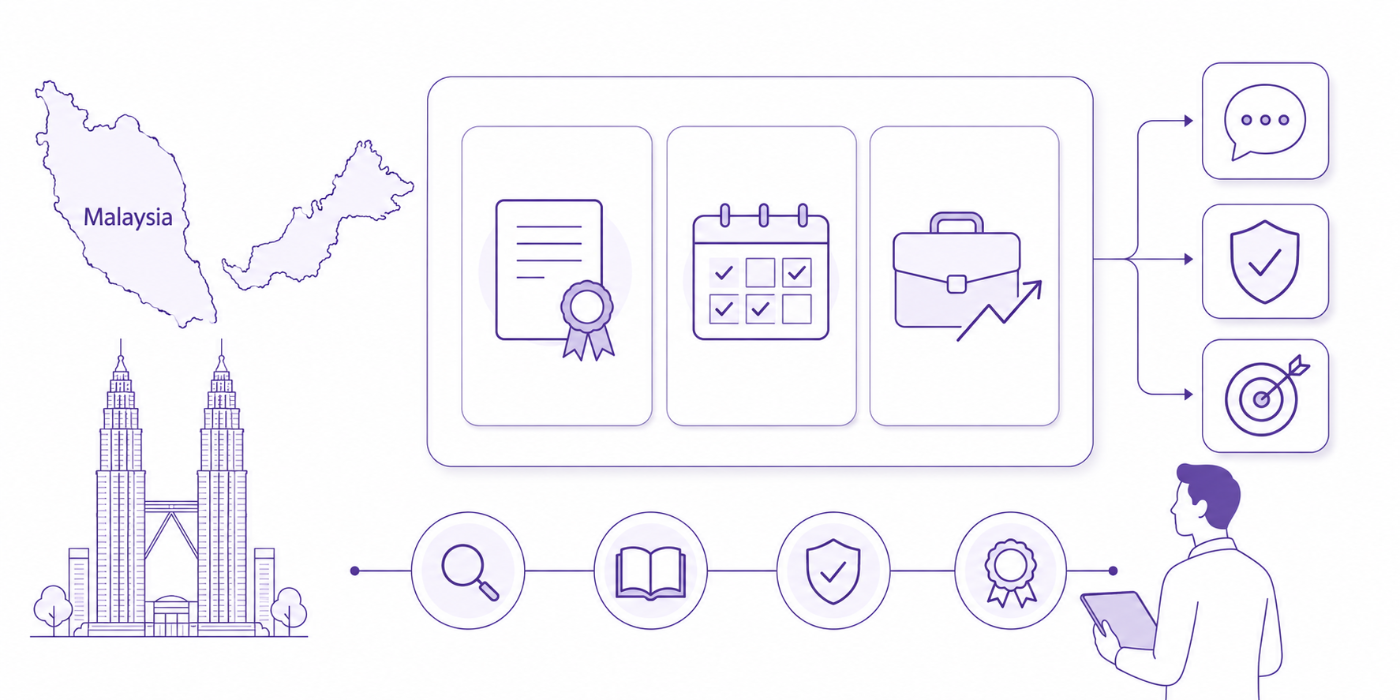
1. Why Health & Life Coaching Certification Matters in Malaysia in 2026-2027
The Malaysian coaching market is moving toward a more credibility-driven model. Clients still care about empathy, communication, and motivation, but they also want structure, safety, evidence-informed methods, and proof that a coach can support change without overstepping into therapy, nutrition diagnosis, or medical advice. That is why a strong certification helps you position yourself as a serious professional rather than someone offering vague encouragement.
A good certification gives you language for scope, boundaries, client intake, goal-setting, habit design, accountability, ethics, and coaching conversations. Those are the exact areas where inexperienced coaches usually lose trust. Many new coaches think clients leave because of price, but often they leave because the process feels random. If your sessions sound inspiring yet clients cannot see progress, your authority weakens quickly. This is where training in coaching integrity, ethical responsibilities, client accountability, and behavior change becomes practical business protection.
In Malaysia, certification also helps you speak to different client groups with more confidence. A corporate professional in Kuala Lumpur may need stress-management support, a busy parent in Penang may need lifestyle routines, and an online client may want a blend of life direction, emotional resilience, and health behavior support. Certification helps you avoid giving the same advice to everyone. It teaches you how to assess readiness, ask better questions, adjust expectations, and build realistic plans around culture, schedule, family systems, and client motivation. Coaches who understand client anxiety and stress, habit formation, safe coaching environments, and emotional consent can serve clients with more care and less guesswork.
The biggest mistake Malaysian beginners make is choosing a certification only because it is fast, cheap, or heavily advertised. Speed matters, but credibility matters more. A short online certificate may help you start, but it should still teach coaching foundations, practice sessions, ethics, client documentation, and business application. If a program only gives motivational theory and a downloadable certificate, it may leave you unable to handle real clients who miss sessions, resist change, overshare emotionally, or expect medical-level guidance. Before enrolling, compare the program against health coach certification trends, certification differentiation, credential listing strategy, and certification mistakes.
2. How To Choose the Right Health & Life Coaching Certification in Malaysia
Start with your intended client, not the certificate name. A coach serving executives with burnout needs different training from a coach supporting weight-loss habits, confidence, relationship patterns, or purpose-driven life planning. When the client problem is clear, certification comparison becomes easier. You can judge whether the curriculum teaches the skills that match your niche, such as mental health coaching, relationship coaching, preventative health coaching, or financial coaching.
For Malaysia, a strong health and life coaching certification should cover both client transformation and professional risk. Client transformation means you learn how to support goal clarity, motivation, habits, self-awareness, confidence, emotional regulation, and action planning. Professional risk means you learn what you should avoid: diagnosing conditions, prescribing diets, making unrealistic promises, guaranteeing outcomes, or acting as a replacement for licensed healthcare or mental health professionals. These boundaries become especially important when clients bring stress, food struggles, sleep problems, family pressure, workplace overwhelm, or emotional crises into coaching. This is why your training should connect with emotional intelligence coaching, client crisis support, expectation management, and constructive feedback.
Next, check the learning format. If you are working full-time in Malaysia, an online or hybrid certification may be more practical than a rigid live schedule. But online should still mean interactive, assessed, and supported. Good online training includes live practice, coaching demos, mentor feedback, written assignments, case studies, templates, discussion groups, and clear completion criteria. A weak online program gives you videos, quizzes, and a certificate without testing whether you can actually coach. Use online health coach certification guidance, quick certification planning, online life coach certification reviews, and course-based continuing education to separate convenience from shallowness.
You should also compare certification against your credibility needs. If you want private coaching clients, your website, testimonials, niche clarity, and coaching process may matter as much as the certificate. If you want corporate wellness, HR partnerships, or institutional work, your credential language and documentation may matter more. If you want international clients, choose a certification that explains its standards clearly and helps you present credentials professionally. That is where resume credential strategy, certification portfolio building, credentialing essentials, and case study templates become valuable.
The smartest way to choose is to score each program across six categories: credibility, curriculum depth, practice hours, ethics, business support, and post-certification growth. Do not let one shiny feature hide five weak areas. A beautiful website cannot replace supervised coaching practice. A famous instructor cannot replace ethics training. A low price cannot replace client-result tools. A fast timeline cannot replace confidence. Coaches who pick carefully avoid the painful moment when they finish certification and still do not know how to run a first session, handle resistance, explain pricing, or create a client plan. Before paying, compare the program with which certification is right for you, ICF credentialing skills, NBHWC competencies, and CPD life coach certification.
3. What You Should Learn Before Coaching Paying Clients
A certification should make you safer, sharper, and more useful. The first skill you need is intake. Many new coaches jump straight into advice because they fear silence or want to prove value quickly. Strong intake slows the process down enough to understand the client’s goal, history, obstacles, support system, readiness, stressors, and expectations. Without intake, a coach may build a plan that sounds good but collapses after one difficult week. Strong intake connects naturally with surveys and feedback tools, custom coaching dashboards, client journaling tools, and coaching resource hubs.
The second skill is goal design. Clients often arrive with goals that are too vague, too emotional, too dependent on other people, or too large for their current capacity. “I want to be healthier” becomes useful only when a coach helps define the behavior, context, friction, measurement, and next step. “I want confidence” becomes coachable when the client identifies specific situations, internal patterns, practice behaviors, and feedback loops. Certification should teach you how to move from desire to action without making the client feel judged or rushed. This is where interactive goal tracking, life mapping, solution-focused coaching, and transformational coaching strategies can deepen your process.
The third skill is behavior change. Malaysian clients, like clients everywhere, do not fail because they lack inspirational quotes. They struggle because their environment, schedule, identity, stress level, family expectations, food culture, work pressure, sleep quality, and emotional triggers all compete against change. A useful coach helps the client shrink habits, design cues, reduce friction, plan recovery, and normalize setbacks. A weak coach repeats “stay consistent” until the client feels worse. Study habit formation tools, strength-based coaching, positive psychology coaching, and neuroscience-based coaching if you want your sessions to produce measurable movement.
The fourth skill is communication under pressure. Clients may resist, disappear, over-explain, blame themselves, ask for guarantees, request advice outside your scope, or expect you to rescue them emotionally. A certified coach should know how to listen, reflect, challenge, summarize, ask permission, give feedback, and hold boundaries. This is where trust is built. Trust does not come from being endlessly nice. It comes from being clear, consistent, respectful, and useful when the client feels stuck. Training in coaching communication, trust building, non-negotiable standards, and difficult client situations can protect your practice from messy misunderstandings.
The fifth skill is documentation. New coaches underestimate how much professionalism comes from written clarity. Every client should know the coaching agreement, scope, schedule, confidentiality limits, cancellation policy, session goals, action steps, progress markers, and review rhythm. Documentation also helps you avoid the awkward problem of repeating conversations, forgetting client details, or making promises you cannot track. If you want clients to experience you as organized and serious, use client session recording tools, automated email sequences, client testimonials capture, and coaching case studies strategically.
4. How To Turn Certification Into a Coaching Career in Malaysia
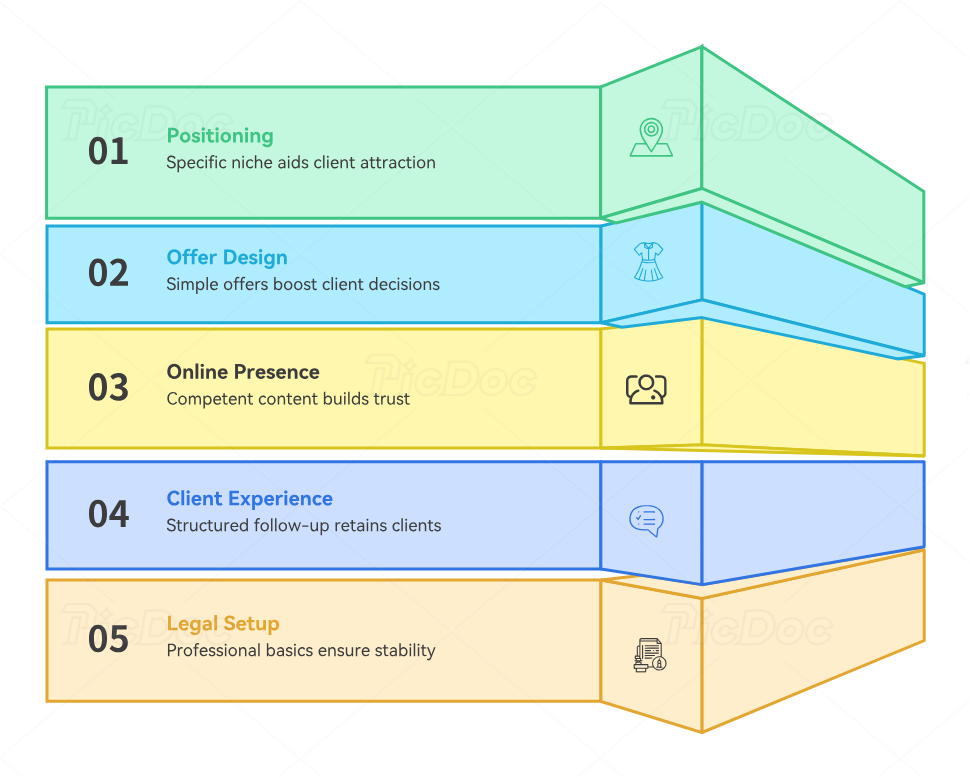
Certification gives you credibility, but positioning turns credibility into clients. Many new coaches finish training and immediately call themselves a “health and life coach” without explaining who they help, what problem they solve, how their process works, and why their approach is different. That broad label makes marketing harder because clients cannot see themselves in it. A stronger position sounds more specific: stress and lifestyle coaching for working professionals, habit coaching for busy women, confidence and wellness coaching for young adults, or health-behavior coaching for corporate teams. Use client preference trends, future coaching opportunities, niche toolkit planning, and coaching business benchmarking to shape your offer around market demand.
Your first offer should be simple enough to explain in one conversation. Avoid launching with six packages, ten bonuses, three payment plans, and unclear outcomes. A beginner-friendly coaching offer can include a 6-week or 8-week program, a defined client problem, weekly sessions, between-session support, a tracking method, and a review at the end. Clients buy clarity faster than complexity. When they understand the problem, process, outcome, and support, the decision feels safer. This is why studying high-ticket coaching offers, payment systems, client retention, and exceptional client experiences matters immediately after certification.
Your online presence should prove competence before you ask for a sale. A Malaysian coach can use a simple website, LinkedIn profile, Instagram page, email list, or YouTube channel, but every channel needs the same foundation: clear niche, credible credential, strong point of view, useful content, client-safe language, and a direct call to action. Avoid posting only motivational quotes because they attract likes without proving skill. Instead, publish practical content about stress patterns, habit recovery, coaching boundaries, goal failure, self-sabotage, food environment, routines, decision fatigue, and accountability. For stronger visibility, use SEO tools for coaching websites, YouTube growth for coaches, digital marketing tools, and testimonial capture.
You also need a client experience system. Clients may enjoy sessions, but retention depends on what happens between sessions. Do they remember the action plan? Do they know what to track? Do they receive reminders? Do they feel seen when they struggle? Do they understand what progress looks like when results are slow? Coaches who create structured follow-up often outperform coaches who rely only on charisma. Use coaching automation, CRM tools, business automation, and client engagement technology to create a cleaner client journey.
Legal and business setup also deserve attention. Even a small coaching practice should think about agreements, payment terms, privacy, refund policies, disclaimers, tax planning, and business structure. You do not need to overcomplicate your first month, but you should never coach casually when clients are paying you for guidance. Professional basics create psychological safety for both sides. Review legal requirements for coaches, setting up a coaching LLC, tax planning for coaches, and financial forecasting so your practice grows on stable ground.
5. Common Certification Mistakes Malaysian Coaches Should Avoid
The first mistake is confusing certification with readiness. A certificate can confirm you completed training, but readiness shows up when you can hold a difficult conversation, explain your scope, design an action plan, track progress, and respond when a client misses commitments. Many coaches feel disappointed after certification because they expected confidence to appear automatically. Confidence comes from practice, feedback, repetition, and real client scenarios. Use certification interview preparation, ICF exam preparation, ICF application guidance, and exam mistake prevention if your pathway includes formal assessment.
The second mistake is choosing a niche after building the website. Your niche should shape the website, not the other way around. A generic coaching website usually sounds polished but forgettable. It says “unlock your potential,” “live your best life,” and “achieve balance,” but it does not speak to a client lying awake at midnight worrying about weight, work, marriage, confidence, energy, or identity. Strong positioning turns pain into language. If your niche is health habits, speak to inconsistency and relapse. If your niche is career-life balance, speak to burnout and decision fatigue. If your niche is emotional resilience, speak to self-trust and patterns. Study mental health coaching trends, micro-coaching, social responsibility in coaching, and future-proof coaching trends before branding yourself.
The third mistake is overpromising transformation. Clients may want dramatic outcomes, but coaches should sell a process they can ethically support. Promising guaranteed weight loss, total confidence, healed trauma, cured anxiety, or permanent life change can damage trust and create risk. Better language focuses on support, structure, behavior, awareness, accountability, and progress. You can still write powerful marketing without making unsafe claims. That balance is easier when you understand coaching boundaries, career-ending mistakes, coaching traps, and professional standards.
The fourth mistake is ignoring technology. In 2026-2027, clients expect convenience. They do not want scattered WhatsApp notes, forgotten links, unclear scheduling, missing payment reminders, and action plans buried in chat history. A simple tech stack can make your coaching feel premium: scheduler, payment system, intake form, client portal, habit tracker, email sequence, feedback form, and testimonial process. You do not need expensive software at the beginning, but you do need a repeatable system. Explore coaching technology transformation, AI client interactions, best coaching apps, and must-have coaching tools.
The fifth mistake is failing to measure outcomes. Coaches often rely on client mood after sessions as proof of success. Feeling better after a session matters, but long-term value comes from changed behavior, better decisions, stronger self-awareness, improved routines, and more consistent follow-through. Track baseline, goals, weekly actions, barriers, wins, and client reflections. This helps clients see progress even when results feel slow. It also helps you improve your method. Use feedback for business growth, successful transformation case studies, client diet change support, and client empowerment methods to build a practice around evidence of progress.
The sixth mistake is studying forever and never launching. Some Malaysian coaches keep collecting certificates because they are afraid to be visible. More training can help, but it can also become a hiding place. Once you have foundational skills, clear ethics, a defined niche, and a simple offer, begin with low-risk practice clients, beta programs, workshops, or community sessions. Real coaching teaches lessons no course can fully simulate. Keep improving through coach mastery, continuous coaching education, mindset shifts, and scaling your coaching practice, but do not let learning replace service.
6. FAQs About Health & Life Coaching Certification in Malaysia
-
Certification is usually about credibility, competence, and client trust rather than a simple permission slip. However, the moment you discuss health, stress, lifestyle, nutrition habits, or emotional wellbeing, you need strong scope awareness. Certification helps you avoid crossing into medical, dietetic, psychological, or therapeutic claims. A responsible coach learns when to coach, when to refer, and how to explain boundaries clearly. Study ethical responsibilities, emotional consent, safe coaching environments, and coaching integrity before working with paying clients.
-
Choose based on the client problem you want to solve. Health coaching fits habits, lifestyle routines, prevention, energy, sleep, food behavior, and wellness follow-through. Life coaching fits goals, confidence, decision-making, identity, relationships, career transitions, and personal direction. A combined certification can be powerful if it teaches both behavior change and life coaching frameworks with clear ethical boundaries. Compare your options using online health certification programs, life coach certification programs, certification selection guidance, and health coaching salary insights.
-
The timeline depends on the program depth, live practice requirements, assignments, exams, and your weekly study availability. A shorter route can work if you already have related experience, but beginners usually benefit from more practice, feedback, and case-based learning. Do not judge a program only by how fast it promises completion. Judge whether you will finish with the ability to run sessions, structure programs, handle resistance, and explain your scope. Use quick life coach certification guidance, quick health coach certification guidance, credentialing resources, and certification portfolio planning while planning your timeline.
-
Yes, many coaching services can be delivered online, but international work requires clearer positioning, professional systems, scheduling discipline, payment setup, privacy awareness, and careful credential language. International clients will judge your website, testimonials, niche, process, and professionalism before booking. They may also expect smooth onboarding, reminders, forms, and digital follow-up. Build your online model with video conferencing best practices, coaching dashboards, automation tools, and digital marketing systems.
-
The biggest mistake is trying to sell coaching before defining a clear client problem. A broad “I help people improve their lives” message forces clients to do too much mental work. Specificity creates trust. Tell clients who you help, what pain you understand, what process you use, and what kind of progress they can expect. Then back that up with strong onboarding, session structure, tracking, and follow-up. Strengthen this area with client retention strategies, exceptional client experience, high-ticket offer design, and networking for coaches.
-
Certification pays off faster when you treat it as part of a business system. Build a niche offer while studying, document practice sessions, collect testimonials ethically, publish educational content, set up simple tech, and create a follow-up process before your first paid program. Do not wait until graduation to think about clients. Use your certification period to build proof, language, confidence, and systems. Focus on client testimonials, coaching case studies, SEO for coaching websites, and profitable scaling from the start.
