
The Ultimate Guide to Getting Health & Life Coaching Certification in Philippines: Everything You Need to Know in 2026-2027
Health and life coaching certification in the Philippines is becoming more valuable because Filipino clients are getting sharper about credibility, online coaching is expanding, and wellness buyers want practical support beyond generic advice. A coach who can combine ethical practice, behavior-change skill, client accountability, and clear positioning can stand out fast.
This guide breaks down the real path: choosing the right certification, understanding global credentials, building local trust, avoiding expensive program mistakes, and turning training into paid coaching work through strong coaching integrity, client trust, and lasting behavior change.
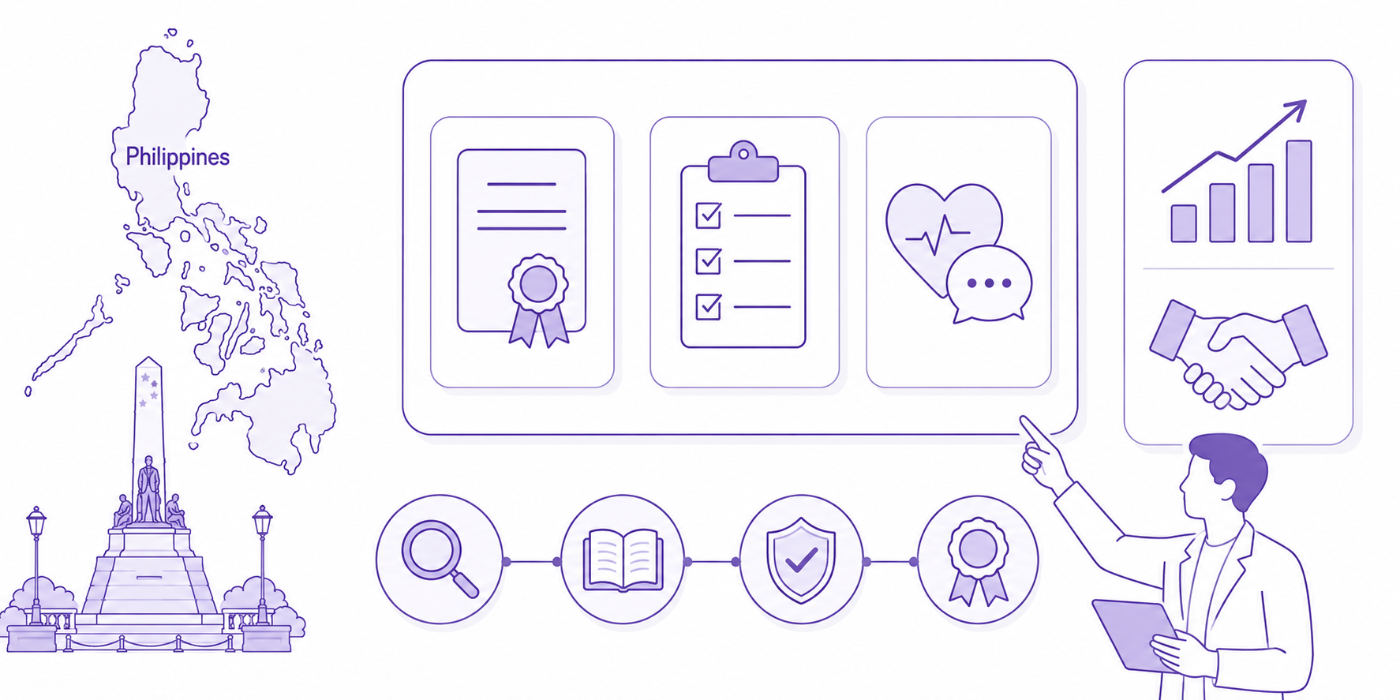
1. Why Health & Life Coaching Certification Matters in the Philippines in 2026-2027
A Filipino client looking for a health or life coach in 2026 is usually dealing with more than one surface goal. They may want weight management, confidence, emotional stability, career direction, routine building, stress control, better food choices, or stronger relationships. That means your training cannot stop at motivational language. You need a structured method for listening, goal-setting, behavior design, accountability, and ethical boundaries. This is where strong health coach certification, life coach certification, coaching ethics, and client communication become practical business assets.
The Philippines has a strong service culture, a large English-speaking professional population, high overseas work influence, and growing digital coaching demand. That creates opportunity for coaches serving clients in Manila, Cebu, Davao, Quezon City, remote teams, OFW families, corporate wellness groups, and online communities. The real pain point is credibility. Many new coaches struggle because their offer sounds emotional but vague. Certification helps you explain your scope, process, tools, and standards through coaching case studies, client testimonials, safe coaching environments, and ethical responsibility.
The Philippine wellness economy has shown meaningful post-pandemic momentum, with the Global Wellness Institute reporting local-currency wellness economy growth since 2019; for coaches, this supports the bigger shift toward preventive health, emotional wellness, stress support, lifestyle change, and digital wellness services. That does not mean every certified coach will earn quickly. It means buyers are more aware, competition is louder, and weak positioning gets ignored. Certification gives you a base, but your results come from applying habit formation, accountability systems, goal tracking, and feedback loops with discipline.
The first decision is whether you want to become mainly a health coach, life coach, wellness coach, corporate coach, relationship coach, mental health-adjacent coach, or hybrid health-and-life coach. A health coach usually works around lifestyle, wellness routines, nutrition behavior, sleep, movement, stress, and preventive habits. A life coach usually works around goals, identity, confidence, relationships, productivity, transitions, and decision-making. A hybrid coach needs tighter boundaries because health conversations can slide into medical advice and life conversations can slide into therapy. You need emotional consent, scope clarity, client expectation management, and crisis support boundaries.
2. Which Certification Path Should Filipino Coaches Choose?
The best certification path depends on the type of client you want to serve, the credibility signal you need, and the amount of time you can realistically commit. A Filipino coach who wants corporate wellness contracts may benefit from health coaching, behavior-change training, and business credibility. A coach serving career transitions may prioritize life coaching, communication frameworks, and goal architecture. A coach serving stress, self-care, and burnout recovery needs emotional boundaries, referral awareness, and safe coaching practices, anxiety and stress strategies, emotional intelligence coaching, and transformational behavior strategies.
For health coaching, NBHWC-aligned training is one of the strongest global signals because the National Board for Health & Wellness Coaching requires completion of an approved training program before exam application, and its eligibility requirements include 50 health and wellness coaching sessions plus an education or work-experience requirement. A Filipino coach who wants to market internationally or work with evidence-informed wellness clients should understand this route early, even if they begin with a more accessible program. The danger is buying a cheap certificate, then discovering later that it does not support board-certification eligibility. Use NBHWC exam preparation, NBHWC competencies, NBHWC communication skills, and health coach salary insights to evaluate the full pathway.
For life coaching, the ICF route is widely recognized globally, with credentials such as ACC, PCC, and MCC. ICF describes different credential levels and requirements involving coach-specific education, coaching experience, mentor coaching, and assessment; higher credentials require deeper experience, with MCC requiring 200+ education hours and 2,500+ coaching experience hours. This matters because many Filipino coaches start with enthusiasm and immediately market “transformational coaching,” but transformation without trained presence can become advice, rescue, or emotional overreach. Strong ICF-style preparation pairs well with ICF exam guidance, ICF application process, ICF credentialing skills, and ICF exam mistake prevention.
CPD-accredited programs can also be useful, especially for coaches who want structured continuing education, professional development language, and flexible online learning. In the Philippines, CPD has a formal professional meaning under Republic Act No. 10912 for PRC-regulated professionals, so coaches should avoid implying that a private coaching certificate gives a regulated professional license unless that is specifically true. This distinction protects your marketing. Use CPD language carefully through CPD-accredited life coach certification, continuous coaching education, coaching resource hubs, and certification portfolio building.
A smart certification stack for the Philippines usually looks like this: first, complete a strong foundational health or life coaching certificate; second, begin supervised practice and coaching logs; third, choose a specialization such as habit formation, stress coaching, relationship coaching, career coaching, or preventive wellness; fourth, build client proof through case studies and testimonials; fifth, pursue higher credentials once your practice has traction. This sequence keeps you from hiding behind certificates while avoiding the opposite mistake: selling coaching before you have enough skill. Build the stack with habit formation science, relationship coaching pathways, preventative health coaching, and future-proof coaching trends.
3. How to Choose a High-Value Certification Program Without Wasting Money
The biggest certification mistake is choosing the program that feels inspiring instead of the program that builds usable coaching ability. A polished sales page can promise freedom, purpose, and income, yet leave you without supervised practice, assessment, ethical boundaries, niche clarity, or business systems. Before you pay, inspect the curriculum like a serious buyer. Look for coaching demonstrations, live practice, mentor feedback, client scenarios, behavior-change frameworks, ethical decision-making, business application, and post-certification support. Compare programs using certification trends, credentialing mistakes, program reviews, and online life coach program comparisons.
A high-value program should teach you how to coach a client who misses sessions, emotionally shuts down, wants fast weight loss, refuses accountability, overthinks every decision, or expects you to fix their life. Those are the moments where certification quality shows. You need tools for resistance, ambivalence, motivation dips, identity conflict, family pressure, shame, and relapse. A weak course gives you worksheets. A serious course teaches when to use the worksheet, when to stop using it, and how to read the client in front of you. Strengthen this with inner critic management, solution-focused brief coaching, appreciative inquiry, and positive psychology frameworks.
For Filipino coaches, price sensitivity is real. Many students compare certification costs against local earning potential, foreign exchange rates, family obligations, and the pressure to recover investment quickly. The answer is to calculate return on skill, not just return on certificate. Ask: Will this program help me run better sessions? Will it help me get testimonials? Will it help me explain my offer? Will it help me prevent harm? Will it help me retain clients? Will it help me create a niche program? That level of analysis connects certification to client retention, premium coaching offers, business forecasting, and payment systems.
Review the assessment model before enrolling. Multiple-choice quizzes alone rarely build coaching confidence. Stronger programs include observed sessions, reflective journals, mentor feedback, competency rubrics, case-study assignments, and practical exams. This matters because real coaching involves judgment. A client may ask for a meal plan, but your scope may require helping them explore patterns and refer to a nutrition professional when needed. A client may describe panic, trauma, or depressive symptoms, and your job is to respect coaching limits. Program quality should prepare you for constructive feedback, emotional crises, scope protection, and coaching integrity.
4. Step-by-Step Roadmap to Certification and Paid Coaching Work
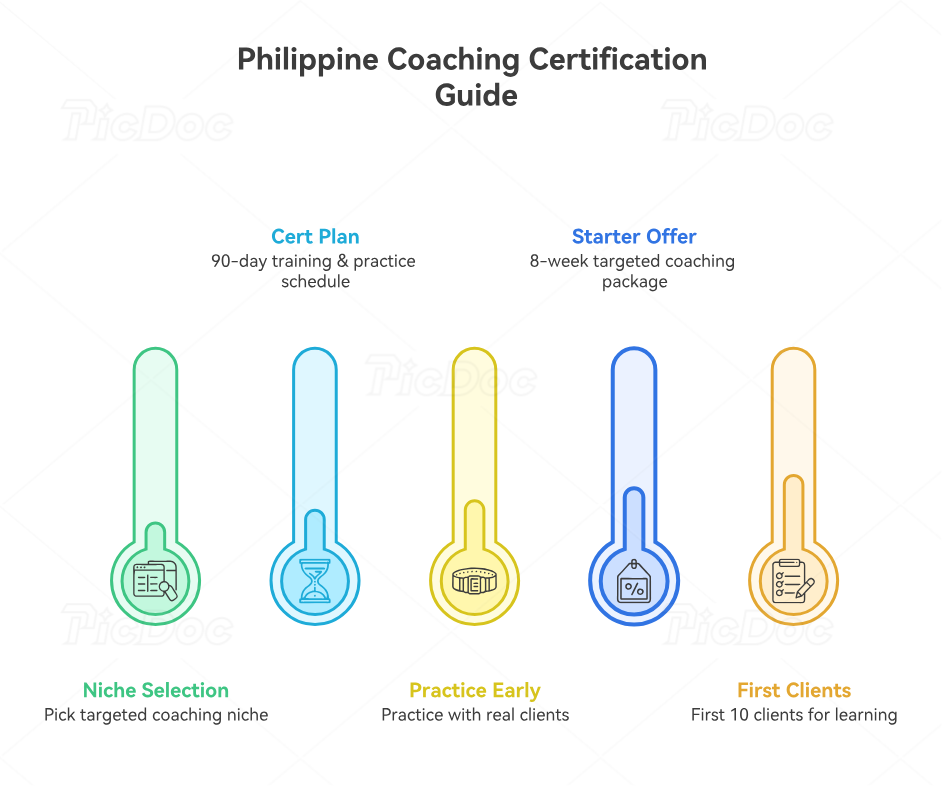
Start with a niche decision, because certification without positioning creates a painful gap. You may complete training and still struggle to explain who you help. For the Philippines, strong niches include corporate stress coaching, OFW family wellness, women’s habit coaching, young professional confidence coaching, relationship communication coaching, preventive health coaching, executive wellness, student resilience, faith-sensitive wellness, and burnout recovery support. Your niche should combine pain, audience, and measurable improvement. Build that thinking with mental health coaching, financial coaching career planning, relationship coaching careers, and micro-coaching trends.
Next, pick your certification route and create a 90-day execution plan. Week 1 should be program selection, budget confirmation, schedule blocking, and outcome definition. Weeks 2-6 should focus on core coaching skills: listening, questions, values, goals, behavior design, accountability, and ethics. Weeks 7-10 should include practice clients, recorded reflections, and feedback. Weeks 11-12 should turn your training into a market-ready offer, onboarding process, and first case-study pipeline. Keep the work grounded through study schedule planning, certification interviews, coaching toolkits, and case study templates.
During certification, practice with real humans as early as your program allows. Many new coaches wait until they feel ready, then discover that readiness comes from difficult sessions. Practice clients teach you what textbooks cannot: clients forget commitments, change goals, avoid discomfort, hide shame, expect advice, and celebrate small wins that look boring on paper but matter deeply. Your job is to turn those moments into skill. Use session recording tools, surveys and feedback tools, journaling prompts, and goal dashboards to convert practice into learning.
After the certificate, build a simple 8-week starter offer. Avoid launching with a messy menu of single sessions, VIP days, WhatsApp support, meal planning, mindset coaching, relationship coaching, productivity coaching, and life purpose coaching all at once. Package one outcome. For example: “8-week stress reset for Filipino professionals,” “12-week habit coaching for women rebuilding health routines,” or “6-week confidence coaching for career transition.” Every offer should include intake, baseline assessment, weekly sessions, action plans, check-ins, progress markers, and renewal options. Support that system with client onboarding, automation tools, habit tracking, and business automation.
Your first 10 clients should generate learning, testimonials, referrals, and sharper messaging. Do not chase scale before you know which client problems you solve best. Track why clients joined, where they resisted, what they completed, what changed, what they valued, and what confused them. These answers become your sales page, content strategy, and coaching improvements. Build the feedback engine through client feedback growth, testimonial capture, networking strategy, and joint ventures.
5. How to Build Trust, Stay Ethical, and Grow in the Philippine Coaching Market
Trust is the real currency of coaching in the Philippines because many clients will find you through referrals, social proof, community reputation, Facebook groups, LinkedIn, Instagram, webinars, churches, companies, schools, gyms, clinics, or wellness communities. A client may admire your content, but they buy when they feel safe. That safety comes from clear promises, transparent boundaries, honest credentials, strong confidentiality language, and a coaching process they can understand. Strengthen your reputation through trust building, coaching integrity, ethical responsibilities, and safe coaching environments.
Ethical marketing is especially important for hybrid health and life coaches. Do not promise disease reversal, guaranteed weight loss, trauma healing, mental health treatment, medical outcomes, or instant transformation. Better promises sound specific, behavioral, and honest: “build a consistent evening routine,” “improve follow-through around movement,” “create a stress-response plan,” “practice healthier food decisions,” “reduce decision fatigue,” or “build confidence in career transitions.” These claims are easier to support and safer to deliver. Pair them with behavior change science, constructive feedback, client expectations, and coaching boundaries.
Technology can help Filipino coaches compete beyond local geography. With Zoom, scheduling tools, email sequences, client portals, surveys, habit trackers, payment systems, and dashboards, a coach in the Philippines can serve clients locally and internationally. The danger is tool overload. Start with the client journey: discovery call, intake, agreement, first session, action plan, check-in, progress review, testimonial request, renewal. Add only the tools that remove friction at each step. Use technology in coaching, AI client interactions, coaching apps, and must-have coaching tools.
Marketing should educate before it sells. Write posts that answer painful questions: “Why do I keep losing motivation after two weeks?” “How do I rebuild health routines with night-shift work?” “How can I manage stress without quitting my job?” “What should I expect from a health coach?” “How do I know whether I need coaching or therapy?” This kind of content builds authority because it respects the client’s real confusion. Build your content system with YouTube growth, SEO tools, digital marketing tools, and client magnet positioning.
Long-term growth comes from specialization, proof, and partnerships. A certified coach can partner with gyms, yoga studios, corporate HR teams, wellness retreats, nutrition professionals, therapists, doctors, community groups, schools, and online course creators, while staying clear about scope. Partnerships work when each side understands the client journey and referral boundary. Build that maturity with industry benchmarks, state of coaching trends, social responsibility in coaching, and economic-change coaching strategies.
6. FAQs
-
Health and life coaching is generally a private professional service rather than a single government-licensed profession in the same way medicine, psychology, nursing, or nutrition-dietetics may be regulated. That means your certificate mainly functions as a credibility, training, ethics, and skill signal. Still, you must avoid regulated claims, medical advice, therapy language, and credential exaggeration. Use ethical responsibilities, scope boundaries, coaching integrity, and legal requirements for coaches before publishing your offer.
-
Choose health coaching if your work centers on habits, wellness routines, stress, sleep, movement, food behavior, preventive lifestyle change, or health accountability. Choose life coaching if your work centers on confidence, goals, career transitions, relationships, decision-making, identity, communication, or personal growth. Choose a hybrid path only when you can explain your boundaries clearly. Compare health coaching programs, life coaching programs, which certification fits, and coaching toolkit design.
-
Yes, online coaching makes international work realistic when your training, niche, client process, payment setup, scheduling system, and communication standards are strong. International clients may care more about recognizable credentials, proof of results, clear packages, and professional delivery than your location. Build credibility through credential listing, case studies, client experience, and video coaching best practices.
-
Many foundational online programs can be completed in a few months, while advanced credential pathways may take longer because they require practice hours, mentor coaching, assessments, or exam preparation. The better question is how quickly you can become useful to clients without rushing the skill-building process. A fast certificate with weak practice can leave you anxious in real sessions. Use quick certification planning, life certification timelines, study planning, and certification portfolio work.
-
Look for flexible scheduling, clear curriculum, live practice, mentor feedback, ethical training, business support, internationally understandable credentials, downloadable resources, assessment, and post-training community. Filipino learners should also consider time zone fit, payment flexibility, internet-friendly delivery, English clarity, and whether the program helps with client acquisition after certification. Compare options through online certification programs, CPD certification, certification resources, and business growth tools.
-
Start with one niche offer, then run discovery calls, publish educational content, ask for referrals, host free workshops, collaborate with complementary professionals, and collect testimonials from early clients. Avoid selling vague “life transformation.” Sell a specific coaching journey with a clear starting pain and measurable progress markers. Build your first-client engine with networking secrets, testimonial capture, client retention, and high-ticket coaching offers.
