
The Ultimate Guide to Getting Health & Life Coaching Certification in Hong Kong: Everything You Need to Know in 2026-2027
Health and life coaching certification in Hong Kong is becoming a serious credibility filter because clients are busy, highly informed, and quick to dismiss vague wellness promises. The opportunity is strong, but the market rewards coaches who can explain their method, boundaries, results, and professional standards clearly.
This guide shows how to choose the right certification, avoid weak programs, build client trust, and turn training into a real coaching practice using coaching integrity, client communication, behavior change science, and client accountability.
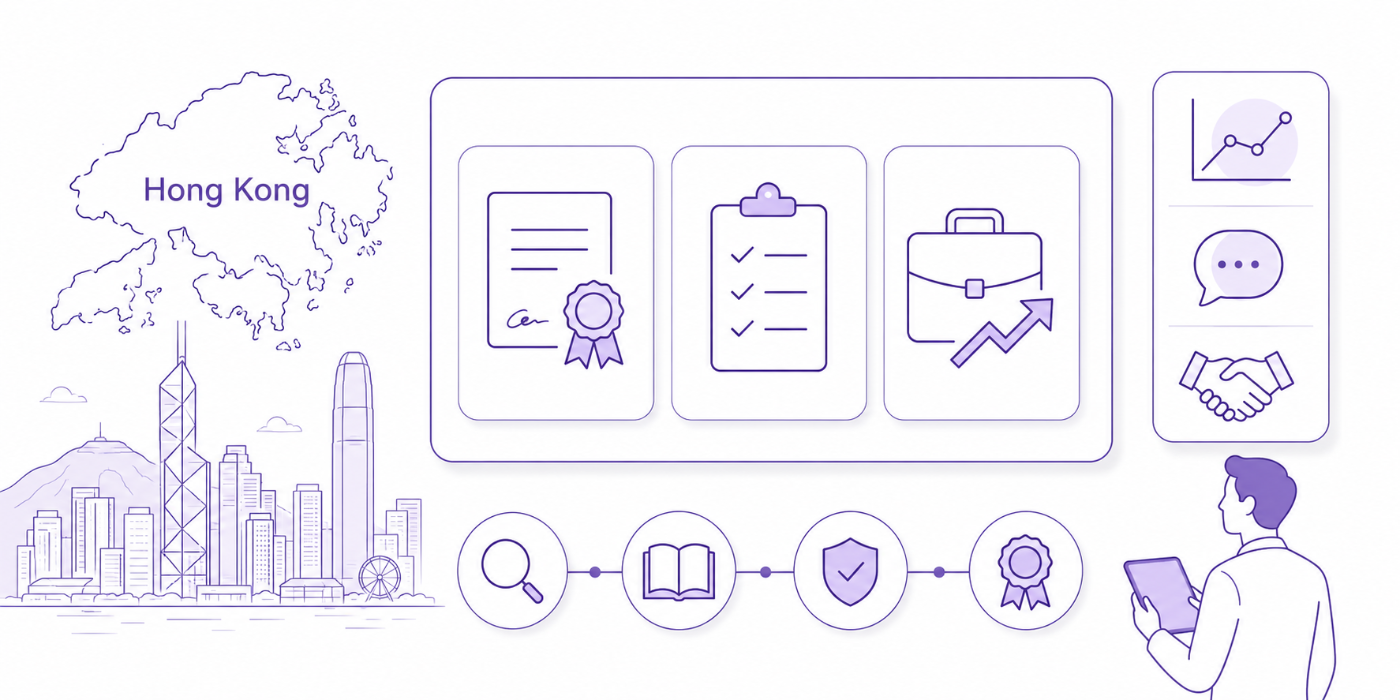
1. Why Health & Life Coaching Certification Matters in Hong Kong in 2026-2027
Hong Kong clients often come to coaching with layered pressure: long working hours, high-performance expectations, family obligations, financial stress, career uncertainty, sleep problems, food inconsistency, burnout, relationship tension, and the constant feeling that life is moving faster than their ability to manage it. A coach who only offers motivation will struggle. A coach trained in habit formation, stress coaching strategies, goal tracking, and safe coaching environments can provide structure clients can actually use.
Certification matters because Hong Kong is a trust-sensitive market. Clients may compare coaches quickly through websites, LinkedIn profiles, referrals, testimonials, credentials, and corporate wellness language. They want to know whether you are trained, whether your work is ethical, whether your claims are realistic, and whether you can support real change without crossing into therapy, medical care, or nutrition treatment. This is where health coach certification, life coach certification, coaching ethics, and credential listing become practical tools rather than decorative badges.
Hong Kong also has a professional landscape where title clarity matters. The government’s Accredited Registers Scheme explains that some healthcare professionals outside statutory registration are handled through voluntary, society-based registration systems, which means clients may rely on professional bodies and public registers when checking credibility. For dietitians and nutritionists specifically, Hong Kong’s Consumer Council has warned that there is currently no statutory registration for those titles, which creates public confusion around credentials and service claims. A coach should therefore use scope boundaries, ethical responsibility, coaching integrity, and career mistake prevention from day one.
The strongest opportunity in Hong Kong is hybrid coaching done responsibly. A health-and-life coach can help clients build routines, improve follow-through, reduce decision fatigue, clarify goals, manage stress triggers, strengthen relationships, and make healthier daily choices. That hybrid value becomes risky when a coach starts diagnosing, prescribing, treating, or promising medical outcomes. Your certification should train you to coach behavior, motivation, planning, values, environment, accountability, and self-awareness. It should also teach when to refer. Pair your training with emotional consent, client expectation management, constructive feedback, and transformational coaching strategies.
2. Which Certification Path Should Hong Kong Coaches Choose?
The right certification path depends on your target client. A coach serving professionals in Central, Admiralty, Quarry Bay, Kowloon, or remote corporate teams may need executive wellness positioning, stress coaching, confidentiality, and strong digital delivery. A coach serving parents, students, entrepreneurs, or expats may need life coaching tools, emotional intelligence, values work, routine design, and decision-making frameworks. Your path should connect certification to a real market need through career blueprinting, relationship coaching pathways, mental health coaching, and future coaching trends.
For life coaching, ICF credentials remain one of the clearest global signals. ICF describes credential pathways such as ACC, PCC, and MCC, with requirements involving coach-specific education, coaching experience, mentor coaching, and performance evaluation. The PCC route, for example, requires 125 hours of coach-specific education and 500 hours of coaching experience. This matters in Hong Kong because many clients work in international industries and understand professional standards. If you want a serious life coaching route, study ICF certification, ICF application process, ICF credentialing skills, and ICF exam mistakes.
For health and wellness coaching, NBHWC is a strong route for coaches who want a board-certification pathway. NBHWC states that applicants must complete an NBHWC Approved Training Program before applying for the board exam, and eligibility includes 50 qualifying coaching sessions plus an education or work-experience requirement. That route is especially useful if you want your health coaching identity to feel evidence-informed and internationally readable. Prepare with NBHWC exam pitfalls, NBHWC competencies, NBHWC communication, and NBHWC practice questions.
CPD-accredited life coach certification can work well for flexible learning, professional development, and early credibility, especially when paired with real practice and a clear niche. CPD can be useful for coaches building a continuing-education stack, but buyers should still check what the certificate qualifies them to claim. A CPD badge alone does not replace supervised coaching skill, client experience, or a strong ethics framework. Combine CPD with CPD-accredited life coaching, online course leverage, resource hub building, and coaching portfolio creation.
A smart Hong Kong pathway looks like this: complete a foundation certificate, practice with real clients, choose one niche, document outcomes, add advanced credentialing, then build corporate or premium packages after proof exists. This order protects you from two common traps: collecting certificates without clients and taking clients before you have enough structure. The goal is a coach who can think, listen, challenge, document, refer, and improve. Build that foundation with coaching mastery, client breakthrough techniques, positive psychology, and neuroscience-based coaching.
3. How to Choose a High-Value Certification Program Without Getting Burned
The most expensive certification is the one that gives you a certificate but leaves you scared to coach. Before enrolling, inspect the program’s actual skill-building design. Does it include live practice? Does it include supervised feedback? Does it teach ethics, scope, referrals, behavior change, client resistance, emotional safety, and business application? Does it assess your coaching ability or only your memory? A serious buyer should compare every program through certification trends, credentialing mistakes, health coaching program reviews, and life coaching program reviews.
Hong Kong learners need to be especially careful with programs that sell freedom faster than competence. A polished sales page may promise a dream coaching business, but you need to know how to coach a client who avoids action, cancels repeatedly, wants advice, feels ashamed, expects a meal plan, brings relationship pain into a health session, or asks whether they need therapy. Certification should prepare you for the messy middle of human change. Strengthen your evaluation with solution-focused brief coaching, appreciative inquiry, inner critic management, and life mapping.
Look closely at the curriculum. A strong health-and-life coaching program should teach intake, contracting, confidentiality, coaching presence, goal clarification, readiness assessment, habit design, motivation, relapse planning, emotional boundaries, referral protocols, client documentation, testimonials, business setup, and professional development. Weak training often gives you too many worksheets and too little judgment. The difference shows when a client gets stuck. A trained coach can identify friction, reduce the task, ask better questions, re-contract the goal, and protect the relationship. Build this skill set with daily journaling prompts, gratitude journal coaching, visualization methods, and strength-based coaching.
Budget should be judged by return on capability. A cheaper program may be fine if it gives you strong practice, clear ethics, useful tools, and credible positioning. A premium program may be worth it if it provides mentor feedback, recognized alignment, business support, and a pathway toward advanced credentials. The danger is paying for prestige without using the training. Calculate how many clients you need to recover tuition, what package you will sell after certification, and how the program improves client outcomes. Use high-ticket offer design, payment systems, financial forecasting, and business scaling.
4. Step-by-Step Roadmap to Becoming Certified and Getting Clients
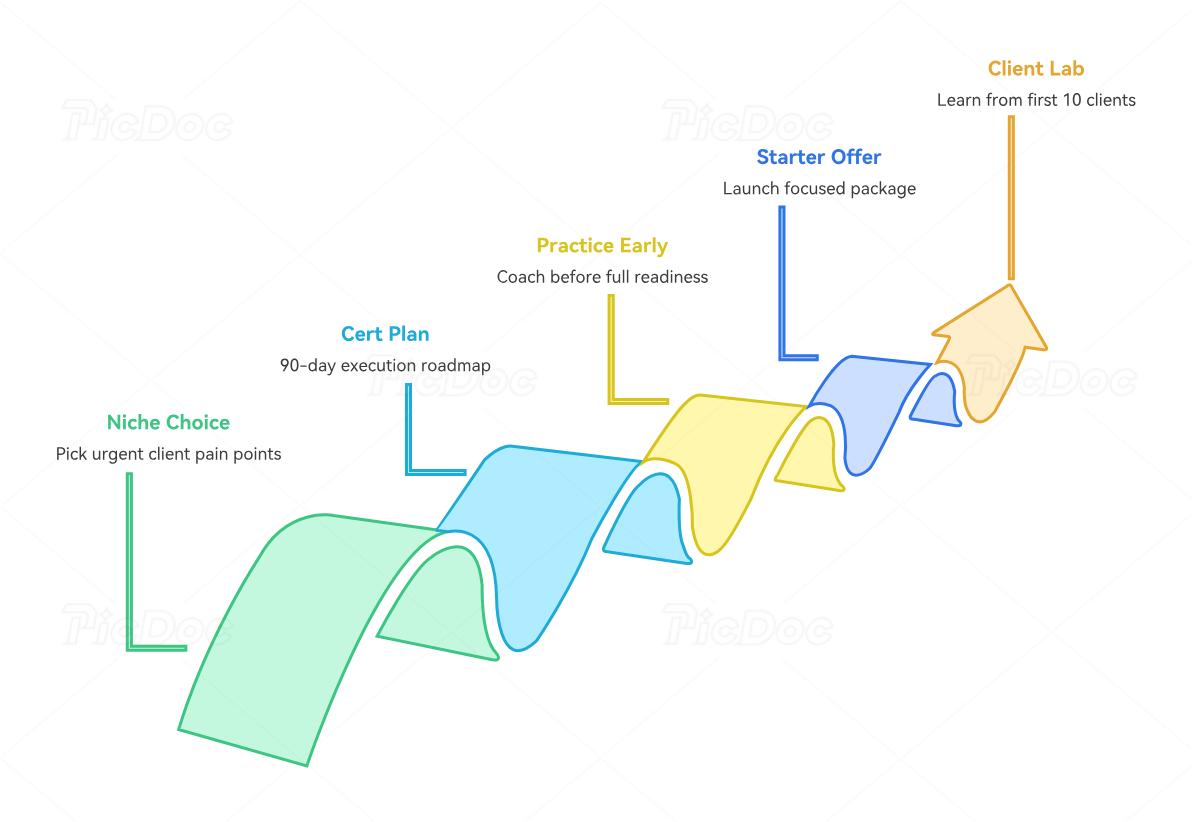
Start by choosing one client pain point that is urgent enough for someone to pay for help. In Hong Kong, strong examples include burnout recovery for professionals, habit rebuilding for exhausted parents, stress support for finance and legal workers, confidence coaching for career transitions, wellness coaching for entrepreneurs, routine coaching for shift workers, and corporate health accountability. A clear niche makes your certification easier to use because you know which tools matter. Build that decision with mental health coaching trends, micro-coaching, client preference trends, and state of coaching insights.
Create a 90-day certification execution plan. In days 1-10, choose your certification route, confirm tuition, block study time, and define your future niche. In days 11-40, focus on listening, questioning, contracting, ethics, behavior change, and session structure. In days 41-70, practice with real clients, log reflections, request feedback, and study your weak spots. In days 71-90, package your first offer, build your intake form, write your discovery-call script, and create a testimonial system. Support this plan with quick health coach certification, life certification timelines, certification interviews, and coaching case study templates.
Practice coaching before you feel fully ready. Many new coaches delay client conversations because they fear awkward silence, difficult emotions, or being exposed as inexperienced. Ethical practice clients solve that problem. They teach you how real people resist change, forget commitments, overcommit, underreport progress, avoid shame, and need help translating insight into action. Use session recording tools, surveys and feedback tools, custom dashboards, and automated email sequences to turn each practice session into useful data.
After certification, launch one starter package rather than a scattered menu. A strong Hong Kong offer might be “8-week burnout reset for professionals,” “12-week habit rebuilding for busy executives,” “6-week career confidence coaching,” or “10-week health accountability for high-stress workers.” Each package should include intake, weekly sessions, between-session action plans, check-ins, progress reviews, and renewal options. Clients should know exactly what support looks like before they pay. Shape the offer with client retention strategies, exceptional client experiences, coaching automation tools, and CRM systems.
Your first 10 paying clients are your laboratory. Track what brought them in, what language they used to describe pain, which exercises helped, where they resisted, when they felt progress, why they renewed, and what made them refer. That information becomes your website copy, content strategy, pricing logic, and future program design. Build this feedback loop with client feedback growth, testimonial capture, networking for coaches, and coaching business automation.
5. How to Build Trust, Stay Ethical, and Grow in Hong Kong’s Coaching Market
Trust builds faster when your offer sounds specific, calm, and honest. Avoid inflated promises such as guaranteed weight loss, disease reversal, instant confidence, trauma healing, or permanent transformation. Use outcome language you can actually support: better routines, stronger follow-through, improved stress planning, clearer boundaries, healthier decision patterns, more consistent movement, better self-awareness, and measurable accountability. This kind of claim feels professional because it respects the client’s agency. Keep your marketing strong with trust in coaching, coaching integrity, ethical responsibility, and emotional consent.
Hong Kong’s fast-moving professional culture creates demand for coaching that respects time. Clients may want concise sessions, asynchronous check-ins, mobile-friendly resources, written action plans, and clear progress markers. They may also be skeptical of fluffy coaching language. Give them evidence of process: intake questions, baseline measures, habit trackers, weekly summaries, reflection prompts, and review points. A coach who can show the journey feels safer than a coach who only sells inspiration. Use goal tracking tools, client journaling tools, custom dashboards, and technology in coaching.
Technology can help you serve clients across Hong Kong Island, Kowloon, New Territories, Mainland China-facing businesses, expat communities, and international time zones. Start with a simple stack: calendar scheduling, payment system, intake form, video platform, client notes, habit tracker, email follow-up, and testimonial capture. Add AI only where it improves preparation, summaries, prompts, or admin. Keep human judgment at the center. Learn from AI client interactions, coaching apps, virtual coaching practices, and coaching automation.
Marketing in Hong Kong should solve visible pain. Publish content around questions clients already ask: “Why do I keep burning out even after resting?” “How do I build health routines with a demanding job?” “How do I know whether I need coaching or therapy?” “Can coaching help me stay consistent when work changes weekly?” “What does a health coach actually do?” This approach earns trust because it reduces confusion before asking for a sale. Build visibility through SEO tools, YouTube growth, digital marketing tools, and client magnet positioning.
Partnerships can accelerate growth when your scope is clean. Coaches can collaborate with gyms, wellness studios, HR teams, therapists, dietitians, doctors, yoga teachers, corporate trainers, schools, retreats, and community organizations. The key is referral clarity. You should know when a client needs a licensed clinician, medical professional, dietitian, therapist, or emergency support. Ethical partnerships protect your reputation and make you easier to recommend. Use joint ventures, coaching resource hubs, industry benchmarking, and social responsibility in coaching.
6. FAQs
-
Health and life coaching certification is mainly a professional credibility and training signal rather than a single statutory coaching license. Still, Hong Kong’s broader healthcare title environment can be confusing for clients, especially around wellness, nutrition, and healthcare-adjacent services. Coaches should avoid medical, therapy, or dietetic claims unless they hold the correct professional qualifications. Use legal requirements for coaches, ethical responsibilities, scope boundaries, and coaching integrity.
-
Choose ICF-style training if your main focus is life coaching, executive coaching, leadership coaching, or personal development. Choose NBHWC-aligned training if you want a stronger health and wellness coaching pathway. Choose CPD-accredited training when you want flexible professional development, especially as part of a wider learning stack. The best choice depends on your niche, budget, timeline, and credibility needs. Compare ICF certification, NBHWC competencies, CPD life coaching, and which certification fits.
-
Yes. Many certification programs are delivered online, which works well for Hong Kong learners who need flexibility around work, commute, family, and international schedules. The important part is choosing a program with real practice, feedback, ethics training, and clear assessment. An online certificate should still produce real coaching skill. Review online health coach certification, online life coach programs, quick health certification, and life certification timelines.
-
Yes, especially when their credentials, niche, online systems, payment process, and coaching language are easy to understand. International clients often care about professionalism, proof, session quality, privacy, and clear outcomes. Build a credible online practice with credential listing, case study templates, client experience systems, and video conferencing best practices.
-
Avoid exaggerated claims, unclear credentials, medical promises, therapy language, guaranteed transformations, and confusing nutrition claims. Say exactly what you help clients do: build habits, manage stress patterns, clarify goals, improve follow-through, create action plans, and stay accountable. Strong marketing should feel specific and safe. Protect your practice with coaching ethics, career mistake prevention, client expectation management, and trust building.
-
Start with one niche, one clear package, and one painful client problem. Offer discovery calls, publish practical content, speak to professional groups, partner with complementary practitioners, and collect testimonials ethically from early clients. Avoid trying to serve everyone. A focused offer builds trust faster. Use networking secrets, testimonial capture, client retention, and premium coaching offers.
