
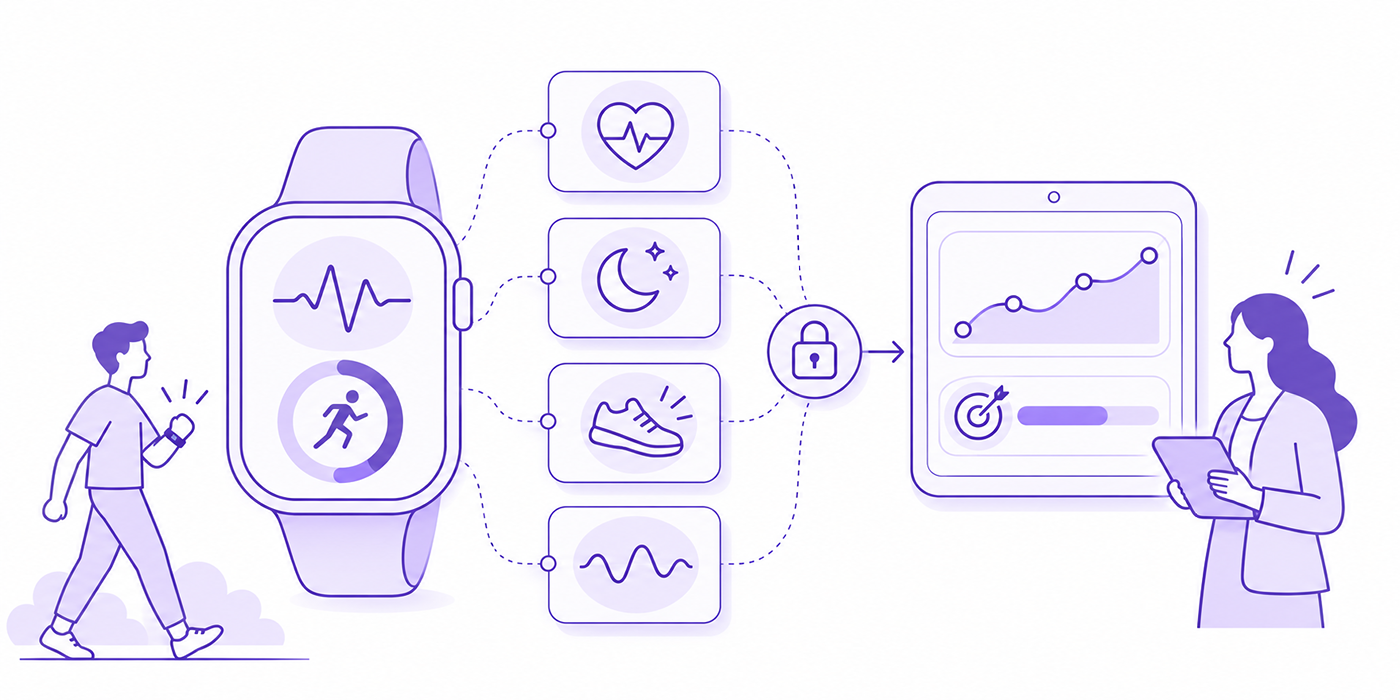
Wellness wearables are transforming how health coaches understand client behavior, identify lifestyle barriers, and personalize accountability strategies. Smartwatches, fitness trackers, smart rings, and connected wellness devices provide insights into movement, sleep consistency, recovery, and everyday routines between coaching sessions. Combined with effective health behavior change, holistic coaching, and accountability coaching, wearable technology can help clients develop greater self-awareness. The real opportunity lies in translating continuous feedback into sustainable actions while respecting coaching scope of practice and protecting client autonomy.
1. How Wellness Wearables Are Changing the Health Coaching Experience
Traditional coaching sessions depend heavily on clients recalling their behaviors throughout the previous week. Stressful schedules, inconsistent routines, and selective memory can leave important behavioral patterns unexplored. Wearable technology introduces a continuous feedback mechanism that strengthens transformational coaching strategies and enables more specific conversations.
For example, a client may describe their physical activity as consistent while their tracker reveals substantial differences between weekdays and weekends. A coach practicing constructive feedback can explore the scheduling barriers behind this pattern without creating embarrassment or guilt.
This approach also complements emotional agility coaching and positive psychology coaching by encouraging clients to approach setbacks with curiosity.
From Retrospective Conversations to Continuous Behavioral Feedback
Wearables can help coaches and clients explore four particularly valuable areas:
Behavioral consistency: Discover when established habits become difficult to maintain.
Environmental influences: Examine how work schedules, travel, family responsibilities, and other circumstances affect routines.
Goal adherence: Track progress toward client-selected behavioral commitments.
Subjective and objective alignment: Compare perceived energy, sleep satisfaction, and activity with available device estimates.
Through habit formation strategies and SMART goal setting, coaches can transform these observations into manageable experiments.
Consider a client who repeatedly abandons evening walks. Their tracker shows that activity decreases considerably after particularly demanding workdays. Using techniques from career burnout coaching, the coach explores whether a shorter lunchtime walk would fit more naturally into the client's schedule.
What Modern Wellness Wearables Can Track
Different devices offer different capabilities, including accelerometer-based movement tracking, optical heart rate monitoring, estimated sleep duration, heart rate variability, and proprietary recovery scores.
Coaches should understand how each metric is generated, what its limitations are, and whether tracking it supports the client's goals. This technical awareness is increasingly valuable in preventive health coaching, lifestyle medicine coaching, and corporate health coaching.
The following framework provides practical applications across movement, sleep, recovery, stress awareness, and behavioral accountability.
2. The Most Valuable Wearable Metrics for Health and Wellness Coaches
A wearable dashboard may display dozens of measurements, but tracking excessive information can overwhelm clients. Effective coaches select metrics according to behavioral relevance, measurement reliability, and the client's capacity for sustainable change.
This principle complements micro-coaching techniques, self-care coaching, and managing client expectations.
Physical Activity and Movement Patterns
Daily steps, active minutes, and sedentary periods are useful starting points because clients can connect them with recognizable actions. Coaches can explore which meetings, commuting arrangements, or household responsibilities influence movement opportunities.
A client averaging 4,000 daily steps might independently choose to work toward 4,500 through a brief additional walk. After establishing an achievable routine, the client can reassess the commitment.
Combining wearable feedback with habit stacking and the T-GROW coaching model helps identify existing routines that can support movement goals.
Useful coaching questions include:
Which part of your day offers the most realistic movement opportunity?
What makes your active days different from your less active days?
How could you maintain your routine during particularly demanding weeks?
Such questions strengthen client accountability while maintaining client ownership.
Sleep Duration and Routine Consistency
Wearables can provide estimated sleep duration and timing, allowing clients to explore connections between daily routines and perceived restfulness.
Coaches working with professionals experiencing career burnout or struggling with anxiety and stress may find bedtime consistency more actionable than proprietary sleep scores.
Consumer sleep-stage estimates have important accuracy limitations. Persistent insomnia, suspected sleep apnea, and significant daytime sleepiness require appropriate clinical assessment.
Coaches can reinforce their duty of care by discussing behavioral routines and referring concerns that require medical expertise.
Heart Rate Variability and Recovery Scores
Heart rate variability measures variations in the intervals between consecutive heartbeats. Consumer devices estimate HRV through different measurement techniques, recording windows, and algorithms.
Recovery scores may incorporate HRV, resting heart rate, estimated sleep, and previous activity. Their interpretation varies between manufacturers.
A coach can ask clients how workload, perceived energy, and opportunities for rest have changed over time. Techniques from emotional intelligence coaching and positive intelligence coaching can support this reflective process.
Avoid establishing universal HRV targets or concluding that an individual has a medical condition based on wearable scores. Maintain clear professional coaching boundaries, especially when clients request physiological explanations.
Stress Awareness and Behavioral Context
Wearable stress scores commonly rely on physiological proxies and proprietary calculations. Physical exertion, illness, caffeine consumption, and other influences can affect these estimates.
Clients should contextualize wearable feedback through subjective reflections. A simple journal recording perceived stress, workload, energy, and relevant circumstances can provide additional insight.
Coaches practicing emotional agility and self-confidence coaching can use these reflections to explore coping behaviors, boundaries, and achievable self-care commitments.
3. Building a Wearable-Based Health Coaching Program That Produces Measurable Results
Purchasing a wearable rarely resolves the underlying reasons clients struggle with consistency. A structured coaching process connects technology with behavioral experiments, meaningful feedback, and sustainable commitments.
The following four-week framework integrates principles from the CLEAR coaching model, OSCAR coaching model, and ADKAR change management model.
Week 1: Establish a Personal Behavioral Baseline
During the first week, encourage clients to maintain their usual routines while collecting a limited set of relevant measurements.
Document the client's primary goal, existing commitments, perceived barriers, device preferences, and previous experiences with tracking technology. Obtain informed consent and establish appropriate data-sharing arrangements through coaching contracts.
A baseline prevents unrealistic comparisons with generic device targets and provides a foundation for individualized progress assessment.
Week 2: Identify the Highest-Impact Behavioral Barrier
Review baseline information alongside the client's reflections. Explore whether inconsistent habits are associated with time scarcity, environmental constraints, competing responsibilities, or unrealistic expectations.
The immunity to change model can reveal competing commitments, while the Wheel of Life coaching tool helps explore broader lifestyle imbalances.
Select one behavioral experiment based on the client's priorities.
For example, a remote employee might choose to take a five-minute movement break after their afternoon meeting on three workdays.
Week 3: Introduce Contextual Accountability
Accountability becomes more effective when reminders correspond to actual opportunities for action. Allow clients to select reminder frequency, timing, and notification preferences.
Combine wearable feedback with accountability coaching techniques and constructive feedback strategies.
Review missed commitments through questions about circumstances, effort, and accessibility. This supports positive psychology coaching and encourages adaptive problem-solving.
Week 4: Evaluate Behavioral Progress and Independence
Measure progress using three complementary categories:
Behavioral outcomes: Completion frequency, routine consistency, and adherence to client-selected commitments.
Experiential outcomes: Confidence, perceived energy, satisfaction, and perceived manageability.
Independence outcomes: Ability to adapt routines and recover from interruptions without frequent external prompts.
These categories reflect the long-term objectives of transformational coaching and self-actualization coaching.
At the end of the program, ask clients which insights were genuinely useful, which notifications created unnecessary pressure, and whether they want to continue tracking.
This evaluation can also support professional development and ethical service improvement through coach supervision.
4. Real-World Applications of Wellness Wearables Across Coaching Niches
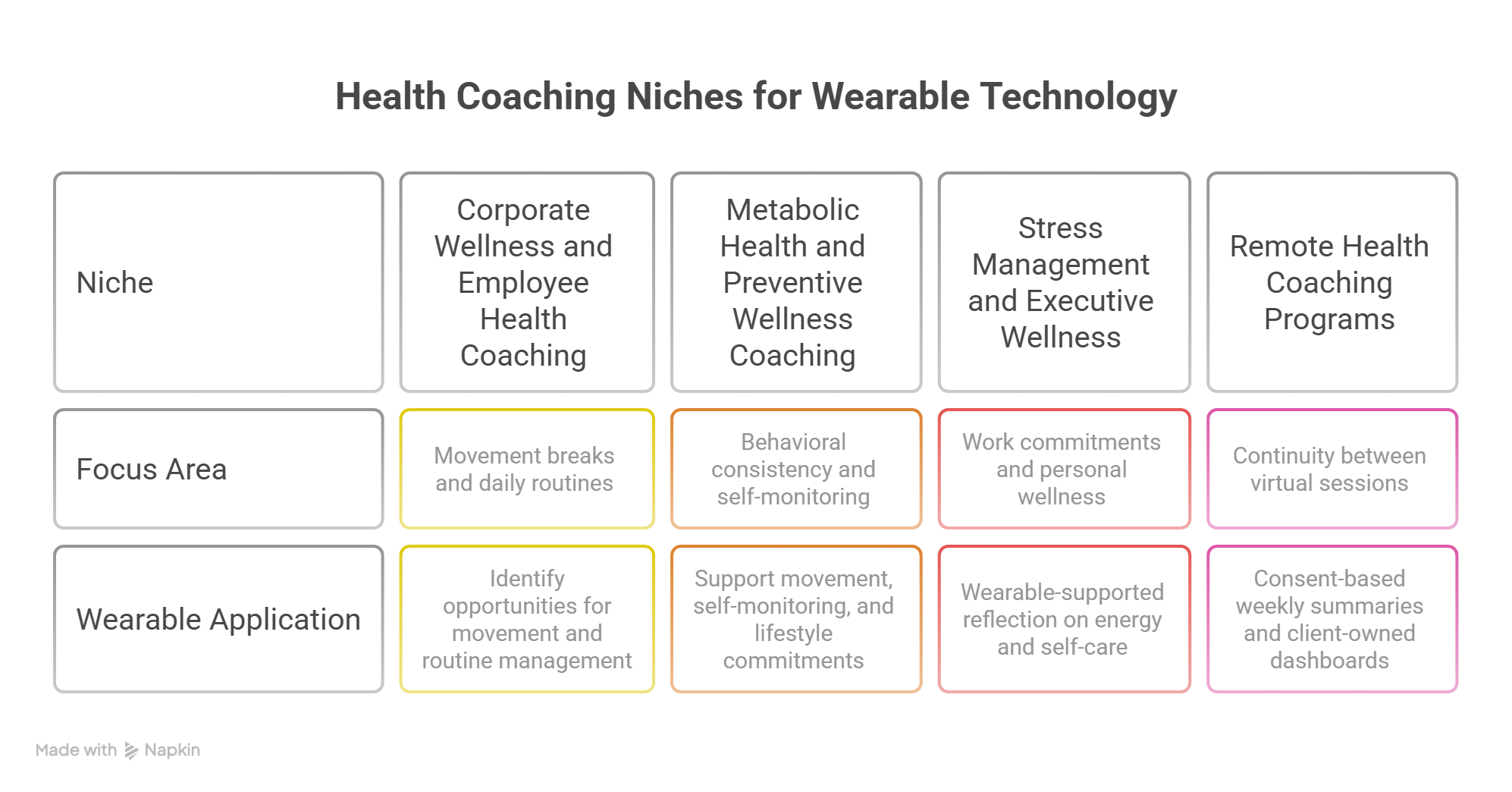
Wearable technology becomes commercially and professionally valuable when its capabilities align with a specific audience's problems. Coaches exploring the best health coaching niches should identify which client populations benefit from additional behavioral feedback.
Corporate Wellness and Employee Health Coaching
Employees working remotely or in office environments frequently experience prolonged sitting, unpredictable workloads, and inconsistent self-care routines.
Wearable-supported corporate wellness coaching can help participants identify opportunities for movement breaks and more manageable daily routines.
Organizations should evaluate voluntary participation, accessibility, perceived usefulness, and engagement. Individual health measurements require appropriate privacy protections, and employers should avoid using wellness data for employee performance judgments.
Coaches can apply principles from conscious leadership and inclusive coaching to accommodate varying abilities, schedules, and device preferences.
Metabolic Health and Preventive Wellness Coaching
In metabolic health coaching, wearable technology can support behavioral consistency around movement, self-monitoring, and clinician-directed lifestyle commitments.
Consider a client whose healthcare professional has recommended incorporating regular walking into their routine. A coach can help the client explore scheduling difficulties, establish reminders, and review adherence.
Clinical glucose interpretation, medication adjustments, and therapeutic nutrition decisions require appropriately qualified professionals. Understanding the differences between health coaches and dietitians and the legal boundaries of nutrition coaching is particularly important in this niche.
Stress Management and Executive Wellness
Executives and entrepreneurs may struggle to recognize when work commitments begin interfering with personal wellness routines.
Through leadership coaching, wearable-supported reflection can help clients explore the relationship between demanding schedules, perceived energy, and neglected self-care commitments.
A coach might help an executive recognize that late meetings frequently disrupt their planned evening routines. The resulting behavioral experiment could involve establishing a client-selected meeting boundary twice a week.
Such interventions complement life purpose coaching and life visioning techniques by connecting everyday behaviors with personally meaningful priorities.
Remote Health Coaching Programs
Wearables provide opportunities to strengthen continuity between virtual sessions. Professionals pursuing remote health coaching jobs or developing an online coaching business can incorporate consent-based weekly summaries into their services.
A practical remote workflow includes a client-owned dashboard, a scheduled reflection form, a focused coaching session, and a documented behavioral commitment.
This creates structured support without requiring coaches to monitor individual clients continuously.
5. Wearable Data Accuracy, Client Privacy, Ethical Boundaries, and Business Integration
Wearable technology introduces responsibilities that extend beyond choosing convenient applications. Coaches must understand measurement uncertainty, data governance, service boundaries, and the psychological effects of continuous tracking.
A strong understanding of the coaching code of conduct, professional indemnity insurance, and misrepresentation in coaching provides a foundation for responsible technology integration.
Understand Measurement Accuracy Before Using Wearable Data
Research evaluating consumer wearables generally finds that measurement accuracy varies considerably across devices, activities, populations, and metrics. Step counts and heart rate measurements can be useful under suitable conditions, while calorie expenditure and sleep-stage estimates present significant limitations.
Coaches should establish the following operating principles:
Compare behavioral patterns using consistent devices and measurement conditions.
Document device changes, missing measurements, and irregular wear time.
Give client-reported experiences appropriate consideration.
Refer physiological abnormalities and concerning symptoms to qualified clinicians.
Avoid presenting proprietary wellness scores as established clinical assessments.
These safeguards support continuing professional development and help maintain credibility as coaching technology evolves.
Protect Client Information Through Data Minimization
Collect only information necessary for the agreed coaching objectives. A client working on walking consistency may need to share weekly activity totals alone.
Before collecting wearable information, establish:
Which measurements will be shared.
Who can access the information.
Which platforms process and store the data.
How long records will be retained.
How clients can withdraw sharing permissions.
Whether third-party integrations introduce additional privacy risks.
HIPAA applicability depends on the organization's role and relationships. Other privacy and consumer protection requirements may also apply.
Effective informed consent procedures, transparent coaching agreements, and attention to power dynamics in coaching help protect voluntary participation.
Recognize Technology-Related Anxiety and Tracking Fatigue
Some clients become excessively concerned about sleep scores, missed activity targets, or broken habit streaks. Continuous feedback may undermine confidence when clients associate their personal worth with numerical achievements.
Coaches can establish flexible measurement schedules, disable unnecessary notifications, and offer tracking-free periods.
Through creating a safe coaching environment and managing client motivation, practitioners can help clients develop healthier relationships with their devices.
Significant anxiety, compulsive exercise, disordered eating behaviors, or other psychological concerns may require referral, consistent with the professional boundaries between therapists and coaches.
Package Wearable-Enhanced Coaching Into a Sustainable Service
Coaches can incorporate wearable technology into existing services through structured programs such as:
A four-week movement accountability program.
An eight-week executive wellness routine program.
A corporate movement and self-care initiative.
A monthly behavioral progress review.
A clinician-directed lifestyle adherence support program.
Pricing should reflect coaching time, preparation, communication responsibilities, platform expenses, and professional expertise.
For example, a coach charging $400 for an eight-week package with eight 30-minute sessions, 80 minutes of data preparation, and 40 minutes of administration would commit approximately six hours per client. This produces around $66.67 in gross revenue per working hour before expenses.
Understanding health coaching pricing strategies and realistic coaching revenue models helps prevent technology-supported services from becoming financially unsustainable.
Clearly defined service limits also prevent clients from expecting continuous health surveillance. Communicate these boundaries during coaching discovery calls, including response times, data review frequency, and emergency procedures.
As competition increases between AI health coaching and human coaching, practitioners who combine technology literacy with empathy, ethical judgment, and behavioral expertise can create more differentiated services.
6. Frequently Asked Questions About Wellness Wearables in Health Coaching
-
Wellness wearables are connected devices that collect or estimate information about everyday activity, sleep, and other wellness-related parameters. Coaches use appropriate measurements to support behavioral reflection, goal adherence, and health behavior change. Their value depends on measurement quality, client engagement, and responsible application.
-
Smartwatches, fitness bands, and smart rings can all support coaching programs. Select devices according to affordability, accessibility, battery life, privacy controls, measurement reliability, and client preferences.
Coaches specializing in holistic wellness coaching should prioritize features connected directly to their clients' goals.
-
Health coaches can facilitate reflection on everyday behavior and help clients understand general device limitations. Medical interpretation of physiological measurements requires appropriate professional qualifications.
Practitioners should follow their applicable scope of practice and maintain clear referral pathways for concerning findings.
-
Accuracy varies according to the device, sensor technology, activity type, wear conditions, and metric being measured. Estimated calorie expenditure, sleep stages, and proprietary stress scores require particular caution.
Coaches should develop technology literacy through continuing professional development and avoid making unsupported health claims.
-
Wearables can provide timely reminders, behavioral summaries, and progress feedback. Coaches can use this information to explore barriers and adjust client-selected commitments.
Integrating wearable technology with habit stacking and accountability coaching can strengthen consistency when clients find tracking supportive.
-
Scheduled weekly or periodic reviews are sufficient for many behavioral coaching objectives. Continuous monitoring creates additional workload, privacy responsibilities, and potentially unrealistic client expectations.
Establish review frequency and communication boundaries through appropriate coaching contracts.
