
The Ultimate Guide to Getting Health & Life Coaching Certification in Italy: Everything You Need to Know in 2026-2027
Getting certified as a health and life coach in Italy in 2026-2027 is a credibility move, a skill-building move, and a business-positioning move at the same time. Italian clients may come to coaching for stress, food habits, confidence, career direction, family pressure, burnout, emotional balance, and healthier routines, but they will trust you faster when your training, scope, and process feel clear. Start by comparing which certification is right for you, strengthening coaching communication, understanding ethical coaching responsibilities, and learning how certification differentiates your health coaching business.
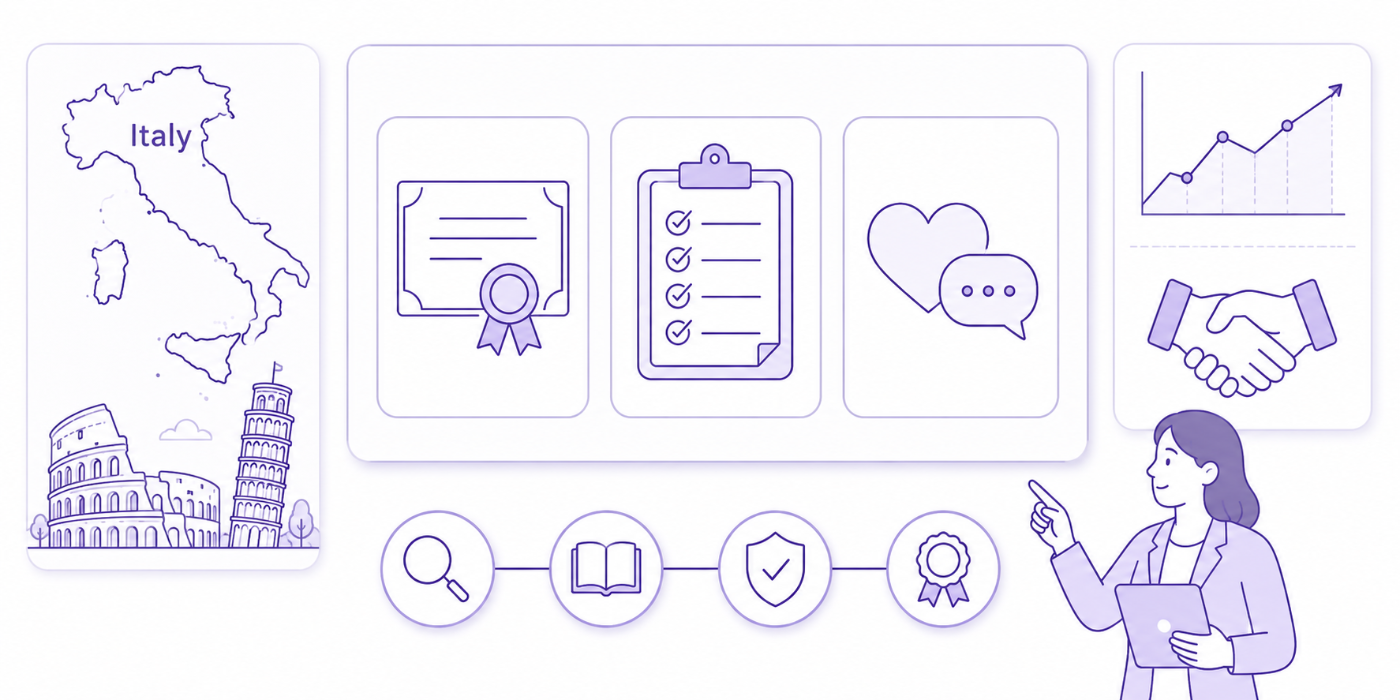
1. Why Health & Life Coaching Certification Matters in Italy in 2026-2027
Italy is a promising coaching market because modern client problems are deeply practical: people are exhausted, overstimulated, inconsistent, and often trapped between knowing what to do and failing to repeat it. A client may understand that sleep, movement, food quality, stress regulation, and better boundaries matter, yet still collapse into old habits after one difficult week. A strong certification helps you move beyond motivation talk and build repeatable coaching systems through behavior change science, habit formation coaching, client accountability systems, and constructive feedback methods.
Certification also matters because “coach” can sound broad unless you explain your training with precision. Clients want to know whether you can help them create structure, handle resistance, stay consistent, rebuild confidence, and track progress without pushing them into shame. Your certificate should support visible competence: better intake questions, better session design, better goal setting, better follow-through, and better referral judgment. That is why serious coaches study health coach credential listing, coaching integrity, trust in coaching, and safe coaching environments.
For Italy, scope clarity is especially important. The EU explains that a profession is regulated when access requires a specific degree, exam, or registration with a professional body, and Italy’s official regulated-professions portal lists competent authorities for protected professions. Coaching should be positioned as behavior-change, goal-support, accountability, and personal development work, while medical, psychological, dietetic, and other regulated healthcare services need the appropriate legal qualification and professional recognition.
That boundary can increase trust when you handle it professionally. Clients feel safer when your website says what coaching includes, what it excludes, and when you refer to another professional. A credible Italian coaching practice should never depend on vague wellness claims. It should depend on process, ethics, documentation, communication, and measurable change. Build that foundation with non-negotiable coaching standards, emotional consent in coaching, client anxiety and stress strategies, and supporting clients during emotional crises.
2. How to Choose the Right Health & Life Coaching Certification for Italy
Start with your future client, then choose the certification. A coach supporting Italian professionals with burnout recovery needs stronger stress, boundaries, and routine-design training. A coach supporting weight-loss behavior needs habit science, emotional eating boundaries, referral judgment, and client tracking. A coach serving expats needs cross-cultural communication and clear English-language positioning. Before you buy any program, use coaching toolkit planning, client preference trends, mental health coaching career guidance, and relationship coaching career planning.
A strong certification should teach you how to coach behavior under real-life pressure. Clients rarely fail because they never heard basic advice. They fail because advice breaks when work gets intense, family obligations rise, emotions spike, sleep drops, or confidence disappears. Your training should help you design small commitments, detect barriers early, handle ambivalence, and turn setbacks into data. Look for modules connected to motivational coaching techniques, solution-focused brief coaching, appreciative inquiry, and strength-based coaching techniques.
Assessment quality should carry real weight. A certificate that only proves you completed lessons may leave you underprepared for messy client conversations. Serious programs include practice coaching, mentor review, session recordings, feedback loops, case studies, and a final assessment that tests actual competence. This matters because clients do not experience your syllabus; they experience your questions, pauses, summaries, accountability, and ability to keep the session useful. Use NBHWC competency review, effective coaching communication, client session recording tools, and coaching case study templates as your quality filter.
Finally, check whether the program helps you launch. Many new coaches finish training with knowledge, then freeze because they have no offer, no pricing, no discovery-call structure, no website copy, and no lead system. Certification should help you become useful and visible. Compare the program’s business support with online health coach certification options, quick online certification pathways, online life coach certification programs, and CPD-accredited life coaching guidance.
3. Step-by-Step Plan to Get Certified and Start Coaching in Italy
Step one is defining your lane in one sentence. Say, “I help [specific client] improve [specific problem] through [specific method] so they can [specific outcome].” For example, “I help overwhelmed professionals rebuild energy, boundaries, and health routines through structured weekly coaching and habit design.” This single sentence protects you from buying the wrong certification and writing a weak website. Shape it with life mapping coaching, inner critic management, daily journaling prompts, and positive psychology coaching.
Step two is selecting a certification that fits that sentence. Review the syllabus, practice hours, assessment, trainer support, ethics training, and post-certification resources. Ask whether the course teaches intake, session structure, goal design, habit coaching, values work, accountability, feedback, and referral boundaries. If your chosen program cannot explain how it turns you into a safer, sharper, more useful coach, keep comparing. Use certification comparison guidance, credentialing resources, certification portfolio planning, and common credentialing mistakes.
Step three is building your business shell while you study. Waiting until graduation creates panic. Build your basic website, discovery-call script, intake form, coaching agreement, progress tracker, email sequence, testimonial process, and referral list during the program. A simple business shell makes your first paid clients easier to onboard and easier to retain. Strengthen your system with automated email sequences, client testimonials capture, interactive goal tracking tools, and custom coaching dashboards.
Step four is handling the Italian business side carefully. If you operate regularly as a self-employed coach in Italy, you may need a Partita IVA, appropriate tax handling, invoices, accounting records, and social security planning. Italy’s Revenue Agency provides the AA9/12 model for individuals, sole traders, artists, and self-employed professionals starting, changing, or closing VAT activity, and it also provides software for preparing the form. A commercialista can help you choose the right setup, tax regime, ATECO code, invoicing process, and compliance rhythm for your situation.
Step five is practicing before you sell at full price. Run beta sessions with clear consent and defined scope. Track what clients ask for, where they get stuck, which tools help, and where your language needs tightening. This will give you better case studies, cleaner pricing, stronger confidence, and sharper marketing. Improve your beta process with surveys and feedback tools, turning client feedback into growth, exceptional client experience design, and client retention strategies.
4. How to Position Your Coaching Certification for Italian Clients
Your certification should be translated into client value. Avoid leading with long credential language that makes clients work too hard. Say what you trained in, what problems you help with, how sessions work, and what clients can expect after the first month. A strong positioning line might be: “I help professionals rebuild sustainable routines around stress, energy, health habits, and life direction through structured coaching, accountability, and practical behavior-change tools.” Support that message with resume credential wording, coaching credibility case studies, client case study templates, and trust-centered coaching.
Your website should also explain your method. Clients should never wonder whether they are buying casual conversation, advice, therapy, fitness programming, or accountability. Give them a clear journey: intake, goal clarity, weekly coaching, habit design, barrier review, progress tracking, and renewal decision. This turns coaching from an abstract service into a visible process. Build that process with accountability coaching, habit formation tools, visualization and guided imagery, and transformational coaching strategies.
Italian coaches can also position around two strong client groups: individuals and organizations. Individual clients often want private support for change they have tried to make alone. Organizations may want workshops or coaching around wellbeing, stress, leadership habits, communication, and resilience. Create separate pages because the buyer psychology differs. Individuals buy relief, clarity, confidence, and follow-through. Companies buy structure, participation, engagement, and practical outcomes. Shape these offers with state of coaching industry trends, future-proof coaching practice trends, micro-coaching models, and coaching automation for growth.
Proof should be built from the beginning. Do not wait for perfect transformations. Track early wins: a client planning meals twice a week, sleeping earlier, setting work boundaries, reducing skipped workouts, handling conflict more calmly, or returning after a setback. Specific proof creates more trust than polished promises. Collect it through client journaling tools, weekly feedback systems, custom coaching dashboards, and client testimonials capture.

5. Common Mistakes to Avoid When Getting Certified in Italy
The first mistake is confusing passion with positioning. Caring about wellness is a starting point; clients pay when your offer speaks to a painful, specific situation. “I help people live better” is too broad. “I help busy professionals recover from burnout patterns and rebuild sustainable health routines” is easier to understand, search, and buy. Sharpen your market angle with client expectations management, handling difficult client situations, setting coaching boundaries, and avoiding common coaching traps.
The second mistake is using risky health language. Coaches should stay careful with promises around diagnosis, treatment, medical outcomes, mental health recovery, diet plans, or clinical claims unless they hold the correct professional qualification. Italy’s professional recognition system applies to protected professional activities, and the Italian Department for European Affairs operates an assistance centre for recognition of professional qualifications. Your safest and strongest message is process-based: you help clients clarify goals, build habits, improve follow-through, reflect honestly, and coordinate with qualified professionals when needed. Reinforce this with ethical coaching responsibilities, emotional consent, career-ending mistake prevention, and non-negotiable coaching standards.
The third mistake is ignoring your client management system. A coach with scattered notes, manual reminders, unclear packages, and inconsistent follow-up will lose momentum even with strong training. The client experience should feel organized from the first inquiry. Use scheduling, intake forms, session notes, dashboards, reminders, payment tools, renewal emails, and testimonial capture. Keep the tech stack lean with coaching technology transformation, best coaching apps, CRM tools for coaches, and payment systems for coaching businesses.
The fourth mistake is postponing marketing until after certification. Start building visibility while you study. Publish posts that answer real buyer questions: “How does health coaching work?” “What happens in a life coaching session?” “How do I rebuild habits after burnout?” “How is coaching different from therapy?” “How do I stay consistent without becoming extreme?” Build a simple content engine using SEO tools for coaching websites, digital marketing tools, YouTube growth for coaches, and networking strategies for coaches.
The fifth mistake is treating certification as the finish line. Your first certificate should lead into practice, feedback, case studies, supervision, continuing education, and better client outcomes. The market rewards coaches who keep improving their craft. Plan your next 12 months after certification: 10 beta clients, 3 case studies, 1 niche page, 1 referral system, 1 signature offer, and 1 advanced skill area. Support that plan with how coaches reach mastery, continuous coaching education, mindset shifts for coaching success, and scaling a coaching practice profitably.
6. FAQs About Health & Life Coaching Certification in Italy
-
Certification gives credibility, structure, and skill, especially when you work with health habits, lifestyle change, motivation, stress, and personal goals. The legal risk appears when your wording sounds like regulated healthcare, therapy, dietetics, diagnosis, or treatment without the right qualifications. The EU defines regulated professions as those requiring a degree, exam, or professional-body registration before practice, so coaches should keep their scope clear and refer out when a client needs regulated support. Build your foundation with coaching ethics, trust in coaching, safe coaching environments, and coaching integrity.
-
The best choice depends on your niche, schedule, language, budget, and business model. Choose a program that teaches practical coaching, ethical scope, behavior change, client communication, case documentation, and launch strategy. A future burnout coach needs different training emphasis than a relationship coach, corporate wellbeing coach, or habit-change coach. Compare options through which certification is right for you, online health coach certification programs, online life coach certification reviews, and credentialing resources.
-
Yes, online coaching can work well when your onboarding, consent, payment, privacy, and session structure are clear. The challenge is trust: remote clients need a smoother process because they cannot judge your professionalism through an office environment. Use a clear booking flow, intake form, coaching agreement, video platform, progress dashboard, and follow-up rhythm. Build your online delivery with Zoom and video conferencing best practices, automated coaching emails, custom coaching dashboards, and coaching automation tools.
-
If you coach regularly as a self-employed professional in Italy, you should investigate Partita IVA requirements with a commercialista. Italy’s Revenue Agency provides the AA9/12 model for individuals and self-employed professionals opening, changing, or closing VAT activity. Your exact setup may depend on activity pattern, income, residency, tax regime, services, and client location. Pair local advice with legal requirements for coaches, tax guide for coaches, payment systems for coaches, and financial forecasting.
-
Many online programs can be completed within a few months, while deeper credential pathways may take longer because they require practice sessions, mentor feedback, assessments, and portfolio work. Speed matters only when the training still prepares you for real clients. A fast certificate with poor practice support can leave you nervous on discovery calls and weak during difficult sessions. Plan your timeline with quick health coach certification, life coach certification timing, certification portfolio creation, and mastering certification interviews.
-
Start with a narrow offer and a simple lead system. Choose one audience, one main problem, one clear package, and one weekly marketing channel. For example, you might serve busy professionals in Milan, Rome, Florence, or online expat communities with a 12-week stress-and-routine reset. Then collect feedback, testimonials, and case studies from early clients. Build your acquisition engine with client testimonials capture, case studies that boost credibility, digital marketing tools, and joint ventures for coaches.
