
The Ultimate Guide to Getting Health & Life Coaching Certification in Switzerland: Everything You Need to Know in 2026-2027
Switzerland is a strong market for serious coaches because clients often expect precision, privacy, professional boundaries, and measurable progress before they trust someone with health, lifestyle, stress, work-life balance, or personal change. A casual certificate will struggle in that environment. A credible certification gives you language, structure, ethics, and proof.
For Swiss-based coaching in Zurich, Geneva, Basel, Lausanne, Bern, Lucerne, Lugano, remote Europe, or bilingual international practice, your certification plan should combine health coach certification strategy, life coach certification clarity, coaching ethics, client trust-building, and behavior change science.
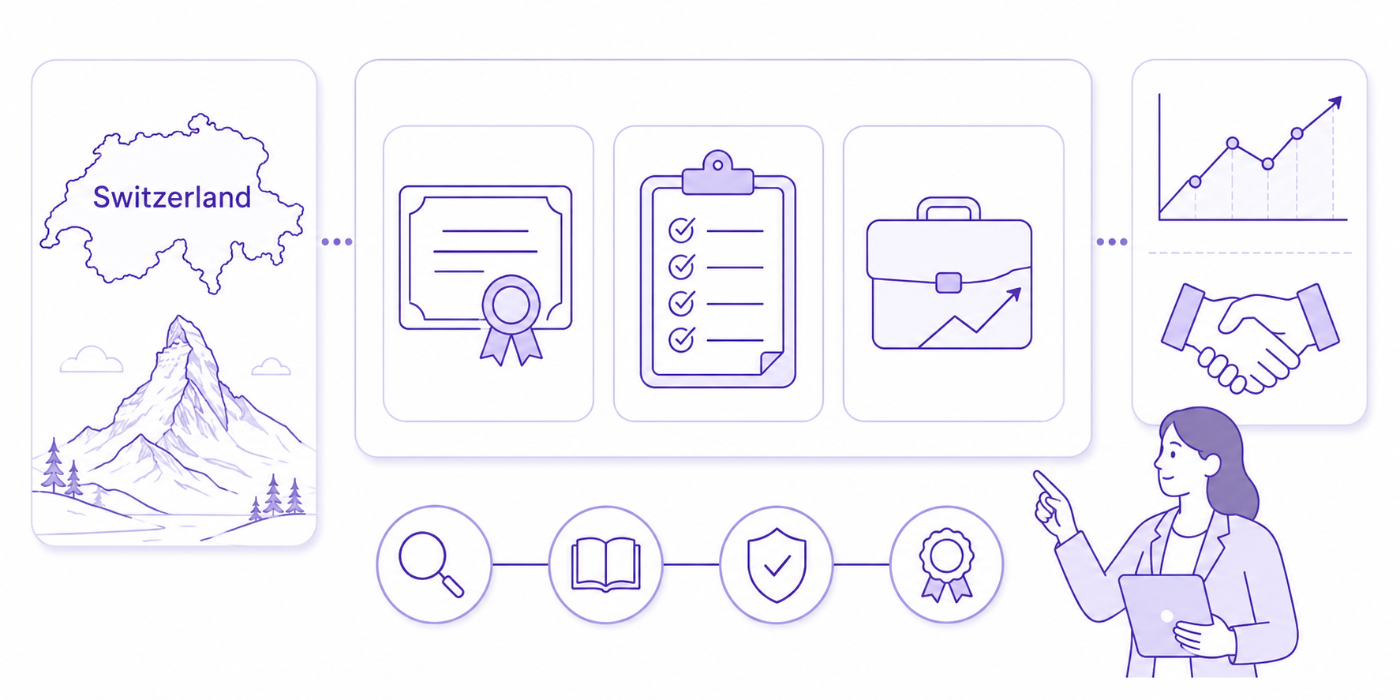
1. Why Health & Life Coaching Certification Matters in Switzerland in 2026-2027
Switzerland rewards professionalism. Clients may arrive with burnout pressure, career fatigue, weight-management frustration, stress routines that keep collapsing, leadership anxiety, family strain, low motivation, or the feeling that their life is successful on paper while unsustainable in practice. They usually want more than encouragement. They want a coach who can hold complexity, ask sharp questions, protect boundaries, and turn vague goals into repeatable action.
Certification matters because it helps you explain exactly what you do. A certified health and life coach can support habit formation, motivation, lifestyle routines, confidence, personal goals, accountability, communication, emotional self-awareness, and decision-making. Your role should stay clearly separate from diagnosis, therapy, medical treatment, and regulated health advice. That distinction builds trust, especially in a market where clients may already have access to doctors, psychologists, dietitians, physiotherapists, corporate wellbeing resources, and private insurance conversations. Build the foundation with ethical coaching responsibilities, safe coaching environments, emotional consent in sessions, client anxiety strategies, and coaching integrity.
Switzerland also has quality signals that matter when comparing training. eduQua is described by the Swiss Federation for Adult Learning as a certificate for continuing education institutions rather than individual courses, degrees, or persons, so it should be read as a provider-quality signal instead of a personal credential. Eurydice describes eduQua as Switzerland’s best-known CPD quality label, with standards, ongoing development expectations, and three-year validity supported by interim audits. That matters when a training provider uses eduQua in marketing: the smart move is checking what the label actually covers before assuming it certifies you personally.
There are also professional coaching associations and international credentialing routes. ICF Switzerland describes itself around professional coaching development, standards, and connection in the Swiss coaching community. The Swiss Coaching Association presents itself as a body setting quality standards for coaching in Switzerland and promoting professional exchange. For a new coach, this means your certification decision should look beyond “course completion” and focus on training quality, assessment, practice, ethics, supervision, business readiness, and client outcomes.
A weak path leaves you with vague confidence and a certificate you cannot explain under pressure. A strong path helps you answer hard client questions: “What qualifies you?” “How do you handle confidentiality?” “Where is the line between coaching and therapy?” “How will I know this is working?” “Do you offer German, French, Italian, or English sessions?” “Can you work with executives?” “Can you support health goals without giving medical advice?” Use which certification is right for you, credentialing resources, certification portfolio building, common credentialing mistakes, and future-proof coaching practice guidance before you enroll.
2. How to Choose the Right Certification Path for Switzerland
Start with the client, then choose the credential. Many new coaches reverse that order and end up with a certificate that looks fine on paper while failing to support their actual offer. A coach helping Zurich finance professionals with stress and recovery needs different training from a coach serving Geneva expats, Basel healthcare-adjacent professionals, Lausanne students, Lugano entrepreneurs, or remote clients across Europe.
A strong certification path should answer seven questions. Does the program teach live coaching skills? Does it include ethics and boundaries? Does it include health behavior change? Does it give you supervised practice? Does it assess your competence? Does it help you create client delivery tools? Does it make sense for your Swiss market language and niche? Before enrolling, compare online health coaching programs, online life coach certification programs, CPD-accredited life coach certification, health coach salary and career expectations, and certification value from real coaches.
In Switzerland, you may see several signals: ICF-aligned training, SCA-related quality language, eduQua-certified training providers, university-adjacent continuing education, private coaching schools, executive coaching diplomas, health and wellness coaching programs, and online international certification. Some Swiss providers offer long-form coaching programs; one Swiss coaching center describes an 18-month certification pathway with a six-month development course followed by a year-long professional coaching course. Executive coaching providers also advertise Swiss or hybrid programs running across 2026 and 2027, which shows that high-depth coaching education remains active in the Swiss market.
Your best path depends on your business model. For private health and life coaching, choose a program with behavior change, habits, communication, accountability, ethics, and practical client tools. For executive wellness, add leadership, performance pressure, burnout prevention, workplace communication, and systemic thinking. For expat life coaching, prioritize identity, transition, cultural adjustment, values, decision-making, and emotional resilience. For preventive lifestyle coaching, focus on habit formation, transformational behavior strategies, stress and anxiety coaching, positive psychology coaching, and neuroscience-informed coaching.
The biggest pain point is confusion disguised as research. New coaches collect ten tabs, compare fees, scan logos, ask strangers online, then freeze. A better process is to rank each program against your intended client problem. If the client problem is burnout, does the training teach nervous-system awareness, boundaries, energy management, referral triggers, and habit repair? If the client problem is weight-management follow-through, does it teach behavior change without medical claims? If the client problem is executive overwhelm, does it train contracting, stakeholder clarity, confidentiality, and results tracking? Use coaching case studies, client feedback tools, goal tracking tools, custom coaching dashboards, and client session recording tools to judge practical readiness.
3. What a Strong Swiss-Ready Health & Life Coaching Certification Should Teach
A strong certification should make you useful inside real client complexity. The client who says “I want more discipline” may be dealing with perfectionism, decision fatigue, poor sleep, family demands, cultural pressure, workplace exhaustion, self-criticism, weak planning, or goals that never belonged to them. A coach trained only in motivational phrases will miss the real work.
Your training should include contracting, intake, confidentiality, active listening, powerful questioning, reflection, goal design, behavior mapping, accountability, values clarification, strengths, progress review, and ethical closure. It should also teach you how to respond when clients cry, shut down, resist action, overcommit, blame themselves, avoid feedback, ask for advice outside your scope, or reveal issues that need clinical support. Strengthen these areas through communication skills, constructive feedback, difficult client situations, support during emotional crises, and client expectation management.
Swiss clients may bring high standards into the coaching room. They may expect punctuality, discretion, structured follow-up, professional documents, and clear session outcomes. Remote clients may expect polished scheduling, secure forms, concise recaps, and easy payment. Corporate clients may expect measurable objectives, confidentiality clarity, and language that aligns with performance, wellbeing, and leadership development. That means certification should train delivery discipline as much as coaching empathy.
Health coaching modules should go beyond general wellness. You need practical tools for sleep routines, stress behavior, habit stacking, environmental design, motivation dips, relapse recovery, and support around professional health plans. Life coaching modules should cover values, identity, career crossroads, relationships, confidence, self-leadership, boundaries, and decision-making. Add appreciative inquiry, solution-focused brief coaching, inner critic management, gratitude journal coaching, and visualization and guided imagery when your niche requires deeper self-awareness work.
The real test is follow-through. Clients do not pay for beautiful frameworks they never use. They pay because something changes in their week: they sleep earlier, prepare meals, speak honestly, walk after work, close the laptop, attend medical appointments, track energy, stop overcommitting, ask for support, or make a decision they have avoided for months. Your certification should help you design that bridge between insight and action.
4. Step-by-Step Roadmap to Getting Certified and Launching in Switzerland
Step one is choosing your market lane. Switzerland gives you several strong routes: executive wellness in Zurich, expat life coaching in Geneva, stress and habit coaching across German-speaking Switzerland, lifestyle accountability for busy professionals, preventive wellness for high performers, relationship and communication coaching, or remote bilingual coaching for European clients. A clear lane makes your certification search easier because you can judge training against a real commercial goal. Use career blueprint planning, mental health coaching career guidance, relationship coaching pathways, future client preferences, and state of coaching industry trends.
Step two is checking certification depth. Look for training hours, live practice, supervised feedback, case reflection, ethics, scope boundaries, behavior-change tools, assessments, business support, and alumni pathways. Ask direct questions: How many practice sessions are included? Who reviews my coaching? What happens if my skill level is weak? How are ethical dilemmas taught? Are health coaching boundaries covered? Does the program help me build an offer? Vague answers are a warning sign.
Step three is building your delivery toolkit while studying. Create your intake form, coaching agreement, confidentiality statement, scope-of-practice explanation, session note template, weekly check-in form, progress dashboard, renewal review, and testimonial request. This prevents the common launch disaster where a coach completes certification and still has no client process. Use custom coaching dashboards, survey and feedback tools, automated email sequences, client testimonial capture, and coaching resource hub building.
Step four is practicing with feedback. Record sessions when appropriate and with client or peer consent. Review your questions, pacing, emotional presence, action design, and closure. Notice where you rushed, advised too early, avoided a hard reflection, accepted vague goals, or failed to secure a next step. Skill improves through uncomfortable review. Build this muscle with session recording tools, coaching mastery, client breakthrough techniques, the world’s best coaches’ results habits, and the coaching skill you need.
Step five is preparing your business foundation. This means deciding your legal setup, invoicing process, privacy practices, insurance needs, payment tools, cancellation policy, and referral boundaries. Coaching in Switzerland can intersect with consulting, training, wellbeing, leadership development, and health support, so careful wording matters. Get professional advice for legal, tax, and regulatory details when building a paid practice. For general preparation, review legal requirements for coaches, coaching LLC setup principles, payment systems, tax planning principles, and financial forecasting.
Step six is launching with one focused offer. A strong starter offer could be “12-week stress reset for high-performing professionals,” “8-week life transition coaching for expats in Switzerland,” “90-day habit and health accountability coaching,” or “executive energy and boundaries coaching for managers.” The offer should include the client problem, the process, the timeline, what support includes, what clients must do, and how progress is reviewed.
Step seven is building visibility. Swiss clients may find you through referrals, LinkedIn, local networks, corporate wellbeing contacts, expat communities, workshops, search, and partnerships. Build one strong niche page before trying to be everywhere. Support it with SEO tools for coaching websites, digital marketing tools, YouTube channel growth for coaches, joint ventures for coaches, and networking secrets.

5. Career Opportunities, Pricing, and Mistakes to Avoid in Switzerland
Switzerland gives certified health and life coaches several strong opportunity lanes. Private coaching can work well for professionals who want support with habits, stress, life transitions, confidence, work-life balance, and personal direction. Executive coaching and corporate wellbeing can work well when your offer speaks to performance, resilience, leadership presence, emotional regulation, and sustainable productivity. Expat coaching can work well in Geneva, Zurich, Basel, Lausanne, and remote communities where clients face identity change, relocation stress, loneliness, career uncertainty, or family adjustment.
The best niches connect pain with willingness to pay. “Wellness coaching” is often too broad. “Stress and energy coaching for finance professionals working long hours” is easier to understand. “Life coaching for expats rebuilding identity after relocation” has a clear audience. “Habit coaching for busy professionals trying to follow health advice consistently” has a practical problem. “Executive boundaries coaching for managers who cannot switch off” speaks to a real pressure point. Strengthen your niche with preventative health coaching, micro-coaching, emotional intelligence coaching, habit formation in coaching, and strength-based coaching.
Pricing needs discipline. Switzerland’s cost environment makes underpricing dangerous because low fees can leave you overworked, underprepared, and resentful. New coaches often undercharge because they feel guilty asking for money before they have a long track record. That creates another problem: low prices can attract clients who treat coaching casually, skip sessions, ignore check-ins, and weaken your confidence. A better route is a fair, structured starter package with clear expectations, progress reviews, and defined support.
Common mistakes include choosing certification because the website looks polished, confusing provider quality labels with personal credentials, offering health advice beyond your scope, launching with a vague niche, skipping practice sessions, copying another coach’s offer, hiding your process, using therapy-adjacent language carelessly, avoiding client feedback, and waiting until graduation to build your business assets. Avoid these with coaches avoiding career-ending mistakes, common certification pitfalls, client retention strategies, exceptional client experiences, and turning feedback into business growth.
A serious Swiss coaching practice should feel calm, clear, and well-built from the first client touchpoint. The website should explain who you help. The discovery call should diagnose fit. The agreement should define boundaries. The intake should reveal patterns. The sessions should produce insight and action. The check-ins should protect momentum. The reviews should show progress. The renewal conversation should feel earned. The long-term practice should keep improving through continuous education, future-proof trends, technology in coaching, AI in client interactions, and coaching automation.
6. FAQs About Health & Life Coaching Certification in Switzerland
-
Certification is one of the clearest ways to build credibility, structure, and client trust in Switzerland. Clients often expect professionalism, confidentiality, and a clear method. A strong certification helps you explain your scope, manage ethical boundaries, and coach with skill. Start by comparing which certification is right for you, online health coach certification, online life coach certification, and essential credentialing resources.
-
eduQua is a Swiss quality label for continuing education institutions. It is a provider-quality signal rather than a personal coaching credential, according to the Swiss Federation for Adult Learning. That means an eduQua-certified school may have useful institutional credibility, while your personal credibility still depends on your completed training, coaching skills, assessments, practice hours, ethics, niche, and results. Pair this understanding with credentialing mistakes, certification portfolio building, and coaching standards.
-
Health coaching supports behavior change, habits, motivation, accountability, and lifestyle routines. Therapy, diagnosis, medical treatment, and regulated nutrition care belong to licensed professionals. A credible coach explains this boundary before problems appear. Build your safety system with ethical coaching responsibilities, emotional consent, safe coaching environments, and supporting clients during emotional crises.
-
The best certification depends on your client niche, preferred language, career goals, and desired recognition. For local credibility, examine Swiss provider quality, association links, live practice, and assessment depth. For international work, compare ICF-aligned and other global certification routes. For health and life coaching, prioritize behavior change, ethics, communication, habit design, client safety, and practical business tools. Use CPD certification guidance, ICF exam guidance, NBHWC competency review, and certification trends.
-
Timelines vary widely. Some online health and life coaching programs can be completed in months, while deeper professional programs may run longer and include supervised practice, assessments, and staged training. A fast program only helps when it still builds real coaching skill. Review quick online health certification, how quickly life coach certification can be earned, NBHWC exam pitfalls, and practice exam questions.
-
Yes, online coaching can work well when your client journey is organized. You need smooth scheduling, secure forms, clear session recaps, reliable video calls, progress tracking, payment systems, and confidentiality habits. Remote clients still expect a polished experience. Build this with Zoom best practices, custom dashboards, automated email sequences, and interactive goal tracking.
