
The Ultimate Guide to Getting Health & Life Coaching Certification in Mexico: Everything You Need to Know in 2026-2027
Mexico is one of the strongest markets for coaches who can combine trust, practical behavior change, clean ethics, and culturally aware communication. Clients may want help with weight, stress, family routines, confidence, burnout, food habits, work pressure, or life direction, yet they also need a coach who understands boundaries. The right certification helps you position your offer, build a safer practice, and connect your training to real outcomes through health coaching certification strategy, coaching ethics, client trust, and behavior change skills.
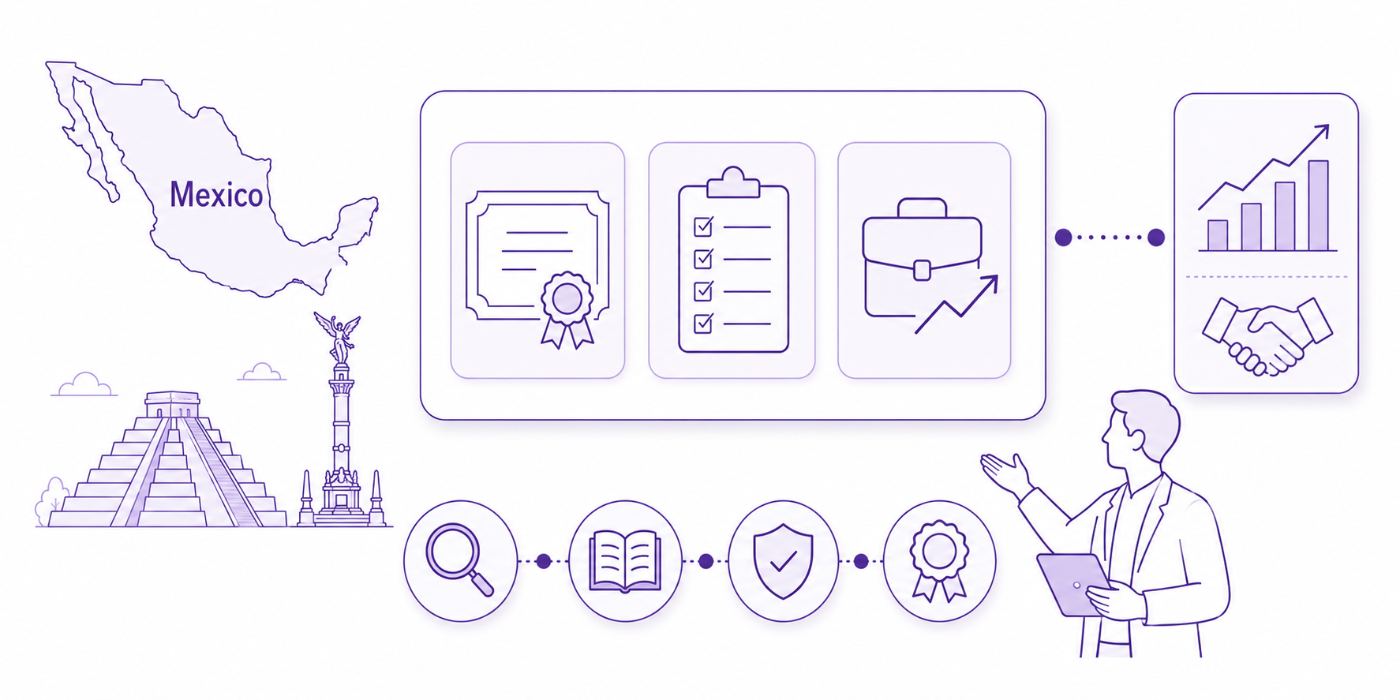
1. What Health & Life Coaching Certification Means in Mexico in 2026-2027
Certification in Mexico should be understood through three separate lanes: private coaching certification, competency-based certification, and regulated professional practice. A private online life coach certification or online health coach certification can train your coaching method, ethics, client communication, niche strategy, and session structure. A competency route can add Mexican market credibility when aligned with CONOCER standards. A regulated health profession, such as medicine, nutrition, psychology, nursing, or dentistry, involves professional title and cédula requirements through Mexico’s professional licensing system; SEP’s Dirección General de Profesiones manages professional title registration and cédula-related processes.
That distinction protects your reputation. A coach can help clients design routines, clarify goals, build habits, improve follow-through, understand obstacles, and create accountability. A coach should avoid diagnosing, prescribing, treating illness, replacing therapy, designing clinical diets without proper licensure, or implying medical authority. This is where ethical responsibilities for health and life coaches, coaching integrity, emotional consent, and safe coaching environments become practical business assets rather than theory.
Mexico also has a useful competency-certification angle. CONOCER describes RENEC as Mexico’s national catalogue of competency standards and says people can evaluate their competencies and obtain an official certification valid throughout Mexico. The EC0204 standard for coaching sessions describes performance around opening, developing, closing, evaluating, and documenting progress in coaching sessions, with the certificate validity listed as five years in that standard. For a Mexico-based coach, combining a reputable coaching program with strong coaching case studies, certification portfolio evidence, client testimonials, and goal-tracking tools gives the market something concrete to trust.
The biggest mistake is buying a certificate before defining the offer. Mexico has several potential coaching markets: Spanish-speaking local clients, bilingual professionals, expats, corporate wellbeing, family wellness, women’s health behavior support, stress coaching, career transitions, relationship coaching, preventive health, and online accountability programs. Each niche needs a different training emphasis. A coach focused on stress needs client anxiety and stress strategies, emotional intelligence coaching, constructive feedback skills, and client expectation management. A coach focused on lifestyle needs habit architecture, food-behavior boundaries, relapse planning, and realistic accountability.
| Decision Area | Best Choice For Mexico | Pain Point It Solves | Use This ANHCO Resource |
|---|---|---|---|
| Credential lane | Choose private certification, CONOCER-aligned competence proof, or both | Stops clients from seeing your credential as a random online badge | which certification is right for you |
| Scope statement | Write exactly what you coach and when you refer out | Prevents health, therapy, and nutrition boundary confusion | ethical responsibilities as a coach |
| Health niche | Focus on habits, prevention, lifestyle routines, sleep, stress, and follow-through | Keeps your offer useful without drifting into clinical claims | preventative health coaching |
| Life coaching niche | Build around identity, confidence, career change, relationships, or life direction | Stops your offer from sounding like generic motivation | online life coach certification |
| Program quality | Prioritize observed practice, mentor feedback, ethics, and case review | Avoids paying for theory that fails in live sessions | earn certification online |
| CONOCER fit | Use competency standards as extra proof where relevant | Adds local credibility for Mexican clients and partners | certification resources |
| Resume positioning | List credential, competencies, practice hours, niche, and scope | Removes the weak “certified coach” line that says too little | list coaching credentials |
| Client intake | Use goals, health context, consent, referral flags, and expectations | Stops messy first sessions and hidden client risks | safe coaching environment |
| Communication | Train reflective listening, clean questions, and culturally respectful challenge | Builds trust with clients who dislike pressure-heavy coaching | coaching communication |
| Habit change | Use triggers, friction removal, environmental design, and weekly tracking | Turns good intentions into visible progress | habit formation tools |
| Diet conversations | Coach planning, awareness, routines, and referral boundaries | Handles food goals without making unsafe nutrition promises | coaches change client diets |
| Stress clients | Build breathing, planning, boundary, energy, and support routines | Helps overwhelmed clients take action without shame | client anxiety and stress |
| Proof system | Track baseline, goal, intervention, barrier, adjustment, and result | Creates evidence for referrals and sales calls | case studies that boost credibility |
| Testimonials | Ask for specific before-after language tied to behavior | Avoids fluffy praise that fails to convert | client testimonial capture |
| Offer design | Sell 8-, 10-, or 12-week packages with clear milestones | Prevents low-trust hourly coaching that feels optional | high-ticket coaching offers |
| Pricing logic | Price around outcome pathway, support level, and client segment | Stops undercharging caused by credential insecurity | financial forecasting |
| Client retention | Add 30-, 60-, and 90-day review points | Keeps progress visible before clients disappear | client retention strategies |
| Feedback loop | Ask what helped, what blocked action, and what needs adjustment | Finds silent dissatisfaction early | client feedback growth |
| Technology | Use simple scheduling, reminders, client notes, and habit tracking | Prevents chaotic admin from weakening client experience | best coaching apps |
| Automation | Automate reminders, check-ins, invoices, and renewal prompts | Reduces ghosting, missed calls, and unpaid admin time | coaching automation |
| Website SEO | Build pages for Mexico, niche problem, language, and client type | Stops your website from ranking for nothing useful | SEO tools for coaching websites |
| Marketing channel | Pick referrals, LinkedIn, workshops, SEO, YouTube, or corporate wellness first | Prevents scattered posting with no pipeline | digital marketing tools |
| Corporate wellness | Package stress, productivity, habit, and energy workshops | Creates B2B opportunities beyond individual coaching | coaching business benchmarks |
| Relationship niche | Coach communication habits, boundaries, values, and repair routines | Gives life coaching a specific outcome language | relationship coach pathway |
| Mental health-adjacent niche | Stay with resilience, self-management, goals, and referral safety | Supports clients without crossing into therapy | mental health coaching career |
| Resource hub | Create worksheets, trackers, scripts, checklists, and recap templates | Gives clients support between sessions | coaching resource hub |
| Journaling tools | Use short prompts tied to weekly goals and emotional blocks | Turns reflection into action instead of endless writing | client journaling tools |
| Accountability | Set one weekly promise, one measure, and one recovery plan | Stops clients from restarting every Monday | accountability in coaching |
| International comparison | Understand how Mexico compares with Europe and North America | Helps bilingual and online coaches explain their credential | certification in Spain |
| Growth plan | Build one niche, one offer, one proof system, one main channel | Turns certification into clients instead of another course | scale your coaching practice |
2. How to Choose the Right Certification Pathway for Mexico
Start with your target client before comparing programs. A coach serving busy professionals in Mexico City may need stress, productivity, sleep, and habit coaching. A coach serving mothers may need family routines, food planning, identity shifts, and emotional consent. A coach working with executives may need communication, performance, burnout prevention, and leadership boundaries. Your choice should connect directly to client preference trends, future-proof coaching practice, state of coaching industry trends, and coaching business benchmarking.
For a health coaching route, look for coursework in behavior change, motivational interviewing, nutrition conversation boundaries, sleep basics, stress support, movement adherence, ethical referral, and measurable outcomes. The program should prepare you to handle the client who wants a meal plan, the client who asks about medication, the client who feels ashamed after relapse, and the client who keeps starting with unrealistic goals. That is where NBHWC coaching competencies, NBHWC practice questions, health coaching salary strategy, and health certification worth analysis become highly useful.
For a life coaching route, choose training that includes live practice, mentor review, ethics, emotional consent, values clarification, confidence work, boundaries, solution-focused coaching, and case formulation. Many clients in Mexico will come with layered problems: family pressure, career expectations, money worries, relationship strain, self-doubt, and burnout. Strong life coach training gives you a structured way to help without overstepping. Compare ICF exam guidance, ICF credentialing skills, CPD-accredited certification, and life coach certification timelines.
Mexico-based coaches should also consider a local proof layer. CONOCER’s public systems, such as RENEC and RENAP, can help people identify standards and verify certified individuals in competency-based pathways. That gives your positioning more substance when paired with a strong website, transparent scope, client resources, and outcomes. Use that proof alongside certification portfolio building, coaching interview preparation, credentialing process mistake prevention, and certification resource planning.
3. Legal, Ethical, and Client-Safety Boundaries for Coaches in Mexico
Your safest positioning is clear, specific, and honest. Say that you help clients build health habits, improve follow-through, clarify goals, manage routines, strengthen accountability, and make sustainable lifestyle decisions. Avoid language that sounds like diagnosis, treatment, cure, therapy, medical nutrition therapy, psychological treatment, or professional healthcare unless you hold the correct Mexican professional credentials for that scope. This distinction supports career-ending mistake prevention, boundary setting, coaching trap avoidance, and trust-centered coaching.
Privacy is another serious issue because coaching intake forms often include personal, lifestyle, family, health, stress, and emotional information. Mexico’s Federal Law for Protection of Personal Data Held by Private Parties has been updated in recent years, and official legal texts place obligations around protection of personal data in private-party contexts. A coach should use a privacy notice, collect only necessary information, explain purposes, secure notes, limit access, avoid storing sensitive details in casual chats, and choose tools carefully. That connects directly to client session recording tools, custom coaching dashboards, technology in coaching, and AI client interaction risks.
Consumer-facing marketing needs discipline too. PROFECO says its role includes guaranteeing access to adequate and clear information about goods, products, services, and consumer rights. Its Federal Consumer Protection Law materials also address advertising and consumer information in service contexts. For coaches, that means clear prices, cancellation terms, refund rules, package details, realistic claims, testimonial context, and honest descriptions of what certification means. Strong marketing can still be persuasive when grounded in exceptional client experience, client retention strategy, payment systems, and legal requirements for coaches.
4. How to Build a Mexico-Ready Coaching Practice After Certification
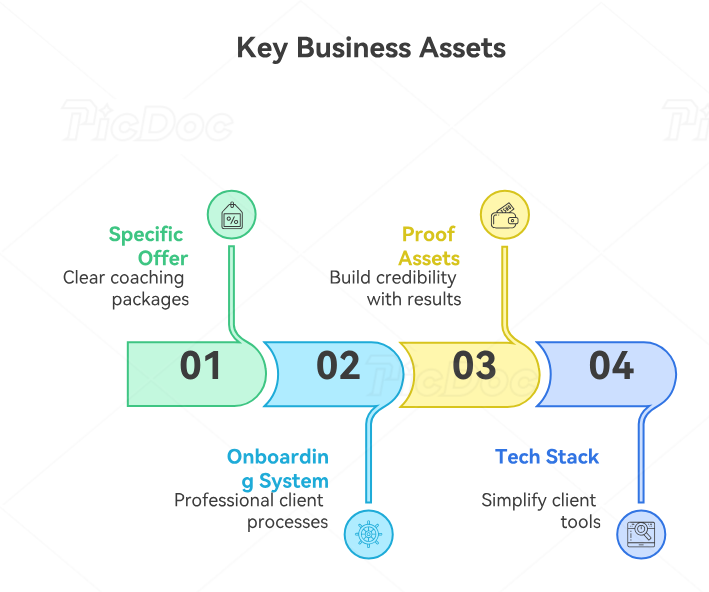
Your first business asset should be one specific offer. “Health and life coaching” sounds flexible, yet it leaves clients wondering what happens after they pay. A stronger offer says, “12-week stress and habit coaching for busy professionals who want better sleep, food structure, movement consistency, and calmer decision-making.” Another strong offer says, “10-week life direction coaching for professionals feeling stuck in career, identity, and confidence.” Use high-ticket offer structure, micro-coaching strategy, client engagement models, and future coaching models to shape the package.
Your second asset should be an intake and onboarding system. Mexican clients may be warm and relationship-driven, yet they still need professionalism: intake form, informed consent, privacy notice, expectations, cancellation terms, session rhythm, communication rules, and referral boundaries. A tight onboarding system makes the coach feel safer, more premium, and more prepared. Build it with surveys and feedback tools, client journaling tools, weekly check-in systems, and coaching dashboards.
Your third asset should be proof. Many coaches hide behind credentials because they have no visible outcomes. Start collecting anonymised case studies from practice clients: starting problem, coaching goal, barriers, session themes, action plan, weekly experiments, adjustments, and result. A coach who can say, “Clients typically struggle with late-night eating, stress-triggered skipping, poor planning, and all-or-nothing thinking, so my method targets those patterns first,” sounds far more credible than a coach who lists every module studied. Support this with case study templates, transformation stories, client feedback systems, and testimonial capture.
Your fourth asset should be a simple technology stack. Use scheduling, secure notes, automated reminders, payment collection, recap emails, habit tracking, and progress reviews. Avoid building a huge software maze that clients ignore after week two. The best stack reduces friction and keeps the client moving between sessions. Build around coaching apps, automating coaching business operations, CRM tools for coaches, and automated email sequences.
5. How to Market Health & Life Coaching Certification in Mexico Without Sounding Generic
The market does not need another “I help you become your best self” profile. It needs coaches who can name the client’s problem sharply. Write pages and posts around real phrases: “I keep starting diets and quitting,” “I am burned out but cannot slow down,” “I want healthier routines but my family schedule is chaotic,” “I feel stuck in my career,” “I need accountability without judgment,” “I want to feel in control of my habits again.” This approach connects with SEO tools for coaches, digital marketing tools, YouTube growth for coaches, and networking secrets.
Your certification should appear as a trust signal, then your method should do the selling. Place credentials near your scope statement, offer description, proof, and values. Explain what your training helps you do: structure sessions, set goals, protect boundaries, use behavior-change methods, support accountability, document progress, and refer responsibly. This is stronger than stacking logos. Pair your credential with coaching mastery, client magnet positioning, successful coach result systems, and client breakthrough techniques.
For Mexico, bilingual positioning can become a major advantage. You can serve Spanish-speaking clients locally, English-speaking expats, remote clients in Latin America, and professionals who want culturally fluent coaching. Create service pages in the language your client actually uses, then adapt examples, objections, and social proof for each audience. Compare regional opportunities with certification in Spain, certification in France, certification in Italy, and certification in Switzerland.
The best marketing angle is practical transformation. Show how you help a client prepare meals around work, recover after a missed week, set boundaries with family, sleep earlier, walk consistently, regulate stress, make decisions, or rebuild confidence after a setback. Use content that teaches and filters at the same time. A good post makes the right client think, “This coach understands the exact problem.” Build that authority with behavioral coaching strategies, positive psychology frameworks, solution-focused coaching, and strength-based coaching techniques.
6. FAQs About Health & Life Coaching Certification in Mexico
-
Certification gives you credibility, structure, ethics, and client-ready skill. Regulated health professions in Mexico involve professional titles and cédulas, while coaching should stay inside behavior change, goal setting, routine design, accountability, and referral boundaries. Use certification to make your practice safer and clearer through ethical responsibilities, coaching integrity, safe coaching environments, and non-negotiable standards.
-
CONOCER can be valuable when you want Mexican competency-based recognition alongside private or international coach training. RENEC helps people find competency standards, and RENAP helps verify people with competency certifications. For many coaches, the strongest route is a practical coaching program plus local proof, case studies, and a clear market niche. Compare that with ICF certification guidance, NBHWC competencies, CPD certification, and credentialing resources.
-
Choose a certification that teaches behavior change, motivational interviewing, nutrition boundaries, sleep and stress support, accountability, ethics, and outcome tracking. The best health coaching program should help you handle real client struggles: relapse, inconsistency, guilt, low energy, social eating, family pressure, and unrealistic goals. Use online health coach certification reviews, health coaching trends, habit formation coaching, and preventive health coaching to compare options.
-
Choose life coach training with live practice, feedback, ethics, emotional consent, values work, identity work, goal design, and client accountability. Mexico’s coaching market rewards coaches who can communicate warmth and structure together. A life coach should be able to help clients make decisions, handle pressure, rebuild confidence, and create practical next steps. Start with online life coach certification, life coach certification speed, life mapping, and inner critic management.
-
Online coaching can work well from Mexico if your business terms, privacy notice, payment process, cancellation policy, platform security, and scope language are clear. If you serve clients outside Mexico, consider the rules that may apply where the client lives as well. Build remote delivery with Zoom best practices, virtual retreat platforms, automated email sequences, and client dashboards.
-
Build one niche offer, one intake system, one proof system, one main marketing channel, and one follow-up process. Then start conversations through referrals, workshops, LinkedIn, local partnerships, SEO, or corporate wellbeing. Certification helps most when clients can see what problem you solve and how your method works. Use must-have coaching business tools, client retention strategy, scaling a coaching practice, and business automation to build the practice after graduation.
