
The Ultimate Guide to Getting Health & Life Coaching Certification in Brazil: Everything You Need to Know in 2026-2027
Getting certified as a health and life coach in Brazil demands more than picking a popular online program. You need a credential that strengthens client trust, respects Brazilian health-profession boundaries, protects sensitive client data, and helps you build a clear paid offer. This guide connects health coaching certification strategy, life coach training choices, ethical coaching responsibility, and client transformation skills into one practical Brazil-focused roadmap.
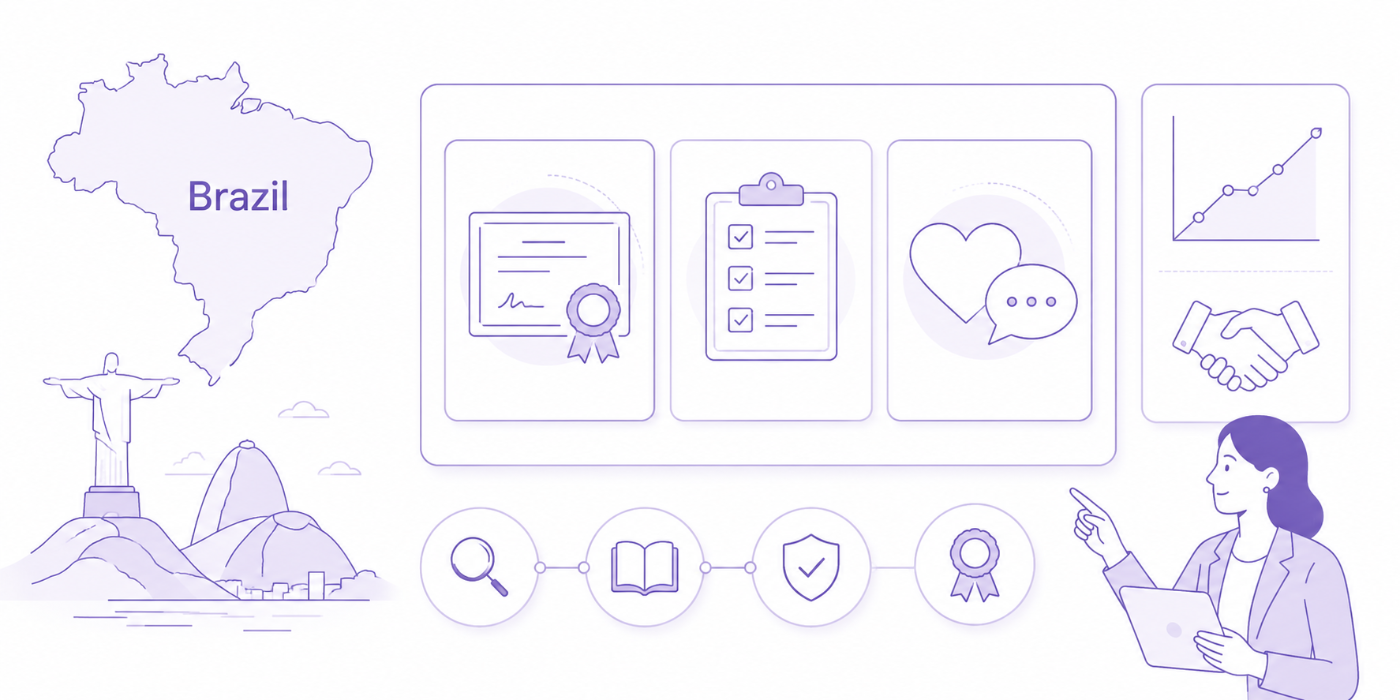
1. How Health & Life Coaching Certification Works in Brazil
Brazil is a strong market for coaching because clients are actively looking for support around stress, lifestyle consistency, career direction, weight habits, confidence, relationships, wellness routines, and business performance. The real opportunity sits in clarity. A coach who explains their role well can build trust faster than someone hiding behind vague “wellness expert” language. Your certification should show that you can run structured sessions, protect boundaries, support behavior change, and guide clients through repeatable progress using coaching integrity, client accountability, behavior change science, and client communication skills.
Brazil also has a serious regulated-health-profession environment. Official Ministry of Health material describes a regulated model for health professions such as medicine, psychology, nutrition, nursing, physiotherapy, physical education, pharmacy, dentistry, occupational therapy, and others, which means a coach should speak carefully when working near health, nutrition, mental wellbeing, or exercise topics. A coaching certificate should strengthen support, motivation, planning, and accountability while keeping diagnosis, prescription, treatment, psychotherapy, clinical nutrition, and regulated professional acts outside your scope.
That boundary matters because clients often arrive with mixed needs. A client may say they want “health coaching” when they actually need a physician, nutritionist, psychologist, physiotherapist, or another licensed professional. A responsible coach builds referral triggers into the intake process, explains limits before the first paid session, and documents the difference between coaching goals and clinical care. This is where coaching boundaries, safe coaching environments, emotional consent, and client expectation management become business assets.
Data protection deserves the same attention. Brazil’s LGPD defines sensitive personal data to include health or sex-life data, genetic data, biometric data, and other protected categories, so a coach collecting stress history, weight goals, health routines, emotional notes, food logs, sleep patterns, or biometric screenshots needs a privacy-first intake process. A serious Brazil-ready certification plan should include consent language, secure note-taking, minimal data collection, testimonial permission, recording rules, and a clean retention policy alongside client session recording tools, feedback tools, custom coaching dashboards, and coaching mistake prevention.
2. Choosing the Right Certification Path for Brazil
Start with the outcome your future clients will pay for. If your work centers on healthier habits, energy, sleep routines, meal consistency, movement follow-through, stress habits, or preventative lifestyle support, a health coaching certification gives you the best starting structure. Look for training that teaches habit formation, health behavior change, client goal tracking, and health coach certification value.
If your work centers on confidence, relationships, life direction, career decisions, burnout recovery planning, self-worth, family transitions, or executive performance, a life coaching pathway may fit better. Strong life coaching training should cover listening, powerful questioning, values clarification, emotional safety, identity work, and decision support. Compare online life coach certification, ICF credentialing skills, ICF exam preparation, and solution-focused brief coaching.
Brazil also rewards hybrid positioning when it is handled cleanly. Many clients want a combination of stress support, routines, self-discipline, emotional regulation, work boundaries, and better life decisions. The danger is offering everything to everyone. A hybrid coach should still lead with one painful client problem, then use the right tools behind the scenes. Build your method with positive psychology coaching, inner critic management, strength-based coaching, and client anxiety coaching strategies.
The strongest certification programs include supervised practice, real feedback, ethics, business translation, and assessment. A program should help you run intake, spot scope issues, structure sessions, handle resistance, create client action plans, and document progress safely. A certificate that only gives pre-recorded lessons leaves you exposed when a client becomes overwhelmed, inconsistent, angry, dependent, or confused. Before enrolling, compare fast health coach certification, certification for busy professionals, CPD-accredited coaching, and common credentialing mistakes.
3. What Brazilian Clients and Partners Will Actually Trust
Brazilian clients usually trust specificity. “I help people improve their lives” sounds pleasant and forgettable. “I help exhausted professionals rebuild energy, boundaries, and weekly routines over 10 weeks” gives the buyer a reason to care. Your website, LinkedIn profile, discovery-call script, and proposal should make the same promise with the same language. Use client experience design, client feedback systems, coaching case studies, and trust-building practices to make the offer concrete.
Partners will look at risk before enthusiasm. A gym, clinic-adjacent wellness brand, HR team, private school, retreat organizer, corporate wellbeing company, psychologist, nutritionist, or personal trainer needs to know where your work starts and ends. Bring a simple partner packet: credential summary, coaching scope, referral triggers, sample intake form, privacy statement, package structure, testimonial policy, and progress-report example. That packet becomes stronger when built through coaching resource hubs, CRM tools, surveys and feedback tools, and client retention systems.
Your language also needs cultural precision. In Brazil, health, body image, fitness, nutrition, stress, faith, family, work status, and emotional suffering can be deeply personal. A good coach avoids shaming, moralizing, and overpromising. The better approach is collaborative: define the client’s goal, identify real-life barriers, shrink the first action, track what happens, and adjust without blame. This is the heart of radical simplicity, client empowerment, constructive feedback, and lasting behavior change.
Business setup should be handled early. Brazil’s official Portal do Empreendedor explains MEI formalization routes, including obtaining a CNPJ, registering as MEI, and accessing entrepreneur services; it also lists benefits such as issuing invoices and paying fixed monthly taxes for eligible microentrepreneurs. Coaches should confirm whether their activity, revenue, structure, municipality, and tax situation fit MEI or require another setup before selling at scale.
4. Step-by-Step Brazil Certification Roadmap for 2026-2027
Start with a positioning sprint before you pay for any program. Write down the client you want to serve, the painful problem they already know they have, the result they want, the habits blocking that result, and the risk areas outside your scope. Brazil offers many possible niches: stress routines for executives, habit coaching for entrepreneurs, wellness accountability for busy parents, life transition coaching for expats, confidence coaching for women returning to work, corporate wellbeing for hybrid teams, and health-habit support for clients already working with licensed professionals. Shape your first niche with niche coaching tools, future coaching trends, micro-coaching strategy, and preventative health coaching.
Next, compare programs using a skills checklist. The right program should teach coaching presence, active listening, values work, goal setting, readiness assessment, habit design, motivational conversations, accountability, ethics, cultural sensitivity, privacy-aware documentation, and business implementation. Ask whether you will receive feedback on real coaching practice. Ask whether the program provides a session structure, intake examples, exam support, case-study guidance, and community support. Strong candidates should align with NBHWC-style competency thinking, ICF credentialing skills, certification exam preparation, and credentialing resource planning.
During the study phase, turn every module into a business asset. After a lesson on listening, rewrite your discovery-call questions. After a lesson on habits, create a one-page action tracker. After a lesson on ethics, edit your coaching agreement. After a lesson on motivation, build a client reflection prompt. This turns certification into an operating system instead of a PDF on your website. Use daily journaling prompts, life mapping, gratitude journal coaching, and visualization methods as client-facing tools only when they serve a clear goal.
Then run a small beta program. Recruit five to ten clients from your target niche, define one measurable coaching outcome, create a short intake, run structured sessions, collect weekly feedback, and document anonymized lessons. Keep the beta simple: one offer, one timeframe, one core promise, one progress review. A messy beta with too many goals will give you confusing data. A focused beta will show which clients engage, where they drop off, which tools create traction, and what language makes people buy. Build this using client testimonials, case study templates, client feedback growth, and inspiring transformation case studies.
Finally, launch a paid 8-to-12-week package. Make the promise specific, state who it is for, explain what happens each week, describe between-session support, define communication windows, and show how progress is reviewed. Your first package should be narrow enough to explain in one sentence. Then build a referral network with psychologists, nutritionists, personal trainers, physicians, HR consultants, coworking spaces, yoga studios, wellness communities, and startup groups. Support the launch with coaching apps, automated email sequences, SEO tools for coaching websites, and profitable scaling.

5. How to Build a Paid Coaching Practice in Brazil After Certification
A Brazil-ready coaching practice needs three layers: credibility, clarity, and proof. Credibility comes from certification, ethics, boundaries, continuing education, and referral awareness. Clarity comes from a specific niche, concrete package, clean session structure, and plain-language outcomes. Proof comes from testimonials, case studies, progress snapshots, partner feedback, and client retention. If one layer is weak, the market hesitates. Strengthen all three with coaching trust, certification portfolio building, case study credibility, and exceptional client experiences.
Your offer should solve a problem people already discuss privately. Examples include “I know what to do, but I cannot stay consistent,” “I feel exhausted all week,” “I keep restarting my habits,” “I cannot switch off from work,” “I need confidence during a career change,” “I am overwhelmed after becoming a parent,” or “I need support following the plan my doctor or nutritionist already gave me.” Those pain points convert because they are concrete. Package them through client magnet strategy, goal tracking tools, habit formation systems, and accountability frameworks.
Use WhatsApp with structure. Many Brazilian clients expect fast, human communication, yet unlimited access can burn out the coach and blur the relationship. Set response windows, define which topics belong between sessions, use short check-in forms, and avoid storing unnecessary sensitive data inside message threads. A strong rhythm might include one weekly reflection form, one midweek nudge, one session recap, and one progress review each month. Design this through client engagement trends, nudge systems, coaching automation, and technology in coaching.
Create separate offers for private clients and corporate buyers. Private clients buy emotional relief, identity change, better routines, and personal progress. Corporate buyers buy engagement, retention, reduced burnout risk, team performance, leadership health, and measurable participation. A corporate offer needs a pilot, timeline, group structure, privacy rules, attendance metrics, anonymized reporting, and referral boundaries. Build that offer with corporate-friendly benchmarking, state of coaching trends, digital marketing tools, and joint ventures.
Measure what makes money and what improves outcomes. Track discovery calls, conversion rate, package completion, renewal rate, referral source, weekly check-in completion, client-reported wins, drop-off reasons, and testimonial quality. If discovery calls do not convert, the promise is vague. If clients drop after session three, the between-session system is weak. If renewals are low, clients may struggle to see progress. Use financial forecasting, retention strategy, scaling systems, and business automation to keep the practice healthy.
6. FAQs About Health & Life Coaching Certification in Brazil
-
Certification is best treated as professional training and credibility rather than permission to perform regulated healthcare activities. Brazil has regulated health professions with specific education, councils, and legal scopes, so coaches should avoid titles and claims that belong to licensed fields. Keep your offer focused on goals, habits, accountability, reflection, behavior support, and client-led action. Build your foundation with certification differentiation, ethical coaching practice, coaching boundaries, and legal requirements for coaches.
-
Choose health coaching if your main outcome involves lifestyle routines, habit consistency, stress habits, energy, sleep, movement adherence, or client follow-through around wellbeing goals. Choose life coaching if your main outcome involves confidence, decisions, values, transitions, relationships, leadership, or personal direction. Many Brazil-based coaches combine both, but one pain point should lead the offer. Compare online health coach programs, life coach certification, ICF coaching skills, and NBHWC-style competencies.
-
A coach can support food-related habits, planning, consistency, grocery routines, self-awareness, and adherence to a client’s chosen goals. Clinical nutrition therapy, disease-specific meal plans, diagnosis, prescription, and treatment require proper regulated credentials where applicable. The safest coach language is behavior-based and referral-aware. Use diet habit coaching, habit formation, scope management, and career mistake prevention.
-
LGPD matters when coaches collect, store, process, or share client information. Health data is treated as sensitive personal data under Brazil’s LGPD, so intake forms, progress trackers, recordings, testimonials, WhatsApp notes, and client dashboards should be designed with clear consent, minimal collection, secure storage, and limited access. Strengthen your system with client recording tools, coaching dashboards, feedback tools, and coaching integrity.
-
Online coaching can work well across Brazil because distance, traffic, schedules, and city differences make remote delivery attractive. The quality depends on structure: secure booking, clear session rules, good video setup, privacy-aware notes, clean payment flow, and consistent follow-up. Remote coaching still needs careful scope language and client protection. Build with video conferencing best practices, coaching apps, payment systems, and automation tools.
-
Independent coaches should check official business and tax requirements before selling consistently. Some may explore MEI if their activity, structure, revenue, and local rules fit; others may need a different business setup. Brazil’s Portal do Empreendedor provides official MEI formalization and entrepreneur-service information, including CNPJ-related steps and ongoing services. Use legal requirements, business setup basics, tax planning for coaches, and payment systems as planning support.
