
The Ultimate Guide to Getting Health & Life Coaching Certification in Netherlands: Everything You Need to Know in 2026-2027
Getting certified as a health and life coach in the Netherlands in 2026-2027 requires more than picking the prettiest online program and hoping clients trust it. Dutch clients are practical, research-heavy, and quick to question vague credentials, so your training needs to support real outcomes, ethical boundaries, and a clear niche. The strongest path combines a respected health coaching certification strategy, strong coaching communication skills, credible client transformation methods, and a business setup that can survive the first 12 months.
1. Why Health & Life Coaching Certification Matters in the Netherlands in 2026-2027
The Netherlands is a serious market for coaches because people are actively looking for support with burnout recovery, lifestyle change, work-life balance, confidence, stress, leadership habits, and preventive wellness. A certificate alone will not build your practice, but the right certificate gives structure to your coaching method, protects your credibility, and helps clients understand why your work is worth paying for. This matters even more when your website sits beside therapists, trainers, nutrition professionals, HR consultants, mindfulness teachers, and workplace wellbeing providers.
For Dutch-based coaches, the biggest mistake is treating certification as a logo instead of a professional operating system. A strong program should help you explain your scope, run clean discovery calls, document goals, track progress, handle client resistance, and avoid the messy overpromising that damages trust. Before choosing a program, compare your options through certification decision criteria, understand health coach credential positioning, and study how certification differentiates your coaching business.
A second issue is legal and ethical clarity. In the Netherlands, some healthcare professions require registration in the BIG register, and protected professional titles are limited to people who meet the correct legal requirements. Coaching needs careful language so clients understand that you provide behavior-change support, goal clarification, accountability, habit work, and lifestyle guidance inside your training scope. The BIG register exists for regulated healthcare professions, and official Dutch business guidance also notes that coaches starting a business need to arrange practical items such as registration, administration, taxes, and insurance.
That distinction can become your advantage. When your copy, intake form, agreement, and coaching process are clean, clients feel safer. They see you as a trained professional who respects boundaries, knows when to refer out, and uses coaching for the right problems. Build that foundation with ethical coaching responsibilities, coaching integrity, trust-building standards, and safe coaching environments.
2. How to Choose the Right Health & Life Coaching Certification for the Dutch Market
Start with the client you want to serve. A coach helping expat professionals in Amsterdam with burnout prevention needs different examples, marketing language, and support tools than a coach helping parents rebuild routines after a health scare. Before you pay for training, define your niche through coaching toolkit planning, study client preference trends, and compare the growth potential of niches such as mental health coaching, relationship coaching, and preventative health coaching.
The right certification should train you to coach actual behavior, not simply explain wellness ideas. Look for modules on intake, motivation, listening, goal-setting, habit loops, values work, relapse planning, feedback, and accountability. Dutch clients may be direct in their questions: “What exactly will we do?” “How will I know this is working?” “What happens if I miss a week?” A weak program leaves you answering those questions with vague inspiration. A stronger program helps you build a process using behavior-change science, habit formation coaching, accountability systems, and constructive feedback methods.
Also check how the certification assesses you. A program that only asks you to watch videos may give you information, but it may leave you underprepared for a real client who rambles, freezes, resists, cancels, or changes goals every session. Practical assessment matters because coaching skill shows up under pressure. Prioritize programs with supervised practice, recorded sessions, mentor feedback, case-study assignments, and competency-based review. Use NBHWC-style competency study, effective coaching communication, client session recording tools, and coaching case study templates as your benchmark.
Cost deserves serious attention. The cheapest certificate can become expensive when it leaves you without confidence, clients, or a sellable offer. The most expensive option can also disappoint if it teaches theory without launch support. Build a return-on-investment view before you enroll: certification fee, study time, business setup, website, software, insurance, continuing education, and the number of paying clients needed to recover the investment. Compare this with health coach salary realities, certification worth analysis, high-ticket coaching offer design, and financial forecasting for coaches.
3. The Step-by-Step Path to Becoming Certified and Practice-Ready
Step one is deciding your professional lane. “Health and life coach” can sound broad, so narrow it into a practical client promise. You might support busy professionals with stress and energy, expats with lifestyle adjustment, women rebuilding confidence after burnout, founders with routines, or employees trying to improve sleep, food, movement, and emotional regulation. This focus makes your training easier to evaluate and your marketing easier to write. Use niche coaching resources, life mapping tools, inner critic techniques, and positive psychology coaching to shape your lane.
Step two is choosing a certification that supports that lane. Read the syllabus line by line. Ask how many practice hours you receive, whether the program includes mentor feedback, how it handles ethics, whether it gives templates, and whether it supports business launch. The best program for you should make your future coaching sessions more structured, more humane, and more measurable. Compare online options through online health coach certification reviews, quick online certification paths, online life coach certification programs, and CPD-accredited life coaching guidance.
Step three is building your practice assets while you study. Many new coaches wait until graduation to think about offers, forms, discovery calls, client notes, testimonials, and marketing. That delay creates the painful gap where you feel certified but invisible. Build your launch kit during training: a one-page website, three package options, a discovery-call script, an intake form, a coaching agreement, a progress tracker, and a testimonial capture process. Strengthen this with automated email sequences, client testimonials capture, interactive goal tracking tools, and custom coaching dashboards.
Step four is clarifying your Dutch business setup. If you plan to operate as a coach in the Netherlands, you may need to register your business with KVK and handle taxes, administration, insurance, contracts, and client data responsibly. Business.gov.nl states that starting a business in the Netherlands generally involves registering with KVK and Dutch taxes, while KVK’s coaching guidance highlights administration, taxes, insurance, and business registration as practical starting points.
Step five is practicing with real humans before selling premium packages. Offer a small number of beta coaching spots, define clear boundaries, collect feedback, and document what improves. Do not hide behind endless learning because confidence grows through coached sessions, not through collecting certificates. After 5-10 practice clients, review patterns: which clients got results, where you overtalked, where they disengaged, which worksheets helped, and what objections repeated. Improve using surveys and feedback tools, turning client feedback into business growth, exceptional client experiences, and client retention strategies.
4. How to Position Yourself So Dutch Clients Trust Your Certification
Your certification becomes valuable when clients can understand it in plain language. Avoid hiding behind acronyms. Explain what you trained in, whom you help, how sessions work, what results clients can reasonably pursue, and where coaching ends. A strong bio might say that you help professionals build sustainable routines around stress, energy, habits, and life direction using structured coaching, accountability, and behavior-change tools. Then support the claim with resume credential wording, coaching credibility systems, client case study structure, and trust-centered coaching practice.
Positioning should also separate coaching from advice-dumping. Many clients have already read books, downloaded apps, joined gyms, tried meal plans, and saved motivational posts. Their issue is usually execution under stress. Your work should help them translate intention into decisions, routines, self-awareness, and recovery plans they can repeat on difficult weeks. That is why your website should highlight accountability in coaching, habit formation tools, client anxiety and stress coaching, and transformational coaching strategies.
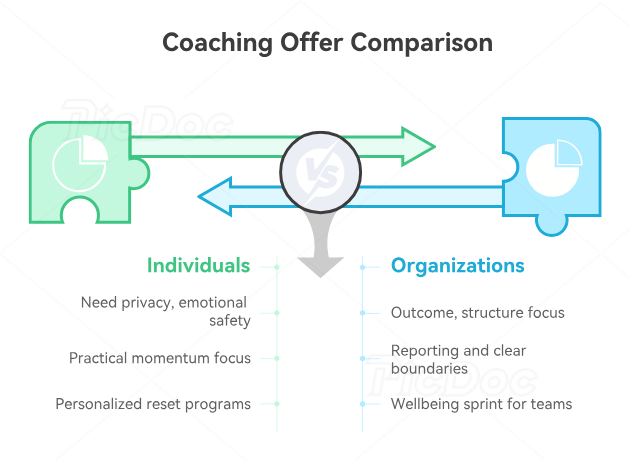
For the Netherlands, consider building two versions of your offer: one for individual clients and one for workplace or organizational clients. Individual clients often need privacy, emotional safety, and practical momentum. Companies need outcomes, structure, reporting, and clear boundaries. You can offer a 12-week personal reset program for individuals and a six-session wellbeing sprint for teams. Build those offers with workplace coaching trends, future coaching opportunities, micro-coaching models, and coaching automation for growth.
Your strongest trust asset is proof. Proof can be testimonials, case studies, anonymized progress snapshots, client feedback themes, referral partner quotes, or clear before-and-after behavior markers. A client saying “I feel better” is useful, but a stronger result sounds like “I now plan meals twice a week, sleep before midnight four nights a week, and handle work stress without skipping exercise.” That level of specificity comes from goal tracking tools, client journaling tools, weekly feedback systems, and client experience design.
5. Common Mistakes to Avoid When Getting Certified in the Netherlands
The first mistake is choosing a certification before choosing a client. This creates generic messaging, generic sessions, generic packages, and generic disappointment. If your certificate says “coach” but your website speaks to everyone, clients feel no urgency to contact you. Define the painful situation you solve: burnout patterns, unhealthy routines, post-career-transition uncertainty, stress eating, inconsistent exercise, emotional overwhelm, or poor boundaries. Use client expectations management, handling difficult client situations, setting coaching boundaries, and avoiding coaching traps before investing.
The second mistake is overselling results. Clients may want weight loss, better mood, calmer relationships, stronger routines, or career clarity, but ethical coaching requires realistic language. Promise the process, the support, the structure, and the accountability. Speak carefully about health outcomes, medical concerns, mental health symptoms, or nutrition claims. When a client needs clinical care, specialized nutrition advice, diagnosis, therapy, or medical treatment, referral is a sign of professionalism. Strengthen this judgment with emotional consent in coaching, support during emotional crises, ethical responsibilities, and non-negotiable coaching standards.
The third mistake is ignoring technology. A coach who relies only on memory and scattered messages will struggle with retention. Clients forget commitments, lose motivation, cancel sessions, and drift when the process has no rhythm. You need a simple tech stack: scheduling, intake form, notes, habit tracker, progress dashboard, email reminders, payment system, and testimonial capture. Keep it lean by studying coaching technology transformation, coaching apps, CRM tools for coaches, and payment systems for coaching businesses.
The fourth mistake is waiting too long to market. Many coaches spend months polishing a website while real clients remain one conversation away. Start with a simple offer, one clear audience, one booking page, one weekly content rhythm, and one referral conversation every week. Publish content that answers painful questions: “How do I rebuild routines after burnout?” “Why do I keep failing health goals?” “How does coaching differ from therapy?” “What happens inside a health coaching session?” Use SEO tools for coaching websites, digital marketing tools, YouTube growth for coaches, and networking strategies.
The fifth mistake is underbuilding the back end of the business. Your certificate may get attention, but your systems create staying power. You need a clear onboarding flow, refund policy, cancellation policy, session notes process, referral list, renewal plan, and offboarding questionnaire. You also need to understand business registration and tax basics in your local situation. Official Dutch business guidance says entrepreneurs starting a business must register with KVK and register for Dutch taxes, while the BIG-register explains protected healthcare titles and registration rules for regulated healthcare professions. Build your foundation with legal requirements for coaches, coaching LLC setup principles, tax guide for coaches, and scaling a coaching practice.
6. FAQs About Health & Life Coaching Certification in the Netherlands
-
Certification is valuable for credibility, structure, ethics, and client trust, especially when your work touches health, habits, stress, lifestyle, motivation, and personal change. The key is using accurate language and avoiding protected healthcare titles unless you are legally entitled to use them. The BIG register covers regulated healthcare professions and protected titles, so coaches should keep their public wording clear and scope-safe. Build your foundation through coaching ethics, trust in coaching, career-ending mistake prevention, and safe session design.
-
The best certification is the one that matches your niche, gives practical coaching experience, teaches ethics, includes feedback, and helps you explain your scope to clients. A busy professional may prefer an online program with recordings and structured practice, while a future corporate wellness coach may need stronger business and outcome-tracking modules. Compare options through which certification is right for you, online health coach certification programs, online life coach certification reviews, and essential credentialing resources.
-
You can build an online coaching practice serving clients across locations, but you should take business registration, taxes, privacy, contracts, payment processing, and local legal advice seriously. Online coaching also requires stronger onboarding because clients need clarity before they trust a remote provider. Create a clean client journey using Zoom and video conferencing best practices, custom coaching dashboards, automated coaching emails, and coaching automation tools.
-
Many online health and life coaching programs can be completed in a few months, while deeper credential pathways may take longer because they require practice, mentoring, assessment, and documented coaching experience. Speed should never be your only criterion because weak preparation creates weak sessions. The better question is how quickly you can become practice-ready. Use quick certification planning, life coach certification timing, certification portfolio creation, and mastering certification interviews to map a realistic timeline.
-
Start with one niche, one clear promise, one entry offer, and one repeatable client acquisition channel. For example, you might publish weekly content for expat professionals dealing with burnout, run discovery calls, collect testimonials from beta clients, and build referral relationships with trainers, HR consultants, therapists, or wellness providers. Your certification supports trust, but your offer creates action. Build momentum through client testimonials, case studies that boost credibility, digital marketing tools, and client retention strategies.
-
Your website should explain who you help, what problem you solve, how your process works, what your certification trained you to do, what coaching includes, what coaching excludes, how clients start, and what results are realistic. Add testimonials, FAQs, a discovery-call button, and a simple description of your program. Keep the language specific enough that the right client feels seen. Use credential listing guidance, SEO tools for coaching websites, resource hub building, and client experience strategy.
