
The Ultimate Guide to Getting Health & Life Coaching Certification in South Korea: Everything You Need to Know in 2026-2027
South Korea is a sharp market for coaches who can combine credible training, clean ethics, measurable behavior change, and culturally intelligent client support. A strong health coach certification, focused life coach certification, and practical coaching toolkit can help you serve clients dealing with stress, lifestyle drift, career pressure, sleep issues, confidence gaps, and inconsistent routines. The winning move in 2026-2027 is choosing a pathway that builds trust, protects scope, and gives you real client results.
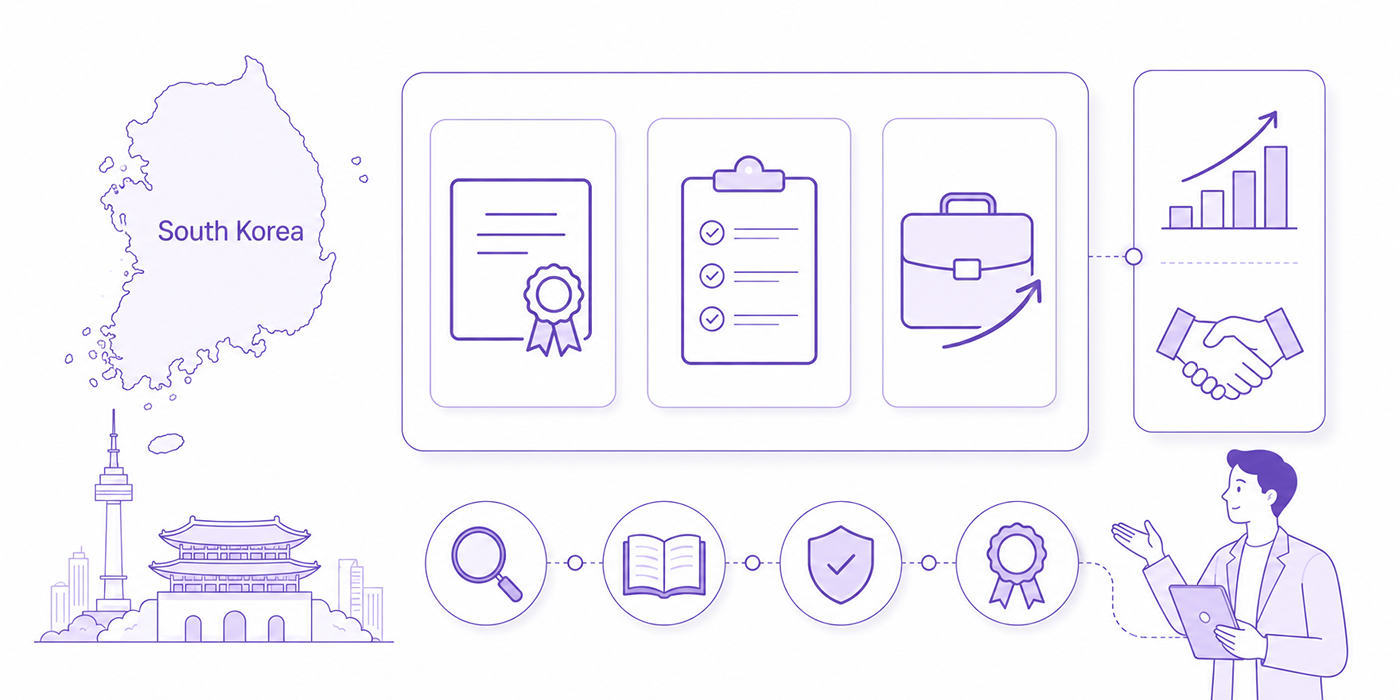
1. How Health & Life Coaching Certification Works in South Korea in 2026-2027
For South Korea, the safest way to think about coaching certification is simple: your certification gives you professional credibility, structure, skills, ethics, and market confidence, while regulated healthcare activities remain separate. A coach can support goals, habits, motivation, lifestyle routines, accountability, communication, and behavior change through a clear coaching scope of practice, strong coaching integrity, and careful ethical responsibility. The moment your language sounds like medical diagnosis, prescribed treatment, clinical nutrition therapy, or mental health treatment, you need referral boundaries and licensed professional collaboration.
That boundary matters because South Korea has regulated health professions. Dietitians, for example, are treated as legally qualified food and nutrition professionals, and Korean dietitian qualification involves approved education and the Korean Dietitian Licensing Examination. A health coach serving Korean clients should use practical coaching language such as “supporting meal planning consistency,” “building grocery routines,” “tracking energy patterns,” and “improving adherence to doctor-approved recommendations.” That protects your credibility far better than inflated claims. It also aligns with client trust, emotional consent, safe coaching environments, and career-saving boundaries.
Certification selection should start with your market. If you want Korean corporate wellness clients, choose training that strengthens stress coaching, communication, measurable goals, and group facilitation. If you want private health coaching clients, prioritize habit formation, motivational interviewing-style conversations, nutrition behavior boundaries, and client accountability. If you want expat, bilingual, or international clients in Seoul, Busan, Incheon, Daegu, Daejeon, or remote settings, combine online health coach certification, continuous coaching education, client session tools, and case study documentation.
| Decision Point | What It Means in South Korea | Best Starting Move | ANHCO Resource | Pain Point It Solves |
|---|---|---|---|---|
| Credential type | Choose health, life, wellness, or hybrid coaching based on client demand. | Match your niche before buying training. | Which certification fits you | Prevents buying a certificate clients ignore. |
| Scope language | Korean clients value professionalism; vague health claims damage trust quickly. | Write clear coaching boundaries. | Coaching standards | Reduces legal and credibility risk. |
| Health coaching focus | Best for habits, lifestyle routines, wellness goals, sleep, stress, and prevention support. | Build behavior-change skill first. | Behavior change science | Stops advice-heavy coaching. |
| Life coaching focus | Best for confidence, transitions, relationships, career direction, and identity goals. | Choose strong communication training. | Life coach certification | Prevents generic “mindset” positioning. |
| Corporate wellness angle | Useful for workplace stress, burnout prevention, communication, and performance habits. | Create workshop-ready frameworks. | Preventative health coaching | Makes you easier to hire by teams. |
| Bilingual delivery | English-speaking expats and Korean professionals may need different examples and pacing. | Create two intake versions. | Coaching communication | Reduces misunderstanding in sessions. |
| Online program format | Remote certification fits busy professionals and international learners. | Check live practice hours. | Online certification programs | Prevents passive video-only learning. |
| Practice sessions | Real coaching reps matter more than theory-heavy certificates. | Log sessions from week one. | How top coaches get results | Builds confidence before paid clients. |
| Ethics training | Essential for confidentiality, consent, referrals, and pressure-free coaching. | Study ethics before marketing. | Ethical responsibilities | Protects clients and your reputation. |
| Nutrition boundary | Support habits and adherence; leave clinical nutrition treatment to licensed professionals. | Use behavior-based language. | Changing client diets | Avoids overpromising health outcomes. |
| Stress niche | Strong fit for Korean professionals managing work pressure and routine collapse. | Train in anxiety-aware coaching. | Client anxiety and stress | Improves safety and retention. |
| Habit niche | High demand because clients often know what to do and struggle with repetition. | Coach one behavior at a time. | Habit formation tools | Fixes inconsistent follow-through. |
| Accountability system | Korean clients may appreciate structure, reminders, and precise next steps. | Use weekly check-ins. | Accountability in coaching | Reduces ghosting between sessions. |
| Client dashboard | Central notes, goals, metrics, and next actions increase perceived professionalism. | Start with one simple dashboard. | Custom coaching dashboards | Stops scattered client management. |
| Feedback loop | Clients stay when they feel progress is visible. | Measure wins every week. | Feedback tools | Prevents silent dissatisfaction. |
| Case studies | Proof matters when clients compare similar online coaches. | Document baseline, process, result. | Coaching case studies | Turns results into trust assets. |
| Testimonials | Social proof helps new coaches overcome low brand recognition. | Ask after clear milestones. | Client testimonials | Improves conversion without hype. |
| Tech stack | Simple scheduling, notes, reminders, and payment flow reduce admin drag. | Automate the repeatable parts. | Coaching business automation | Protects energy for coaching. |
| Program offer | Packages sell better when clients understand the transformation path. | Name the outcome clearly. | High-ticket coaching offers | Prevents hourly-session confusion. |
| Pricing confidence | Certification alone rarely fixes undercharging. | Price around outcomes and support. | Financial forecasting | Stops random pricing decisions. |
| Resume positioning | Credentials need clean wording for employers, clinics, wellness teams, and clients. | List credential, training body, date, skills. | Listing credentials | Avoids weak resume presentation. |
| Exam prep | Test-based credentials require planning, spaced review, and practice questions. | Build a 10-week review calendar. | NBHWC practice questions | Reduces exam panic. |
| Credential comparison | Different credentials signal different strengths to clients. | Compare requirements, recognition, and use case. | Is certification worth it | Prevents buying based on branding alone. |
| Marketing foundation | South Korea clients need clear niche, proof, trust, and practical next steps. | Build one landing page first. | Digital marketing tools | Stops invisible expertise. |
| Retention strategy | Clients leave when progress feels blurry or sessions feel repetitive. | Review goals every four weeks. | Client retention strategies | Improves lifetime client value. |
| Legal setup | Independent coaches should check business, tax, privacy, and contract requirements. | Use professional agreements early. | Legal requirements for coaches | Prevents messy operations later. |
| Long-term growth | The best coaches keep upgrading method, evidence, tools, and delivery. | Plan continuing education annually. | Future-proof your practice | Keeps your offer relevant. |
| Trust signal | Clients need a reason to believe your coaching will create real change. | Show process, ethics, and outcomes. | Certification differentiation | Turns certification into market advantage. |
2. Choosing the Right Certification Path for South Korea
Your best certification path depends on the client problem you want to own. A general health coach certification fits clients who need lifestyle structure, sleep routines, movement consistency, stress management, preventive habits, and sustainable health behavior. A life coach certification fits clients who want clarity, confidence, emotional resilience, leadership growth, relationship communication, or career transition support. A hybrid path fits coaches who want to work at the overlap: burned-out professionals, overwhelmed parents, expats adjusting to Korea, students building routine, or executives who need health discipline and decision clarity.
ICF-style credentialing can be valuable when your target market includes leadership, executive, career, performance, or international coaching buyers. ICF’s ACC pathway lists 60 hours of coaching education, 100 hours of coaching experience, mentor coaching, performance evaluation, and the ACC exam; its PCC level lists 125 hours of education and 500 coaching experience hours. If you are serving corporate wellness, leadership transition, or bilingual professional clients, combine ICF credentialing guidance, essential coaching skills, ICF exam preparation, and effective coaching communication.
NBHWC-style training can be stronger when your identity is health and wellness coaching. NBHWC says board exam candidates need an approved training program, 50 health and wellness coaching sessions, and an education or work-experience requirement. For South Korea, that matters because many clients are achievement-driven and skeptical of fluffy wellness promises. A program that forces real session practice, coaching logs, ethics, and exam readiness gives your website stronger substance than a quick certificate. Pair it with NBHWC competency review, NBHWC exam pitfalls, NBHWC practice questions, and health coach salary insight.
A South Korea-focused coach should also choose training based on delivery style. If you want one-on-one clients, look for observed practice, feedback, coaching demonstrations, and business support. If you want group programs, look for facilitation, community design, habit tracking, and client engagement tools. If you want corporate work, add reporting, measurable outcomes, workshop design, and stakeholder communication. The better your certification connects with client preferences, coaching automation, interactive goal tracking, and client experience design, the faster it becomes useful in the real market.
3. What to Study, Practice, and Document Before You Apply
The first study area is behavior change. Many clients already know they should sleep earlier, walk more, eat with more structure, reduce stress, prepare meals, set boundaries, or stop doom-scrolling at night. The coach’s value comes from turning intention into repeated action. Study cues, triggers, friction, rewards, identity-based habits, relapse planning, weekly reflection, and environmental design. Then connect those tools with habit formation coaching, behavioral strategies, micro-coaching, and accountability systems.
The second study area is communication under pressure. South Korea-based clients may arrive with strong performance expectations, family pressure, career intensity, academic history, social comparison, or fear of losing face. A skilled coach asks cleaner questions, reflects without judgment, tracks motivation, notices avoidance, and creates a session rhythm that feels safe and productive. Build skill with constructive feedback, emotional intelligence coaching, client expectation management, and emotional crisis support boundaries.
The third study area is documentation. Your certification journey should produce usable business assets: intake forms, consent language, session notes, coaching agreements, reflection logs, progress summaries, testimonials, case studies, and referral language. These assets matter because clients can feel the difference between a coach who “completed a course” and a coach who can run a professional process. Build your system using coaching portfolio guidance, case study templates, session recording tools, and surveys and feedback tools.
The fourth study area is niche translation. “Health and life coaching” is too broad for a competitive 2026-2027 market. Choose a specific promise: stress-resilient routines for Korean professionals, habit coaching for remote workers, wellness structure for expats in Seoul, confidence coaching for career transitions, health behavior support for busy founders, or post-burnout life design. Then build a method around that problem. A clear niche makes mental health coaching, relationship coaching, financial coaching, and strength-based coaching easier to position without sounding scattered.
4. How to Build a South Korea-Friendly Coaching Practice After Certification
A South Korea-friendly coaching practice should feel precise, structured, respectful, and outcome-aware. Start with one signature offer instead of a long menu. For example: “8-week stress-resilient routine coaching,” “12-week health habits for busy professionals,” “90-day life reset for expats in Korea,” or “executive wellness accountability for high-pressure teams.” Each offer should include a clear intake, baseline score, weekly session rhythm, between-session support, progress review, and closing summary. This connects your coaching certification to client retention, coaching dashboards, and goal tracking tools.
Your marketing should explain the problem better than your competitors. Korean clients and expat clients may both struggle with routines, burnout, isolation, food structure, career uncertainty, and stress recovery, yet they may describe those problems differently. Use landing pages that speak to real pain: “I know what to do, yet I cannot stay consistent,” “my schedule destroys every plan,” “I feel productive and unhealthy at the same time,” “I need accountability without shame.” Then connect your solution to digital marketing tools, SEO tools for coaching websites, client testimonials, and coaching case studies.
Technology should make the practice feel calm. Use scheduling automation, reminder systems, client portals, check-in forms, habit trackers, payment systems, and weekly recap pages. South Korea’s health environment already includes prevention-oriented public health activity; the National Health Insurance Service describes NHIS-MOVE 100 as a participant-centered health management service designed to improve physical function and encourage healthier lifestyle behavior. Independent coaches can learn from that structure: make support practical, measurable, and repeatable. Use coaching technology, automation tools, CRM tools, and payment systems to reduce friction.
Your referral system should be built before you need it. Create referral language for doctors, dietitians, therapists, personal trainers, HR teams, and wellness businesses. Say exactly what you support: habit implementation, goal clarity, stress routines, accountability, confidence, behavior change, and client self-management. Say exactly when you refer out: medical symptoms, eating disorder concerns, severe depression, trauma treatment needs, medication questions, or clinical nutrition needs. That is how you turn trust, safe coaching, ethical practice, and professional standards into a business advantage.

5. Mistakes That Make Coaches Look Unready in the Korean Market
The first mistake is selling certification as the transformation. Clients buy outcomes, support, structure, and trust. Your credential helps open the door, yet your offer must explain how sessions create progress. A weak coach says, “I am certified.” A stronger coach says, “Here is how we turn your stress, schedule, energy, sleep, and habits into a weekly plan you can actually keep.” Build that language with certification differentiation, premium coaching offers, client experience systems, and coaching business growth.
The second mistake is giving too much advice. Advice makes the coach feel useful for five minutes and leaves the client dependent afterward. Coaching should increase the client’s ability to think, choose, test, reflect, and recover after setbacks. That requires questions, experiments, reflection, strengths, accountability, and consent. Build your sessions around appreciative inquiry, solution-focused brief coaching, positive psychology coaching, and inner critic management.
The third mistake is ignoring cultural context. A South Korea-based client may be dealing with work hierarchy, family expectations, academic pressure, long commutes, group belonging, perfectionism, or fear of disappointing others. A coach who only uses generic Western self-care language can miss the real barrier. Ask about environment, relationships, time pressure, social expectations, identity, and what change would cost the client. That depth supports emotional intelligence, client anxiety strategy, transformational coaching, and safe coaching environments.
The fourth mistake is building a messy backend. If your intake is scattered, payments feel awkward, reminders are manual, notes are inconsistent, and follow-up depends on memory, clients feel the chaos. A serious coach builds simple operating systems early: scheduling, invoices, session notes, check-ins, feedback, testimonials, referral tracking, and monthly metrics. Use must-have startup tools, automation for growth, tax planning, and legal setup guidance to keep the practice stable.
The fifth mistake is skipping proof. In 2026-2027, clients compare coaches fast. They scan your website, social profiles, credentials, testimonials, niche promise, and content. If your page only says “I help people live better,” you blend into every other wellness account. Build proof with anonymized case studies, measurable baselines, progress stories, before-and-after habit maps, client language, and structured testimonials. That turns networking, resource hubs, YouTube growth, and client loyalty into compounding assets.
6. FAQs About Health & Life Coaching Certification in South Korea
-
For general coaching services, your core need is credible training, ethical scope, practical skill, business setup, and clear client agreements. For regulated healthcare titles or clinical services, follow the relevant Korean licensing pathway. Dietetics is a regulated area in Korea, so coaches should use careful habit-support language and refer clinical nutrition needs to qualified professionals. Start with coaching standards, ethical responsibilities, trust building, and legal requirements.
-
Choose based on your market. Health coaching works well for wellness habits, stress routines, sleep, movement, and accountability. Life coaching works well for confidence, career direction, relationships, and life transitions. ICF can help with leadership and executive credibility. NBHWC can help with health and wellness credibility. Compare which certification is right, health coach certification options, life coach certification programs, and NBHWC competency details.
-
Yes, online certification is often the most practical route for busy professionals, expats, parents, and working coaches in South Korea. The key is choosing a program with live practice, feedback, ethics, observed skills, and business application instead of passive content alone. Build a calendar around quick online certification, continuous education, certification portfolio building, and exam mistake prevention.
-
A focused online certificate can take a few months, while more advanced credentialing can take longer because it may require coaching hours, mentor coaching, exams, and documentation. ICF’s ACC pathway includes education, 100 coaching experience hours, mentor coaching, performance evaluation, and an exam; NBHWC exam eligibility includes approved training and 50 coaching sessions. Use credentialing resources, ICF application guidance, NBHWC practice questions, and mastering certification interviews.
-
Choose a niche where the pain is urgent and the outcome is measurable. Strong South Korea-friendly niches include burnout recovery routines, stress management for professionals, health habits for busy office workers, confidence coaching for career transitions, expat adjustment support, relationship communication, and habit coaching for remote workers. Test your niche with mental health coaching, relationship coaching, habit tools, and future coaching trends.
-
Use role clarity in every intake form, website page, and coaching agreement. You can support habits, motivation, routines, accountability, reflection, goals, and behavior change. Refer out when a client needs diagnosis, treatment, medication guidance, trauma therapy, eating disorder support, or clinical nutrition therapy. Strong coaches protect the client first. Build that discipline through emotional consent, ethical responsibility, client crisis support, and career-ending mistake prevention.
