
The Ultimate Guide to Getting Health & Life Coaching Certification in Kuwait: Everything You Need to Know in 2026-2027
Kuwait is a relationship-driven coaching market where credibility, privacy, cultural intelligence, and practical outcomes carry serious weight. Clients want a coach who can handle health goals, family pressure, work stress, routines, motivation dips, and identity shifts with structure instead of vague encouragement. The right certification should help you build client trust, protect ethical coaching boundaries, apply behavior change science, and position your training through credible certification differentiation.
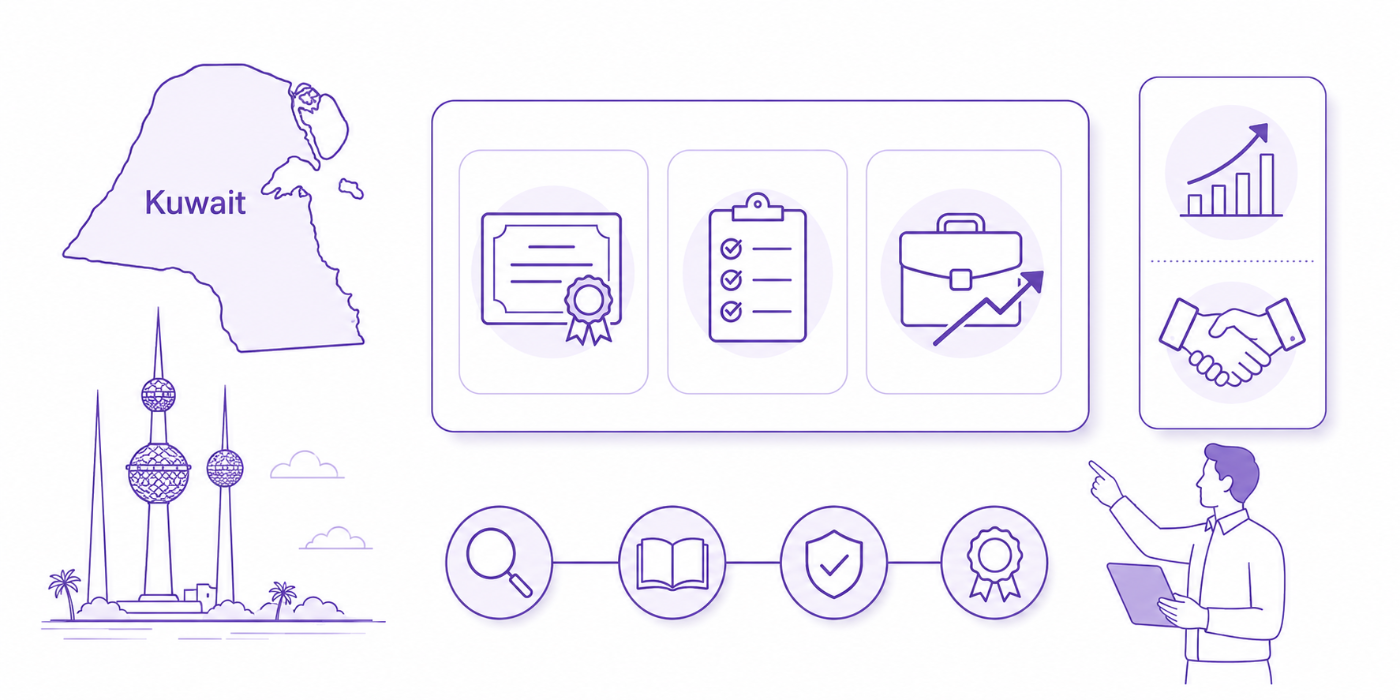
1. Why Kuwait Health & Life Coaching Certification Requires a Serious 2026-2027 Strategy
Kuwait clients often come to coaching with layered problems: weight frustration, low energy, stress eating, family expectations, long working hours, sleep inconsistency, confidence gaps, and burnout hidden behind a polished routine. A weak certification leaves you giving advice. A strong certification helps you assess readiness, map barriers, build weekly actions, track follow-through, and reset the plan when life gets messy. That is why your certification path should include habit formation tools, accountability coaching, stress coaching strategies, and client expectation management.
The biggest danger for new coaches in Kuwait is entering the market with a certificate and no client system. People do not pay premium fees because you completed modules; they pay when they understand your method, your scope, your support style, and the exact problem you solve. Your certification should help you create intake forms, goal maps, coaching agreements, referral language, progress reviews, and case-study proof. Build that foundation with coaching case-study templates, custom coaching dashboards, surveys and feedback tools, and interactive goal tracking.
Kuwait also requires careful separation between coaching, healthcare, therapy, dietetics, and commercial practice. Kuwait Government Online lists business services for commercial licenses and company establishment through Ministry of Commerce and Industry pathways, while Prometric’s Kuwait MOH page states that the Medical Licensing Department regulates licensing and practice in the private sector through evaluation, licensing, inspection, legal, and committee functions. That means a coach should treat certification, business setup, and healthcare licensing as separate decisions. Use legal requirements for coaches, coaching boundaries, career mistake prevention, and coaching integrity before publishing offers or accepting clients.
2. How to Choose the Right Certification Path for Kuwait
Start with the client you want to serve, then choose the certification that builds the exact skill stack that client needs. A coach serving corporate employees needs stress recovery, communication, habit design, group facilitation, and confidentiality. A coach serving women’s wellness needs energy routines, body confidence, food habit support, emotional safety, and practical follow-through. A coach serving expats needs adjustment support, identity work, isolation awareness, and lifestyle planning. Match each niche with strength-based coaching, solution-focused coaching, positive psychology coaching, and life mapping tools.
A good certification should train your judgment, not just your vocabulary. Look for modules that teach intake, goal-setting, active listening, motivational interviewing style skills, behavior change, ethics, relapse planning, client documentation, and business implementation. Kuwait clients may be polite during sessions while privately feeling unclear, embarrassed, or unconvinced. Your method has to make the coaching feel precise. Ask every program how it teaches effective coaching communication, client anxiety and stress support, constructive feedback, and managing expectations.
International pathways can also matter if you want corporate credibility or future portability. ICF’s ACC credential page currently lists coaching education, coaching experience, mentor coaching, performance evaluation, and an exam among its requirements, while its PCC page lists deeper education and experience requirements for the next credential level. For a Kuwait coach, that means you should compare program depth, practice requirements, mentor feedback, credential recognition, and timeline before enrolling. Use ICF application guidance, ICF exam mistakes, essential ICF skills, and certification comparison to avoid picking a course that looks impressive while leaving you underprepared.
A combined health and life coaching certification can work especially well in Kuwait because health problems often have personal, social, and emotional drivers. A client may say they want to lose weight, then reveal shame, family pressure, work stress, poor sleep, social eating, and an all-or-nothing pattern. A client may say they want confidence, then reveal low energy, poor routines, and unmanaged stress. Your certification should give you a wide enough map to support the whole coaching conversation while staying inside ethical scope. Build this with inner critic management, visualization and guided imagery, gratitude journal coaching, and daily journaling prompts.
3. Kuwait Scope, Licensing, Ethics, and Trust Rules Coaches Should Respect
Your safest professional position is simple: coaching supports awareness, goals, habits, accountability, routines, and self-directed change. Medical diagnosis, disease treatment, clinical nutrition therapy, medication guidance, and therapy require the relevant qualified professional. Kuwait Government Online’s license and permit section lists separate medical-sector services such as licenses for private clinics, medical centers, laboratories, hospitals, and healthcare professions, while MOCI’s own site describes its role in supervising commercial and economic activities. A health and life coach should verify business activity, commercial setup, and healthcare-related claims with appropriate local authorities before launching. Build your base with coaching legal requirements, ethical responsibilities, emotional consent, and trust protection.
Your intake process should protect the client from day one. Ask about the goal, previous attempts, current support, health constraints, emotional triggers, schedule realities, family context, food environment, privacy needs, and referral indicators. Many coaches lose trust because they offer advice too early and miss the real barrier. The client may know what to do already; the missing piece may be timing, shame, fatigue, self-sabotage, unrealistic expectations, or a home environment that makes consistency hard. Use client surveys, powerful journaling tools, coaching dashboards, and case-study templates to understand before you intervene.
Marketing ethics matter just as much as session ethics. Avoid claims that sound like guaranteed weight loss, cured anxiety, fixed marriages, medical reversal, or instant transformation. Say what coaching can responsibly support: routine clarity, decision-making, consistency, goal design, stress-aware planning, confidence, accountability, and values-aligned action. That language feels mature in a market where reputation matters. It also helps clients understand the difference between coaching and treatment. Strengthen your messaging with coaching integrity, non-negotiable coaching standards, client testimonial capture, and credibility-building case studies.
4. How to Turn Your Kuwait Certification into Paying Clients
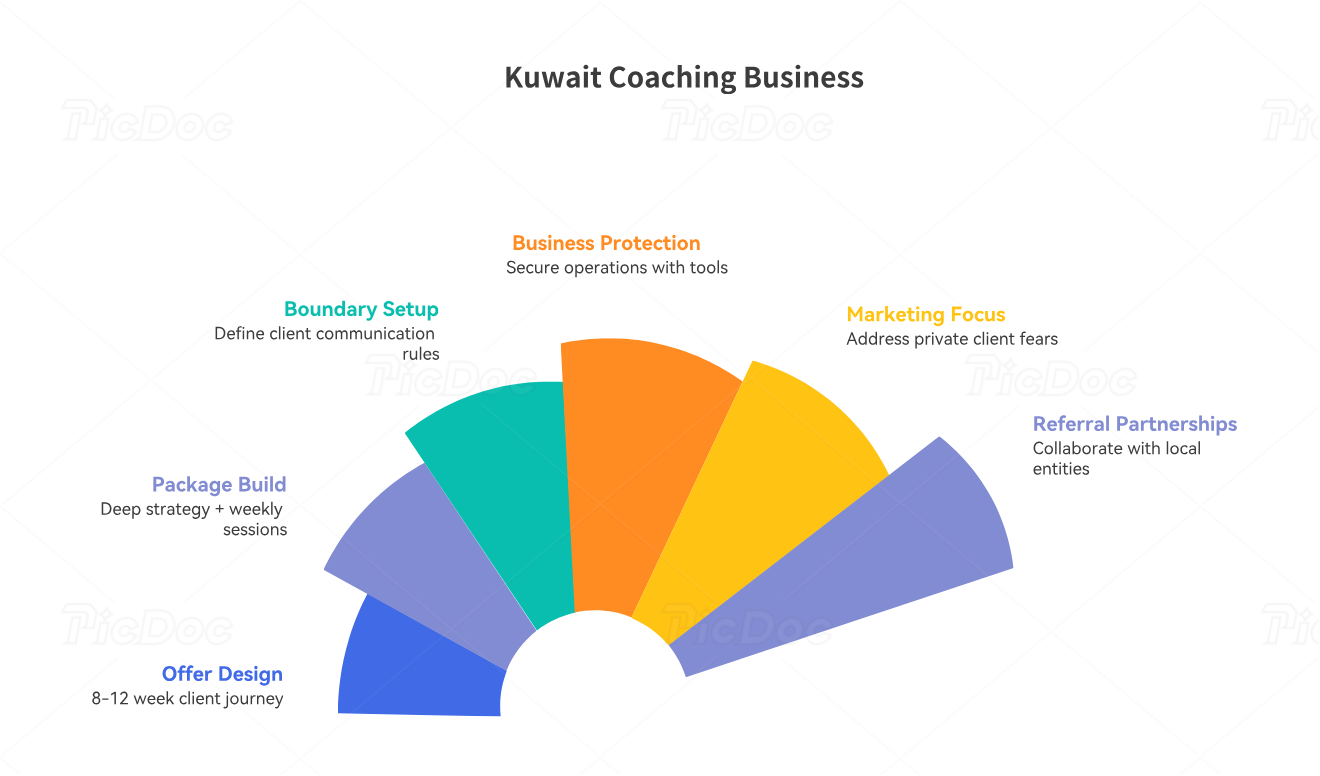
A Kuwait coaching business needs a clear offer before it needs a big audience. Choose one painful problem and turn it into an 8-to-12-week client journey. For example: “stress-proof health routines for busy professionals,” “confidence and habit rebuilding for women who feel stuck,” or “life reset coaching for expats rebuilding structure.” Then define the intake, baseline, weekly focus, between-session check-in, progress review, and renewal path. Build that offer with high-ticket coaching offers, client engagement models, micro-coaching strategies, and client retention systems.
Your first package should feel calm, specific, and premium. Include an intake form, one deep strategy session, weekly coaching, check-ins, a habit or goal dashboard, milestone reviews, and a final next-step plan. Avoid unlimited access unless your boundaries are extremely clear. Clients who pay more often expect fast replies, emotional availability, and personalized support. That can become exhausting unless you define communication windows, urgent-situation limits, and response rules. Protect the business side with payment systems, coaching automation, essential CRM tools, and handling difficult client situations.
Your marketing should speak to what clients privately fear. Many people worry they will fail again, feel judged, waste money, expose family problems, or receive another generic plan they cannot follow. Strong content addresses those fears directly: how to restart after missing a week, how to build health routines around social eating, how to set boundaries at work, how to manage evening cravings, how to rebuild confidence after years of inconsistency. Publish around those problems with SEO tools for coaching websites, digital marketing tools, YouTube growth for coaches, and networking strategies.
Referral partnerships can work extremely well in Kuwait when your positioning is clean. Build relationships with gyms, wellness studios, HR consultants, corporate trainers, clinics that need referral-safe lifestyle support, women’s communities, universities, and expat groups. Present your work as structured behavior change support with clear boundaries, privacy, and measurable follow-through. Offer one-page summaries of your process, sample workshops, and anonymized case studies. Strengthen your referral system with joint ventures for coaches, coaching case studies, exceptional client experiences, and resource hub building.
5. Your 90-Day Kuwait Certification-to-Practice Roadmap
Days 1 to 30 should focus on positioning and compliance awareness. Choose your niche, compare certifications, define your coaching scope, create an intake form, draft your coaching agreement, prepare referral wording, and outline your first client journey. Write a one-sentence offer that names the client, the problem, and the result your process supports. A strong version might be: “I help busy Kuwait professionals rebuild energy, structure, and health routines through weekly coaching, practical habit design, and accountability.” Support this stage with must-have starting tools, certification portfolio planning, business legal awareness, and coaching toolkit curation.
Days 31 to 60 should focus on practice. Coach a small group of practice clients, test your intake, track session themes, document barriers, and ask for structured feedback. Pay attention to moments where clients drift: missed check-ins, vague goals, family resistance, low energy, perfectionism, and shame after setbacks. This stage is where your method becomes real. Turn the learning into one anonymized case study and three content pieces. Use session recording tools, feedback tools, daily journaling prompts, and life mapping to improve fast.
Days 61 to 90 should focus on launch. Build one paid package, create a simple landing page, set your pricing, prepare discovery-call questions, create payment and cancellation terms, and contact referral partners. Your launch message should sound specific: who you help, what pressure they are under, how your process works, what support they receive, and what progress can be measured. Add proof through practice feedback, sample dashboards, and process-based testimonials. Strengthen launch execution with automated email sequences, coaching business automation, business growth automation, and financial forecasting.
The final skill is professional calm. When a client misses goals, you diagnose friction instead of blaming motivation. When a client needs clinical support, you refer without embarrassment. When a client wants a miracle, you bring them back to weekly action. When a client feels ashamed, you make the session safe enough for honesty and practical enough for movement. That maturity is what separates certified coaches who stay busy from coaches who collect credentials and wait. Keep developing coaching mastery, positive change models, neuroscience-based coaching, and mindset shifts.
6. FAQs About Health & Life Coaching Certification in Kuwait
-
Certification gives you structure, trust, ethical awareness, practical tools, and stronger positioning. It also helps clients understand your seriousness before they share sensitive goals. Business setup and healthcare licensing should be checked separately through the relevant Kuwait authorities when you are offering services locally or making health-related claims. Build your foundation with health coach certification options, life coach certification options, ethical coaching responsibilities, and legal requirements for coaches.
-
The best certification depends on your client niche and long-term goals. Corporate wellness coaches need confidentiality, group coaching, stress support, and reporting boundaries. Women’s wellness coaches need habit change, emotional safety, body confidence, and practical routine design. Coaches seeking international credential progression may compare CPD-style learning, ICF pathways, and NBHWC-style competency preparation. Start with which certification is right for you, NBHWC competency review, ICF credentialing skills, and certification resources.
-
A health coach can support awareness, food routines, planning, accountability, barriers, and lifestyle consistency inside a coaching framework. Medical nutrition therapy, disease-specific diet treatment, diagnosis, and clinical meal prescriptions should be handled by the right licensed professionals. Safe coaching focuses on behavior, questions, goals, and sustainable follow-through. Use diet-change coaching, coaching boundaries, career mistake prevention, and safe coaching environments.
-
Many online certification programs can be completed within a few months, while deeper credential pathways may require education hours, practice hours, mentor coaching, assessments, and exams. The better question is how long it takes to become client-ready. A serious Kuwait coach should budget time for training, practice clients, offer creation, testimonials, and business setup. Compare quick health coach certification, life coach certification timelines, ICF exam preparation, and continuous education.
-
Start with a narrow offer, practice-based proof, local referral relationships, and content that speaks to real client pain. Strong early niches include stress and energy, habit consistency, executive wellness, women’s wellness, expat adjustment, confidence, and family routine support. Then build a professional client journey with intake, check-ins, progress tracking, and renewal points. Use digital marketing tools, SEO for coaching websites, client retention strategy, and high-ticket offer design.
-
t can be a strong career when you build it as a serious practice with clear scope, strong ethics, niche positioning, client systems, and referral relationships. Kuwait clients value privacy, trust, professionalism, and practical support that fits real family and work demands. The strongest coaches combine certification with business strategy, digital tools, retention planning, and ongoing skill development. Build toward that with state of coaching trends, future-proof coaching practice, scaling your coaching practice, and coaching income planning.
